
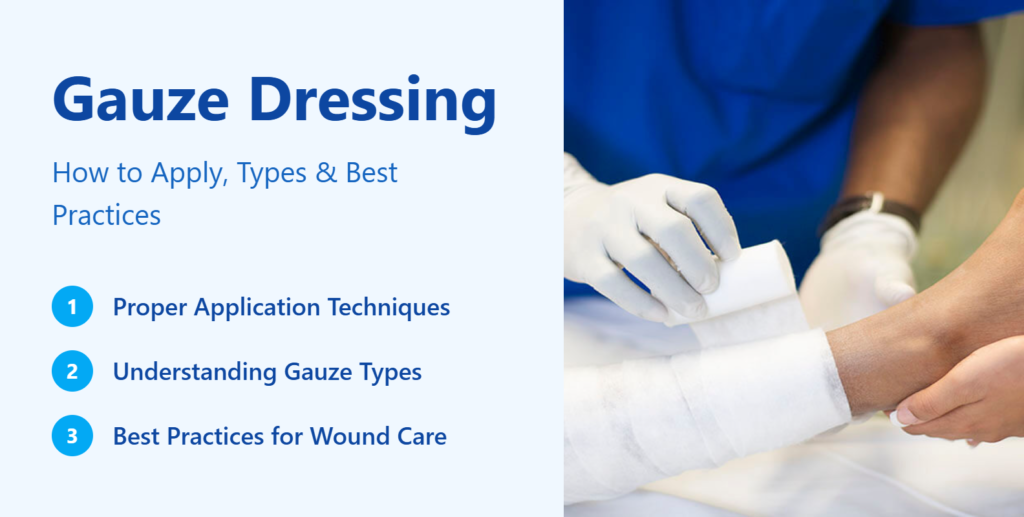
- A gauze dressing helps clean and protect many types of wounds.
- People pick the right type based on the size of the injury and the amount of fluid.
- Proper application and regular changes stop infection and help the skin heal.
Understanding Gauze Dressing and Its Purpose
A gauze dressing is a piece of medical fabric made from cotton or other fibers. It protects an injury, soaks up extra fluid, and helps clean dead tissue from the area. This medical tool is an essential part of wound care.
Think of gauze as a thin, breathable cloth for your cuts. It acts as a shield against dirt. It also works like a sponge to soak up blood or other liquids coming from the wound. You can put it directly on a cut as a first layer. You can also use it as a second layer to hold other medical items in place. People often think wounds heal best in the open air. This is not true. Gauze creates a moist, protected environment that helps the healing process.
Main Types of Gauze for Wound Care
Wound care requires the right materials to help healing. Different types of gauze serve specific needs based on the injury.
| Gauze Type | Best Use | Key Benefit |
| Woven | Cleaning and debriding wounds | Rougher texture helps remove debris |
| Non-woven | Covering surgical sites | More absorbent and leaves no lint |
| Impregnated | Preventing the pad from sticking | Keeps the wound moist with medicine |
| Packing | Filling deep holes or tunnels | Long strips allow for deep placement |
Vitality Medical explains that woven gauze uses cotton with a loose weave. This makes it a solid choice for scrubbing dirt out of a scrape. Non-woven gauze uses pressed fibers instead. It works better for surgical sites because it doesn’t leave tiny pieces of lint inside the cut. Impregnated gauze includes petrolatum or other treatments to stop the dressing from sticking to raw skin. Packing gauze comes in long, thin strips designed specifically to fill deep cavities. You should use woven gauze to scrub a dirty scrape. You should switch to non-woven gauze for a clean surgical site to avoid leaving unwanted fibers behind. This helps your recovery stay efficient.
How to Apply a Gauze Dressing Properly
You need to follow a clear process when you apply a gauze dressing. This prevents infection and helps the skin mend.
- Wash your hands thoroughly with soap. This creates a clean environment for your skin.
- Clean the wound gently with normal saline or clean water. Wipe from the center of the cut toward the outer edges.
- Apply a small amount of antiseptic or ointment if a doctor told you to do so.
- Place the sterile pad over the wound. Make sure the pad covers the wound edges by at least an inch.
- Secure the pad with medical tape or a bandage.
St John Ambulance provides helpful first aid advice for this task. They suggest you never touch the part of the sterile pad that contacts the wound. Keeping that area clean is a vital aspect of proper care.
Securing the Dressing with Medical Tape or Staples
You should place medical tape on all four sides of your gauze. This creates a firm seal to protect the wound. For deep surgical cuts, doctors often use surgical sutures or a skin stapler before they add the gauze. These items from Nuvomed Surg help hold the skin together properly.
Do not wrap the tape too tightly around the limb or torso. Tight tape restricts blood flow and slows the healing process. You must check the skin around the tape often. Look for any redness or signs of irritation. If the skin looks angry or bumpy, you should adjust the tape placement.
Best Practices for Changing and Removing Gauze
Changing your gauze dressing keeps the area clean. Follow these simple steps to make the process easier:
- Change the dressing at least once every day.
- Swap the gauze immediately if it gets wet or dirty.
- Soak a stuck dressing with saline solution for a few minutes. This softens the dried blood and stops the gauze from pulling on your skin.
- Pull the material slowly in the same direction as your hair growth to avoid unnecessary discomfort.
- Check the wound for signs of infection during every change. Look for unusual smells or yellow pus that may indicate a complication.
Common Dos and Don’ts for Gauze Usage
Gauze dressings help protect injuries, but you must use them correctly to prevent infection. Follow these basic rules to keep your skin safe while it heals.
| Do | Don’t |
| Keep the area dry when you are not cleaning the wound. | Never reuse old gauze, even if it looks clean to the naked eye. |
| Use sterile, individually wrapped gauze packages every time. | Do not apply dry gauze to a scabbed wound because it will stick. |
Many people assume a wound needs to form a hard scab to heal properly. That is actually a misconception. Keeping a wound slightly moist under a gauze dressing helps the skin repair itself much better. This is a standard practice for moist wound healing. You can find more specific guidelines for using gauze dressings here.
When to Avoid Gauze and See a Professional
Standard gauze does not work for every situation. You need to identify when an injury requires a doctor instead of a simple bandage.
- Avoid using standard gauze on heavy burns.
- Do not put gauze on wounds that show exposed bone.
- Seek medical help if the wound does not stop bleeding after ten minutes of direct pressure.
- Contact a doctor if you see red streaks spreading away from the wound site.
- Watch for signs like fever or chills, as these symptoms often signal a systemic infection.
Conclusion
A gauze dressing stays a basic item in every home medical kit because it works well. It keeps your skin safe while the body fixes itself. Proper use stops dirt and germs from getting inside. It is a humble tool that gets the job done without any unexpected complexity. Keep your supplies dry and fresh to make sure they perform their duty when an injury happens.
Frequently Asked Questions
How Long Should I Keep Gauze On?
Usually, you leave it on for 24 to 48 hours. Always listen to your doctor if they give you special instructions for surgery sites.
Can I Wash and Reuse Gauze?
No. Always throw away old pads and use a fresh, sterile piece. This stops germs from growing.
Which Side of the Gauze Goes on the Wound?
Most pads look the same on both sides. If one side has a shiny coating, put that non-stick side against your skin.
What If the Gauze Sticks to My Wound?
Soak the pad with clean water or saline. Wait a moment for it to loosen. Then it will slide off without any trouble.
Is Woven or Non-Woven Gauze Better?
Non-woven pads work best for sensitive skin. They do not leave loose threads or fibers behind in the sore area.


