
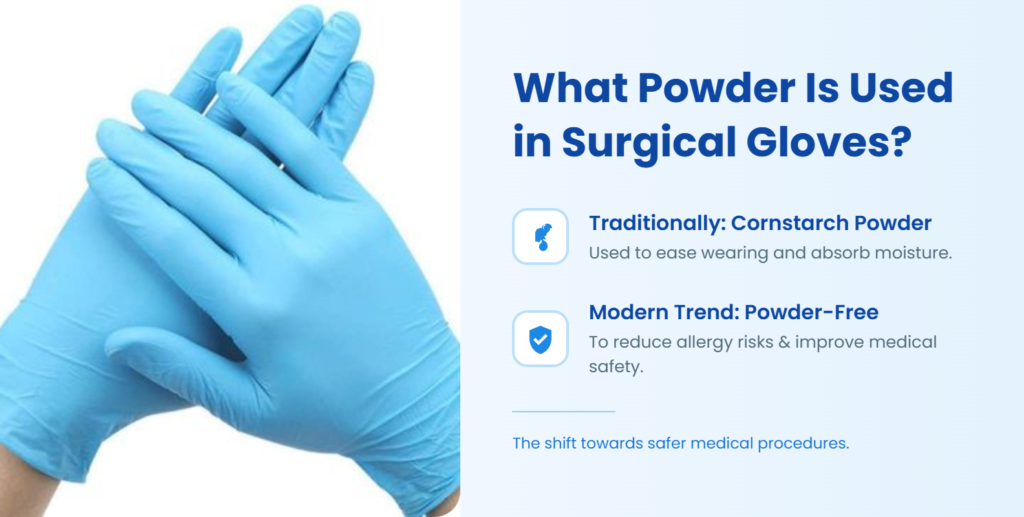
- Surgical gloves powder often contains USP cornstarch.
- This powder helps people put on gloves easily.
- Hospitals now mostly ban these powders.
- Powdered gloves cause breathing issues and internal scarring.
- New gloves use polymers or chlorination instead.
The Specific Powder Used in Surgical Gloves
What powder is used in surgical gloves? Most older gloves used modified USP cornstarch. This substance acts as a lubricant inside the glove. It makes sliding hands into tight gloves much faster. This powder is essentially food-grade starch. Makers treat it so it stays dry and slick during use.
- Product name: USP cornstarch.
- Chemical treatment: Manufacturers use epichlorohydrin to make the starch heat resistant.
- Safety trait: The body absorbs this starch if it enters a wound.
- Research: ScienceDirect notes that these particles can lead to physical complications during surgery.
How Cornstarch Became the Standard Glove Lubricant
Doctors used lycopodium spores in the late 1800s to help put on gloves. These spores caused bad skin reactions for many patients. Talcum powder replaced these spores in the 1940s. Doctors soon noticed that this powder caused post-operative scarring inside the body. A safer option arrived in 1947 when cornstarch became the new choice. It was much less toxic than mineral powders. According to research found at PubMed, the medical field moved away from talc because of its inflammatory effects. By the 1970s, the entire industry used cornstarch to protect patient tissues during surgery.
- Late 1800s: Lycopodium spores were the first lubricants but they hurt the skin.
- 1940s: Talcum powder gained popularity until it caused scarring issues.
- 1947: Cornstarch became the standard safer alternative to minerals.
- 1970s: The industry completed the shift to cornstarch to keep patients safe.
Primary Benefits of Using Powdered Surgical Gloves
What powder is used in surgical gloves? Most older or specific types use cornstarch to reduce friction. This powder acts as a dry lubricant. It helps medical staff slide their hands into tight latex gloves much faster. It also keeps the latex layers apart while they sit in storage. This makes the gloves easier to grab when a doctor needs them quickly.
The starch also serves a practical purpose during long medical procedures. It absorbs sweat from the skin. This keeps the surgeon’s grip stable and dry throughout the operation. Manufacturers also prefer this method because it costs less than newer, high-tech coatings. This production efficiency keeps the price of basic surgical supplies low for hospitals.
Health Risks Linked to Surgical Glove Powder
Cornstarch is the common surgical gloves powder name used to help doctors put them on quickly. These tiny particles often bind with proteins from the latex material. When a person snaps the gloves onto their hands, the dust becomes airborne. This aerosolized starch creates a cloud in the room. A surgeon might snap on a glove, and that invisible dust can trigger a serious latex allergy for a nearby nurse. Inhaling these particles can lead to bad asthma attacks or other breathing problems for staff. Inside a patient, the powder causes issues too. If it gets into a cut, it creates small bumps called granulomas. These areas of inflammation are dangerous. The body may also form scar tissue, known as peritoneal adhesions, after surgery. This increases the risk of wound infections. It is a convoluted situation that requires caution.
Warning: Always use powder-free gloves to prevent allergic reactions and internal inflammation in patients.
Details of the Fda Ban on Powdered Gloves
What powder is used in surgical gloves is a question that led to a major change in safety rules. The FDA decided that the risks were too high.
- The FDA banned most powdered medical gloves on January 18, 2017.
- This rule applies to both surgeon gloves and patient exam gloves in the United States.
- Officials concluded that the danger to patients outweighs the ease of putting the gloves on.
- Many countries, such as India, now follow these same powder-free standards to keep people safe.
How Manufacturers Make Powder-Free Surgical Gloves
Manufacturers produce surgical gloves powder name options by using clever chemistry to remove the need for cornstarch. One common way is chlorination. This process treats the glove with chlorine gas. It makes the surface of the nitrile rubber slippery. This allows users to slide their hands inside without any powder. Another method uses a polymer coating. A layer of silicone or polyurethane covers the interior of the glove. This creates a smooth barrier. Both methods make the glove easy to put on while keeping the environment clean. These steps lower the risk of cross-contamination in Nuvomed Surg sterile environments. This is a real paradigm shift in medical safety.
| Method | How it works | Result |
| Chlorination | Uses chlorine gas | Makes the surface slippery |
| Polymer coating | Adds a thin film | Creates a smooth interior |
Comparing Powdered and Powder-Free Medical Gloves
What powder is used in surgical gloves is a common question, as old designs often relied on cornstarch to prevent sticking. Powdered gloves allow for faster donning. However, they carry high respiratory and wound risks. Particles can float in the air or get trapped in surgical sites. Because of this, powder-free gloves are the modern standard for safety. Most hospitals now require them in the operating room.
High-quality powder-free options provide better tactile sensitivity. This matters during delicate tasks like handling surgical sutures. It is also vital to use clean gloves when preparing a site for a skin stapler to avoid infection. Check Nuvomed Surg for advanced surgical supplies that keep patients safe.
Pros and cons of glove types:
- Powdered gloves: Easy to put on quickly but create messy dust.
- Powdered gloves: Risk of inflammation inside a patient’s body.
- Powder-free gloves: Keep surgical sites clean and free of debris.
- Powder-free gloves: Offer a better grip for precise work during surgery.
Conclusion
So, while cornstarch was once the standard for medical gloves, safety concerns have moved the industry toward powder-free technology. Choosing the right protective gear ensures both staff and patients stay safe during 2026 medical procedures. It is a distinct shift for clinics everywhere.
Frequently Asked Questions
What Is the Name of the Powder Used in Surgical Gloves?
The substance is usually modified USP cornstarch.
Is the White Powder on My Hands Dangerous?
It can cause skin irritation or carry latex allergens, so it is best to wash it off.
Why Did the Fda Ban Powdered Gloves?
They found the powder causes respiratory issues and surgical complications.
Are Powder-Free Gloves Harder to Put On?
No, modern polymer coatings make them just as easy to wear as powdered ones.
Can I Still Buy Powdered Surgical Gloves in 2026?
They are mostly phased out in clinical settings but may exist in some industrial markets.


