
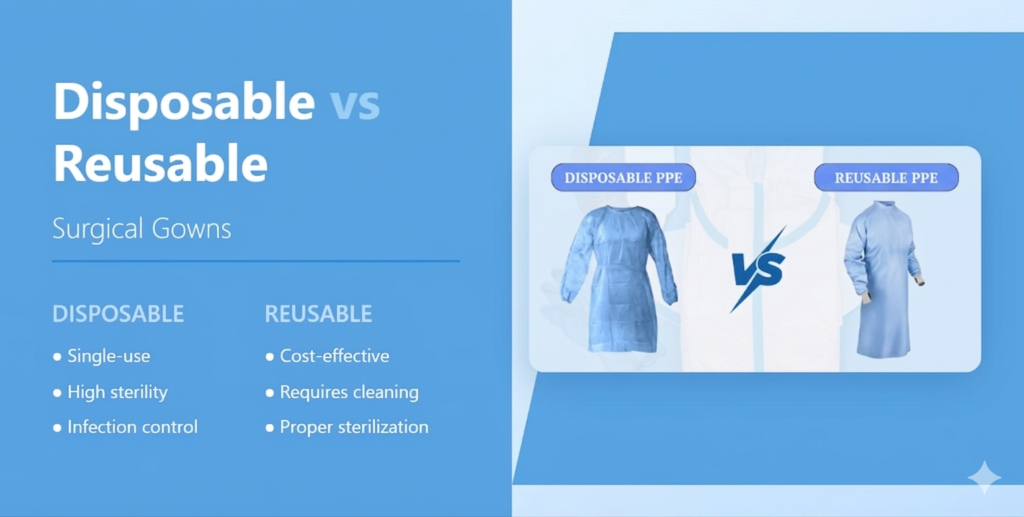
Disposable vs. reusable surgical gowns affect how hospitals manage waste and money. Both types offer important safety for doctors and nurses. They must pass strict tests for fluid resistance in healthcare PPE. Hospitals choose the right type based on how many surgeries they perform and their total waste goals.
- Disposable gowns create more trash but require less effort to prepare.
- Reusable gowns save money over time but need extra cleaning steps.
- Each type meets the required safety standards for surgery.
Basic differences between disposable and reusable surgical gowns
The choice between disposable vs. reusable surgical gowns changes how a medical team works in the operating room. Nuvo Med Surg provides options for different facility needs. Disposable gowns use non-woven polypropylene for single-use protection. You throw these away immediately after one procedure. In contrast, reusable gowns use woven polyester or cotton-blend fabrics. These gowns survive many washes. Sterilization for reusables happens through medical-grade laundering and autoclaving. This keeps the items sanitary for the next patient.
| Feature | Disposable Gowns | Reusable Gowns |
| Material | Polypropylene | Polyester or cotton-blend |
| Usage | Single-use | Multiple uses |
| Cleaning | None, goes to trash | Medical-grade laundering |
| Sterilization | Pre-sterilized | Autoclaving |
Environmental impact of medical textiles
A life cycle assessment (LCA) is a way to measure the total environmental impact of a product from its creation to its disposal. This method helps people understand the carbon footprint and total waste volume of disposable vs reusable surgical gowns. Medical textiles often show big differences in environmental health depending on their material type.
Reusable gowns reduce solid waste by up to 80% when compared to disposable options. Also, making disposable gowns takes 200% more energy than washing reusable ones. Facilities that use high-quality reusable textiles lower their carbon emissions by 64%. Disposable items often fill up landfills with plastic waste, which creates a massive burden on the environment. This discrepancy is a gargantuan issue for modern hospitals.
Barrier protection and safety standards
Safety standards for disposable vs reusable surgical gowns rely on the ANSI/AAMI PB70 guidelines. These rules ensure that all items provide reliable fluid resistance regardless of their fabric. A surgeon performing a complex orthopedic surgery will pick a Level 4 gown to prevent blood strike-through, as safety is the most important factor in the operating room. Surgical equipment must meet these strict criteria to protect staff and patients.
All gown types must pass the same tests to earn their specific ratings. Here is how those levels break down for common procedures:
Level 1 and 2 provide minimal to low fluid resistance for simple tasks. Level 3 is the standard for most moderate-risk surgical procedures. Level 4 offers the highest protection against blood-borne pathogens and liquids.
Total cost of ownership and laundry fees
When buying a surgical gown disposable reusable online, a facility must consider the long-term procurement cost and the ongoing laundry fees. It is a mistake to only look at the price tag on the box. While reusable gowns require more money upfront, they cost much less per use when they survive up to 75 wash cycles. Disposable gowns look cheap at first, but they force staff to spend time and money on constant restocking and warehouse storage space.
- Reusable gowns save money over time because they last for many uses.
- Disposable gowns have a low initial price but need frequent reordering.
- Laundering costs for reusable options include water, electricity, and specialized cleaning agents.
- Waste disposal fees for disposable gowns add 10 to 15 percent to the total price tag.
- The IAHTM Playbook provides a clear breakdown of these financial variables.
Comfort and breathability for medical staff
Breathability matters for surgeon performance during long operations. A common misconception suggests that all modern disposable gowns offer better comfort because they are lighter. In reality, some disposable fabrics trap body heat. This leads to unwanted sweat and heat stress for the wearer. A gown that feels like a plastic sheet makes a long shift very difficult.
Reusable gowns often use thicker fabrics that allow better air circulation. These materials provide superior ergonomics by moving with the body. Many staff members prefer the feel of reusable gowns because they resemble traditional clothing. This comfort helps doctors stay focused on their work rather than their gear.
Waste management and supply chain stability
Supply chain problems often change how hospitals buy disposable or reusable gowns. Many facilities worry about stockouts when they rely on single-use items. Global shortages frequently make it hard to get enough disposable gowns during a health crisis. Reusable gowns provide a stable internal inventory. This stock does not rely on daily shipments from outside companies. Hospitals that use reusables also generate much less medical waste. This reduces the burden on local disposal systems. Disposables take up massive storage space in a warehouse. Reusables use a smaller footprint through a rotating stock system. If your facility needs reliable tools like a skin stapler, keeping a steady supply of gowns helps keep the operating room ready.
Choosing the right gown for your facility
Selecting a surgical gown disposable reusable online requires looking at your facility’s specific needs and limits. Use this list to help your hospital management team with the selection criteria:
- Small clinics without laundry access should stick to disposable options. Do not use reusable gowns if the facility lacks an industrial cleaning system.
- Large hospitals with high surgical volumes benefit most from reusable systems. The cost savings add up over time with a high turnover rate.
- Check the AAMI level rating before purchasing any gown for surgery. This number confirms the barrier protection level.
- Ask the vendor for clear data on the number of safe washes for any reusable gown. This ensures the gear stays safe for staff.
- Evaluate if you have enough space to store bulk boxes before choosing disposables.
Conclusion
Disposable and reusable surgical gowns both offer needed protection in the operating room. Hospitals must weigh price, staff comfort, and green goals when they pick a gown. The best choice keeps the patient and the medical team safe. Proper selection remains an idiosyncratic process for every facility.
Frequently Asked Questions
Are reusable surgical gowns safe?
Yes, they meet the same safety standards as disposables when cleaned the right way.
Which gown is better for the environment?
Reusable gowns create less waste and use less energy over time.
How many times can you wash a reusable gown?
Most high-quality reusable gowns last for 75 to 100 washing cycles.
Are disposable gowns cheaper?
They have a lower price per unit but cost more over time because of waste fees.
Can I buy surgical gowns online in India?
Yes, many medical suppliers sell both disposable and reusable options for online purchase.


