
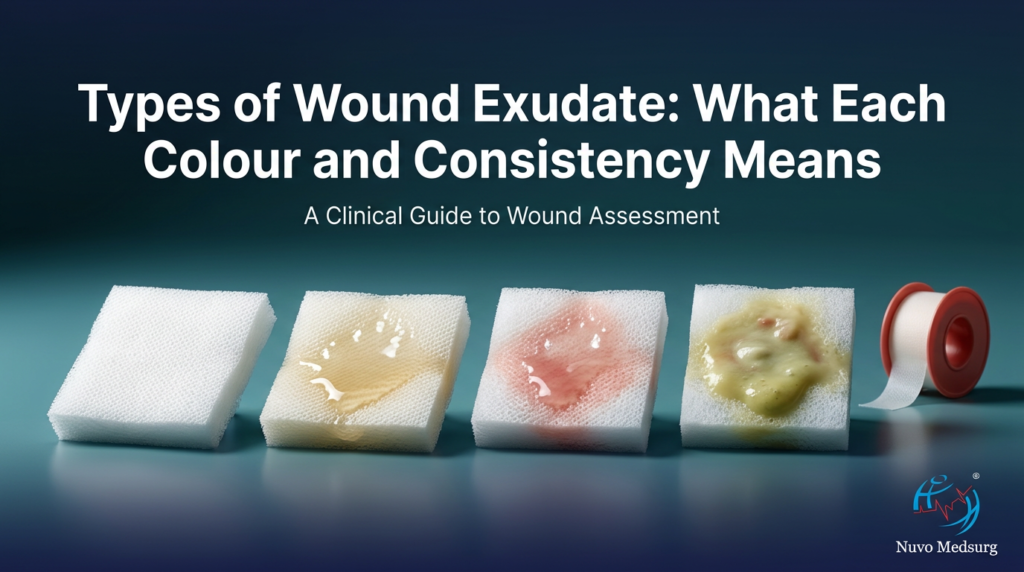
Wound exudate is the fluid a wound produces as part of normal healing, and its colour, thickness, and odour tell a clinician a great deal about what is happening beneath a dressing. Assessing exudate is a routine part of wound review in Indian hospitals and clinics, alongside checking the wound bed and surrounding skin. This guide explains the five recognised types of exudate, what each one usually indicates, and how the type of fluid should guide the choice of dressing.
Quick Answer
Wound exudate is classified into five types: serous, serosanguineous, sanguineous, seropurulent, and purulent, distinguished mainly by colour and consistency. Clear or lightly tinged fluid usually reflects normal healing, while thick, cloudy, or foul-smelling exudate is a sign that a wound needs closer clinical review.
Why Assessing Wound Exudate Matters
Exudate assessment gives a clinician information without needing to disturb the wound bed itself. The amount, colour, consistency, and smell of fluid on a dressing change can point to whether a wound is healing on schedule, whether infection is developing, or whether the wrong type of dressing is being used. A sudden increase in exudate volume, a change in colour, or a new odour between dressing changes is often the first sign of a problem, sometimes appearing before other symptoms such as fever or spreading redness. Recording exudate characteristics at every dressing change, rather than relying on memory, gives the care team a consistent record to compare against as the wound progresses. This is especially useful when more than one clinician is involved in a patient's care, since a written description of colour and consistency travels better between shifts than a verbal handover.
The Five Types of Wound Exudate
Exudate is generally described using five categories, grouped mainly by colour and thickness. The categories are not fully separate in practice, since a wound often moves from one type to another as it heals or as a complication develops, but each has a recognisable appearance that a clinician can learn to identify quickly.
Serous Exudate
Serous exudate is clear or light yellow and thin, similar in consistency to water. It is considered a normal part of the inflammatory and early healing stages of a wound and is expected in small to moderate amounts, especially in the first few days after an injury or a surgical incision.
Serosanguineous Exudate
Serosanguineous exudate is thin and pale pink or blood-tinged, a mix of serous fluid and a small amount of blood. This is also common in the early stages of healing, particularly with fresh surgical wounds, and is not usually a cause for concern on its own.
Sanguineous Exudate
Sanguineous exudate is thin and predominantly red, indicating active bleeding from small blood vessels in the wound bed. Some sanguineous drainage is expected right after an injury or procedure, but ongoing or heavy sanguineous exudate later in healing can point to trauma to the wound bed or a fragile, overgranulating tissue surface.
Seropurulent Exudate
Seropurulent exudate is cloudy, thin to moderately thick, and ranges from pale yellow to tan. It often signals that a wound is moving toward, or already developing, a local infection, and it warrants closer monitoring of the surrounding skin for warmth, swelling, or increasing pain.
Purulent Exudate
Purulent exudate is thick, opaque, and ranges from yellow to green or brown, often with a distinct odour. It is a clear indicator of infection and typically appears alongside other signs such as increased pain, swelling, and warmth around the wound. A wound producing purulent exudate needs prompt clinical assessment rather than a routine dressing change alone.
Choosing Dressings by Exudate Type
Dressing choice should follow the volume and type of exudate rather than habit or convenience. Low-exudate wounds producing serous or serosanguineous fluid generally do well with a film or thin foam dressing that keeps the wound bed moist without over-absorbing. Moderate to heavy exudate, as seen with sanguineous or seropurulent drainage, usually calls for a more absorbent foam or alginate dressing that can manage fluid volume between changes without leaving the surrounding skin macerated. Purulent exudate changes the priority from absorption alone to infection management, and the dressing decision should sit alongside a clinical review rather than replace one. Reassessing the dressing choice each time exudate type changes, rather than continuing with whatever was used at the last visit, keeps the wound bed from becoming either too dry or over-saturated between changes. Nuvo Medsurg manufactures a range of absorbent dressings and gauze designed to match different exudate levels, but the underlying principle, matching absorbency to fluid volume, applies regardless of which brand a facility stocks.
Conclusion
Reading wound exudate correctly turns a routine dressing change into a useful clinical checkpoint. Serous and serosanguineous fluid generally point to normal healing, sanguineous drainage needs context, and seropurulent or purulent exudate calls for closer review. Matching dressing choice to exudate type, and recording what is seen at every change, helps a care team catch problems early rather than after they have progressed. Nuvo Medsurg supplies gauze, dressings, and wound care disposables to hospitals and clinics across India and other countries, with the full range listed at https://nuvomedsurg.com/.
Reviewed by the Nuvo Medsurg clinical content team.
Frequently Asked Questions
Is some wound exudate always a bad sign?
No. Serous and serosanguineous exudate in small to moderate amounts is a normal part of healing, especially in the first few days after an injury or surgery.
How much exudate is considered too much?
There is no single fixed volume, since it depends on wound size and dressing type, but exudate that soaks through a dressing well before the scheduled change, or that increases suddenly, should be reviewed.
Does exudate colour alone confirm infection?
No. Colour is one indicator among several. Odour, wound bed appearance, surrounding skin condition, and the patient's overall symptoms all need to be considered together.
Can exudate type change during healing?
Yes. A wound often starts with serous or serosanguineous fluid, moves through a sanguineous phase after debridement or minor trauma, and should return to a clear, low-volume discharge as it closes.
Should every dressing change include an exudate assessment?
Yes. Recording colour, consistency, volume, and odour at each change builds a record that makes it easier to spot a meaningful change early.


