
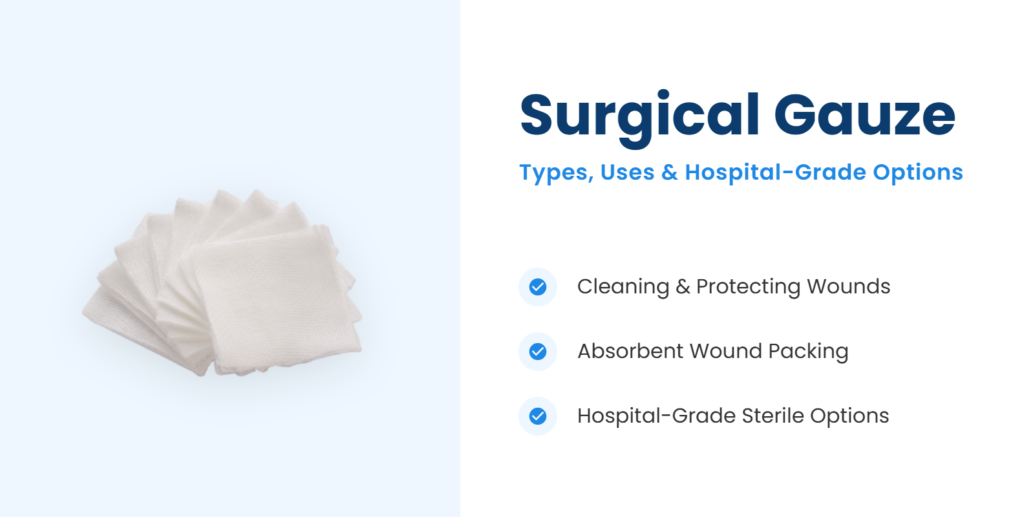
Surgical gauze helps doctors manage different types of wounds. It comes in many weaves and thicknesses. Hospitals follow strict rules to keep this material sterile and prevent infection. Staff pick the right type of gauze based on how much fluid a wound has and what level of wound care is needed.
Surgical Gauze Basics and Materials
Surgical gauze is a thin, clean cloth that doctors use to soak up blood or cover open skin during medical work. It acts as a barrier against germs. It keeps the area around a cut or incision safe and dry. This medical textile manages wound drainage effectively.
Medical teams often prefer cotton for its natural ability to hold fluid. This surgical gauze works well for general padding. Some procedures require synthetic fibers instead. Manufacturers mix polyester and rayon to create a cloth that wicks moisture away from the skin. These blends leave very little fuzzy lint behind. This characteristic is idiosyncratic for procedures involving very delicate tissue. Using the right material ensures the site stays clean and heals without extra irritation.
Woven Versus Non-Woven Gauze Features
Surgical gauze comes in two main types, woven and non-woven. Woven gauze has a loose, open weave. This design works well to clean or debride a wound. It is usually made of 100% cotton.
Non-woven gauze uses compressed fibers. It provides better absorbency than woven types. It also leaves fewer stray threads in a wound. These types often use synthetic blends for extra strength. A surgeon might use woven gauze to scrub a dirty wound. They may switch to non-woven gauze for a clean surgical incision. This choice prevents loose lint from staying in the body. Choosing the right material creates a favorable outcome during medical care.
| Feature | Woven Gauze | Non-woven Gauze |
| Material | 100% Cotton | Synthetic blend |
| Texture | Open, loose weave | Compressed fibers |
| Main Use | Debriding wounds | High absorbency |
| Lint risk | Higher | Lower |
Sterile and Non-Sterile Gauze Applications
Surgical gauze helps manage wounds based on its cleanliness level. You must use sterile surgical gauze for any procedure where the skin is open. This includes cases where an internal cavity is exposed. Using non-sterile gauze on an open site creates a major risk of infection. Sterile products come in individual peel-open pouches to keep them clean.
Non-sterile gauze works fine for basic tasks. You can use it to cushion a bump or clean skin that is not broken. It also acts as a secondary layer that does not touch a wound directly. These products are usually cheaper and come in larger rolls. Always check the packaging to confirm if the items remain pure and ready for medical use.
Specialized Impregnated Gauze Types
Surgical gauze comes in many forms to help wounds heal better. Some versions have a coating of petrolatum or paraffin. These substances keep the wound moist. This environment helps skin repair itself. Because of the coating, these dressings are non-adherent. This means they do not stick to the raw wound bed when someone pulls the bandage off. This is a massive relief for patients with sensitive injuries. Doctors often use these for burns or skin grafts. It protects the new, fragile skin layer during the change. Another specific type includes bismuth-petrolatum gauze. This version contains medicine that stops germs from growing. Surgeons use it to pack deep holes or cavities that need extra protection from infection.
Gauze Ply and Absorbency Levels
Surgical gauze comes in different thicknesses known as ply. The ply count describes how many layers of fabric fold together to make one pad.
- 8-ply gauze is thin and good for light cleaning.
- 12-ply gauze is a middle option for general wound care.
- 16-ply gauze is thick and holds much more fluid.
You should choose a higher ply count when a wound has heavy drainage. These thick pads also provide a soft cushion over bony areas of the body. You should also look at the thread count. A high thread count means the fabric has more strands in every inch. This makes the gauze stronger and less likely to fray or leave loose pieces in the wound. Using the right thickness keeps the area clean and dry.
Hospital-Grade Surgical Gauze Standards
Surgical gauze serves as a vital tool in medical settings. It must meet USP standards for purity, thread count, and weight. These rules keep the product safe for body contact. Companies like Nuvomed run many safety checks on their items to ensure they fit clinical needs. Users should check the box for FDA clearance before use. This label confirms the gauze is safe for a hospital-grade environment. Good gauze stays firm and does not fray easily. This feature stops loose fibers from entering a surgical site, which prevents unwanted body reactions. Proper testing makes all the difference.
Simple Guide to Choosing Gauze
Choosing the right surgical gauze depends on how a person treats a wound. First, consider if the goal is cleaning, packing, or covering.
If a doctor used surgical sutures or a skin stapler to close deep cuts, use sterile non-woven pads as the first layer. This material is soft and safe for healing skin.
If a wound is oozing a lot, pick a high-ply cotton gauze roll. This roll wraps the area tight to soak up fluid.
Stay away from standard woven gauze on dry scabs. This type sticks to the dried blood. It causes sharp pain when it gets pulled off. Pick the right item to stay comfortable.
Conclusion
Surgical gauze stays a basic item in medicine because it works well and doctors trust it. It helps keep wounds clean while people recover. You should pick the right kind to help the skin heal quickly. This also makes the process much more comfortable for the patient. Using it correctly is a prudent choice for wound care.
Frequently Asked Questions
Can I Wash and Reuse Surgical Gauze?
No. You should throw it away after one use to stop germs from growing.
Why Does Surgical Gauze Have Different Ply Counts?
More layers mean the gauze is thicker. It absorbs blood better when a wound bleeds a lot.
Is All Gauze Sterile?
No. Shops sell both sterile and non-sterile types. You pick the right one based on the specific injury.
What Is the Benefit of Non-Woven Surgical Gauze?
It feels soft. It holds more liquid and leaves fewer bits of loose fiber in the cut than woven types.
When Should I Use Impregnated Gauze?
Use this type when you need a surface that does not stick. It helps a lot with burns or sensitive skin grafts that might otherwise become an anomalous snag.


