
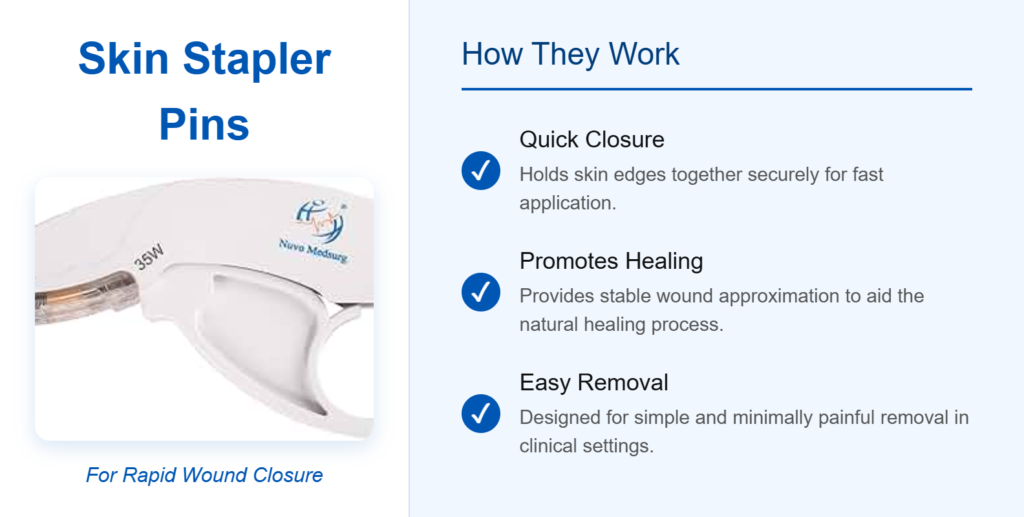
- Skin stapler pins provide a fast and secure way to close large surgical incisions.
- These metal clips hold skin edges together during the initial healing phase.
- Doctors typically remove them after one to two weeks using a specialized tool.
How Skin Stapler Pins Close Wounds
Skin stapler pins help with wound closure by mechanically pulling the edges of a cut together. The device acts like a strong office stapler. It bends a piece of metal wire into a rectangle to pinch the skin layers tight and lock them in place. The tool uses a trigger to push the pin through the skin while an internal part called an anvil shapes the metal. This physical action keeps even tension across the whole cut.
Surgical staples are specialized wire fasteners used to approximate skin edges, typically made of biocompatible metals like stainless steel, which are deformed into a box shape by a mechanical driver against an anvil.
Materials Used in Surgical Staples
Surgeons use high-grade metals to make skin stapler pins. These metals stop the body from rejecting the hardware.
Stainless steel is the most common choice. It offers great strength and keeps costs low. Doctors also use titanium for many procedures. Titanium does not react to magnets. This makes it safe for patients who need MRI scans, as noted by Wikipedia. Some internal layers use plastic or bioabsorbable polymers. The body naturally dissolves these materials over time.
| Material | Primary Benefit |
| Stainless steel | High strength and low cost |
| Titanium | MRI compatibility |
| Bioabsorbable polymers | Dissolves inside the body |
Parts of a Disposable Skin Stapler
A disposable skin stapler contains a delivery tool with several moving parts. These parts work together to close wounds. You can find more information about these tools at Nuvo Med Surg.
- The handle provides a firm grip. The surgeon uses this to control the device accurately.
- The trigger activates the internal spring. This action pushes the staple forward into the skin.
- The anvil bends the straight wire. It shapes the metal into its final form to secure the tissue.
- The staple magazine holds up to 35 pins. This design allows for continuous use during a long surgery.
A surgeon aligns the arrow on the stapler head with the center of the wound. Then, the surgeon squeezes the trigger to ensure perfect placement of the pin. This process seems straightforward but requires steady hands.
Why Surgeons Use Staples Instead of Stitches
Surgeons often pick skin stapler pins because they increase speed during a procedure compared to manual sewing with surgical sutures. A doctor can close a long incision in just a few seconds using surgical sutures, which significantly reduces the total time a patient spends under anesthesia. This quick process also lowers the infection risk because the metal material does not harbor bacteria like braided silk threads often do. Furthermore, staples cause less physical trauma to the skin since the tool does not pull a needle through the tissue multiple times.
- Staples work best for high-tension areas like the scalp or knees.
- The application process takes only moments.
- Metal pins are inert and keep the wound clean.
Proper Steps for Skin Staple Removal
A nurse or doctor must handle the extraction process once the wound shows signs of stable healing. This routine ensures the skin stays healthy after the hardware leaves.
- The nurse cleans the entire site with an antiseptic solution to stop germs from entering the open pinholes.
- The professional slides a specialized staple remover tool under the middle section of the pin.
- The tool squeezes the center of the staple, which forces the ends to straighten and pop out of the skin.
- Most patients feel a light tugging sensation during this part, but it rarely causes actual pain.
Healing Time and Aftercare for Staples
The normal healing window for skin stapler pins lasts from 7 to 14 days, though the exact time depends on where the wound sits on your body. Proper aftercare and good wound hygiene help the skin close up correctly. Keep the area completely dry for the first 24 to 48 hours so the skin can seal. Do not pick at the metal pins. Also, skip applying heavy creams or lotions unless a doctor tells you it is okay. Doctors rarely use staples on the face because they often leave small, permanent marks that look like railroad tracks on the skin.
One common mistake involves cleaning the wound too hard. Many people think they should scrub the staples to keep them clean. This is a mistake. Instead, you should use gentle patting with mild soap and water to wash the area.
Risks and Safety Warnings for Skin Staples
Skin stapler pins are usually safe for closing wounds, but they carry a few risks. You should watch the site carefully for any signs of trouble.
- Infection is possible if you do not keep the site clean. You should look for pus or increasing redness around the staples.
- Allergic reactions to nickel or other metals in the pins can happen in rare cases.
- Internal stapler malfunctions are more dangerous than external skin stapler issues. The FDA warns about this in a 2021 safety communication.
The FDA safety communication also explains the importance of choosing the correct staple size. If the pins do not match the tissue thickness, the risk of a malfunction increases. Always follow the specific advice from your healthcare provider regarding your wound.
Conclusion
Skin stapler pins provide a solid way for doctors to close wounds during surgery. These tools help a patient recover quickly. They also keep the risk of infection very low.
Frequently Asked Questions
How Do Skin Stapler Pins Work?
They use a metal tool to bend a wire into a box shape. This shape holds the edges of the skin together tightly.
Do Staples Hurt More Than Stitches?
The doctor applies them very fast. Most people feel less pain than with stitches. Removal usually feels like a quick pinch.
Can I Shower with Surgical Staples?
You can take a shower after 48 hours. You should stay away from bathtubs or swimming pools until the doctor says it is safe.
Will Skin Staples Leave a Scar?
The pins leave tiny dots on your skin. Because of this, doctors do not use them on the face or other visible areas.
How Are Staples Removed?
A nurse or doctor uses a special tool. The device unbends the metal wire so it slides out of the skin with ease.


