
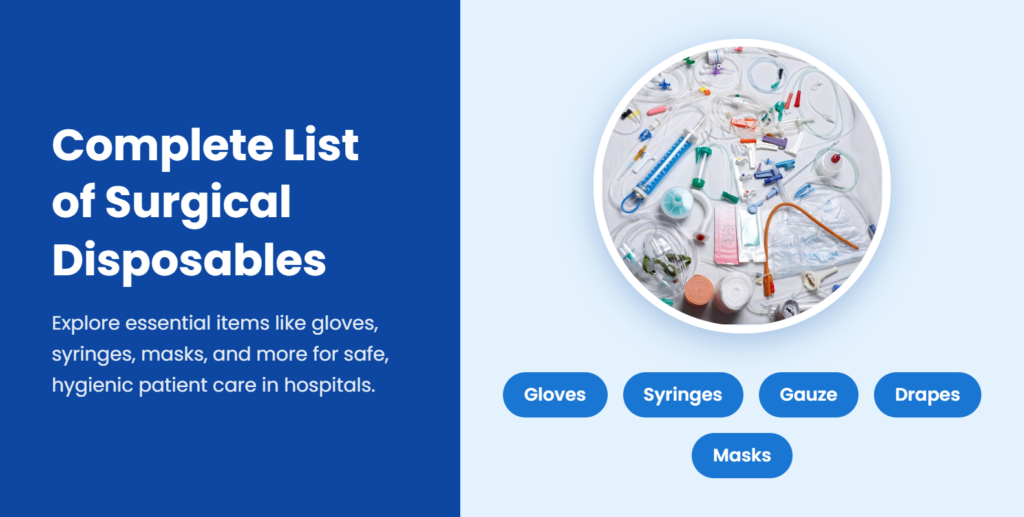
Hospitals use many tools to keep patients safe. You can find a surgical disposable items list at the core of these safety steps. These items stop germs from moving between people. They also help improve hospital efficiency.
- Syringes
- Needles
- Gloves
- Masks
- Gowns
- Drapes
- Sutures
- Scalpel blades
Hospitals use these tools every single day to finish procedures in a clean environment.
Primary surgical disposable items list for hospitals
The Complete List of Surgical Disposable Items in Hospitals covers a wide range of gear. Medical teams use these products once and then throw them away. This process keeps everyone safe from hidden germs.
Definition: Surgical disposables are medical devices designed for one-time use during procedures to eliminate the risk of healthcare-associated infections.
These tools are simple to use. Doctors put on a mask or gloves, do the work, and then toss the item in the trash. This habit makes infection control much easier. It also creates a strange, almost surreal sense of order in a busy room. Sterility remains the main goal for every person in the building.
- Examination gloves
- Face masks
- Surgical caps
- Protective gowns
- Sterile drapes
- Gauze and bandages
- Disposable syringes
These items save money for hospitals. Staff members do not need to wash or sterilize these tools after a patient leaves. This shifts the focus toward quick care. The World Health Organization guidelines on infection prevention (2026) state that these steps stop the spread of sickness during surgery.
Protective apparel and gear for medical staff
Medical staff use personal protective equipment to stay safe during procedures. This gear stops the spread of germs and protects workers from fluids. Nitrile gloves provide better protection against holes than latex gloves do. Surgical gowns often use spunbond polypropylene because it blocks fluids effectively. Staff also wear shoe covers and bouffant caps. These items keep hair and dirt out of clean areas.
|
Item |
Material |
Best Use Case |
| Gowns | Polypropylene | Operating Room |
| Gloves | Nitrile | Patient Exams |
| Shoe covers | Plastic | Clean Rooms |
| Caps | Non-woven fabric | Surgery |
Syringes and needles for clinical procedures
Hospitals keep a list of surgical items that includes specific sizes for needles and syringes. These tools must fit the needs of every patient. Standard syringes come in capacities of 2 ml, 5 ml, 10 ml, and 50 ml according to JKMSCL standards.
- Luer lock tips keep the needle attached tightly. This stops leaks during high-pressure injections.
- Hypodermic needles come in different widths. An 18G needle works well for thick fluids. A 26G needle works best for delicate tasks.
- Insulin syringes usually have a fixed needle attached. This design reduces the amount of medicine left inside the syringe after use.
- Most of these needles consist of stainless steel for strength and safety.
Fluid management and infusion therapy supplies
Doctors must keep patients hydrated during surgery. They use specific tools to give fluids or medicine directly into the blood. These items help keep the patient stable.
- IV cannula units with wings and small ports help nurses give medicine without stopping the flow.
- Blood transfusion sets have 200-micron filters inside. These filters act as a barrier to stop small clots from entering the body.
- Pediatric drip sets use a micro-drip system. This delivers 60 drops for every milliliter of fluid. It gives doctors a precise way to control small doses for children.
- A scalp vein set is a small tool often called a butterfly. It works well for short infusions in small or tricky veins. It is a serpentine way to manage access without a large tube.
Dressing materials and wound care essentials
A surgical disposable items list requires many materials to handle bleeding and help wounds heal. The right gear protects the site from germs and keeps the patient comfortable.
Staff use these basic supplies for daily care:
- Sterile gauze swabs measuring 7.5cm x 7.5cm are the standard for cleaning wounds.
- Abdominal pads have a thick design to soak up fluid from large incisions.
- Micropore and silk tapes hold dressings in place. They do not irritate the skin even if the patient has a sensitive dermis.
- Crepe bandages provide gentle pressure for sprains or support after an operation.
Specialized surgical sutures and skin staplers
Closure tools represent the most technical portion of any surgical disposable items list. Doctors choose between surgical sutures and a skin stapler based on where the wound is and how fast they need to close it.
- Absorbable sutures like polyglactin dissolve naturally in the body over time.
- Non-absorbable silk or nylon sutures require manual removal once the skin heals.
- Skin staplers offer a faster way to close long incisions during trauma surgery.
- Surgeons often use staples for scalp wounds but prefer fine sutures for facial repairs to reduce scarring.
- Never use absorbable sutures on the outer skin layer because they can cause irritation before they dissolve.
Medical teams select the right surgical sutures or skin stapler to ensure the patient heals well. This specific decision is quite idiosyncratic when comparing high-tension areas to delicate zones.
Urinary and drainage systems for patient care
Post-operative care relies on the surgical disposable items list to manage fluid drainage. Proper tools keep the patient comfortable and stop infections.
- Foley catheters use a balloon to stay anchored inside the bladder. These come in 2-way or 3-way designs.
- Urine collection bags contain a non-return valve. This part stops fluid from moving backward and prevents infection.
- Nelaton catheters serve as a choice for short-term or intermittent bladder drainage.
- Always check for latex allergies before inserting a catheter. Use a silicone alternative if the patient has a sensitivity to latex.
Conclusion
Hospitals keep a full list of surgical disposable items to stay ready for any procedure. These tools form the backbone of modern medicine and patient safety in 2026. Consistent inventory management makes the hospital a truly labyrinthine operation, but it keeps patients safe every single day.
Frequently Asked Questions
What is the most used item on a surgical disposable items list?
Examination gloves and syringes are the highest-volume items used daily.
Are all surgical disposables sterile?
No, items like shoe covers are clean but not sterile, while sutures and needles are always sterile.
How should hospitals dispose of these items?
Use color-coded biohazard bins to segregate sharps, plastics, and infected waste.
Can any disposable item be reused?
No, single-use items are designed to lose structural integrity or sterility after one use.
Why use nitrile instead of latex?
Nitrile is allergy-free and offers better protection against chemicals and punctures.


