
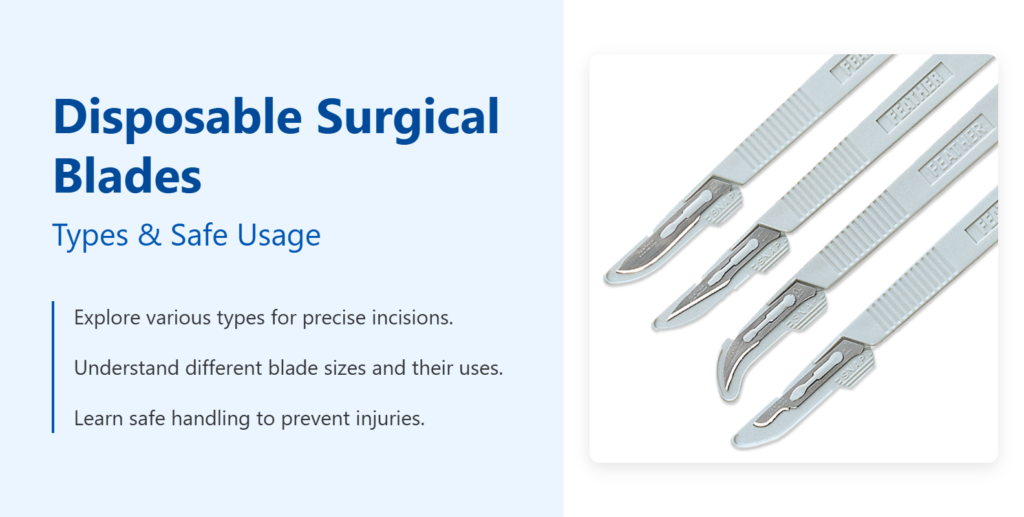
A disposable surgical blade is the standard tool for making clean cuts during medical procedures in 2026. It is a one-time-use knife that doctors use to cut skin or tissue safely without spreading germs. You can find more information about these medical tools at Nuvo Med Surg.
Quick Overview
- A disposable surgical blade provides a sterile, sharp edge for every procedure to prevent infection.
- The numbering system matches specific blade shapes to surgery types and handle sizes.
- Safe usage involves correct attachment, handling, and disposal in sharps containers.
This simple system keeps surgical precision high and keeps patients safe from harm. Using a fresh blade each time creates an element of predictability during every operation.
Common Materials for Disposable Surgical Blades
Carbon steel and stainless steel are the primary materials for disposable surgical blades that doctors use during medical procedures. Manufacturers follow ISO 7740 standards to keep these tools safe and effective. Carbon steel provides a very sharp edge that lasts through tough tissue. It can rust if it gets wet, so it needs careful handling. Stainless steel offers great corrosion resistance. This makes it a dependable choice for many clinical rooms where moisture exists.
| Material | Sharpness | Rust Resistance | Durability |
| Carbon Steel | High | Low | Brittle |
| Stainless Steel | Moderate | High | Durable |
Surgical Blade Sizes and Their Specific Uses
Doctors choose specific blade sizes based on the job. These sizes follow set rules to ensure handle compatibility during an operation. Each number tells the surgeon about the blade shape.
- Blade 10 is the standard size. Surgeons use it for long cuts in skin and muscle.
- Blade 11 has a sharp point. It works well for stabbing motions or draining fluids from a wound.
- Blade 12 features a curved edge. Dentists or surgeons often use it to trim tissue or help with surgical sutures.
Picking the right size helps the surgeon work fast. An incorrect choice makes the work erratic.
Small Surgical Blades for Delicate Procedures
Doctors often use disposable surgical blades in smaller sizes like the number 15 for delicate work. Blade 15 is the most common small blade in plastic surgery and dermatology. Its small, curved cutting edge allows for high precision in tight spaces. For a practical example, a surgeon uses a #15 blade to carefully remove a small skin lesion without damaging the surrounding tissue. This makes the tool an ephemeral necessity during precise operations.
Large Surgical Blades for Heavy Tissue
Large disposable surgical blades like the 20, 21, and 22 work best for thick skin and tough tissue. These blades are much larger than the small options. They fit the bigger number 4 scalpel handle.
- Orthopedic surgeons use these for large incisions in the thigh or hip area.
- Blade 20 offers a broad cutting surface for deep cuts.
- Blade 21 provides extra strength when moving through dense muscle.
- Blade 22 is the standard choice for an autopsy or procedures involving very thick tissue layers.
Surgeons choose these blades when a robust instrument is required to manage substantial anatomical resistance.
Safety Features of Modern Disposable Scalpels
Modern surgery uses a safety scalpel to protect staff. These tools often have built-in shields. You can retract the shield when you need to cut. A protective cap or a sliding sheath covers the sharp edge before and after use. These parts stop accidental nicks from happening during busy shifts.
Hospitals use these tools to meet strict safety rules. They also lower the risk of spreading germs through blood. One detail people often miss is the color-coding on these handles. Each color tells you the blade size immediately. You do not need to hunt for small labels or read tiny print. This simple visual cue makes the environment safer for everyone. Reducing sharps injuries is the main goal of these designs.
Safe Handling and Attachment Techniques
Proper technique prevents cuts during surgery preparation. Always use a tool to handle a disposable surgical blade. Use a needle holder or a pair of forceps. Never touch the blade with your fingers.
Follow these steps for safe blade attachment:
- Grip the back of the blade with your tool.
- Line up the grooves on the blade with the handle.
- Slide the blade onto the handle until you hear a click.
Removing the blade requires the same caution. Use your tool to lift the base of the blade. Slide it forward and away from your body to detach it.
Some people wrongly think they can snap the blade on with a thumb. Do not do this. This specific habit causes most finger cuts in the operating room. Using the right tools for blade attachment keeps your hands safe.
Proper Disposal of Used Surgical Blades
Every disposable surgical blade must go into a sharps container right after the procedure ends. This keeps everyone safe from accidental cuts. A staff member must never leave a used blade on a tray or near the edge of a desk.
Follow these steps for safe handling:
- Put the blade into the bin immediately.
- Do not overfill the container.
- Stop when the waste reaches the fill line.
- Seal the lid tightly once the bin is full.
- Follow your local rules for biohazardous waste pickup.
This process prevents injuries and keeps the workspace clean. It is an idiosyncratic way to handle medical waste effectively.
Standardized Numbering System for Scalpel Handles
The numbering system for surgical blades matches them to the right handle size. This system creates a secure fit for every tool. It is important to know which parts work together.
- Scalpel Handle #3 works with blade sizes 10 through 15.
- Scalpel Handle #4 works with blade sizes 20 through 25.
A surgeon needs a steady blade to work well. The wrong handle makes a blade wobble during a procedure. This lack of stability causes poor results. Checking the numbers before the start of the work is a mandatory safety step. Each handle is calibrated to specific blade dimensions.
Quality Standards for Medical Grade Blades
Surgical blades need to follow very strict rules during manufacturing. These rules keep patients safe during operations. A factory needs an ISO 13485 certification to prove they use a proper management system for medical products. This standard is common in countries like India where many high-quality surgical tools originate.
The production process must include a thorough cleaning step. Manufacturers use these methods to keep blades germ-free:
- Gamma Radiation: This process uses high-energy waves to kill bacteria.
- Ethylene Oxide (ETO) Gas: This gas removes microorganisms from the blades.
You should always look for the CE mark on the packaging. This mark confirms that the blade meets all safety and performance rules for medical use. It is a sign that the product passed the required tests for quality.
Choosing the Right Blade for Surgical Procedures
A doctor picks a blade based on the specific incision depth and the type of tissue involved in the surgery. Using the right tool makes the job much easier and safer.
- Use a #10 or #20 blade for long and deep cuts during general surgery. These blades provide the reach needed for internal work.
- Choose a #15 blade for small or precise cuts on the skin. This blade works well when you plan to use a skin stapler to close the wound later.
When not to use standard blades:
Never use a standard disposable surgical blade to cut bone. These blades are too thin and can break under pressure. Use a specialized surgical saw for any bone work instead. This distinction is quite gargantuan for ensuring safety in the operating room.
Conclusion
Disposable surgical blades remain the most effective tool for safe and sterile medical cutting. Choosing the right size and handling it with care protects both the patient and the medical team. These items are strictly single-use to maintain a sterile environment.
Frequently Asked Questions
Can I Reuse a Disposable Surgical Blade?
No, you must discard it after one use to prevent infection and ensure sharpness.
What Is the Difference Between Carbon and Stainless Blades?
Carbon steel is sharper but rusts. Stainless steel resists rust but is slightly less sharp.
Which Handle Fits a #11 Blade?
A #11 blade fits a standard #3 scalpel handle.
How Are Surgical Blades Sterilized?
Most manufacturers use Gamma radiation or Ethylene Oxide gas to sterilize them inside the pouch. This process is quite rigorous.
What should I do if I get a needle stick from a blade?
Wash the wound immediately and follow your facility’s bloodborne pathogen exposure protocol.
