


Subtotal ₹0.00

Quick Overview
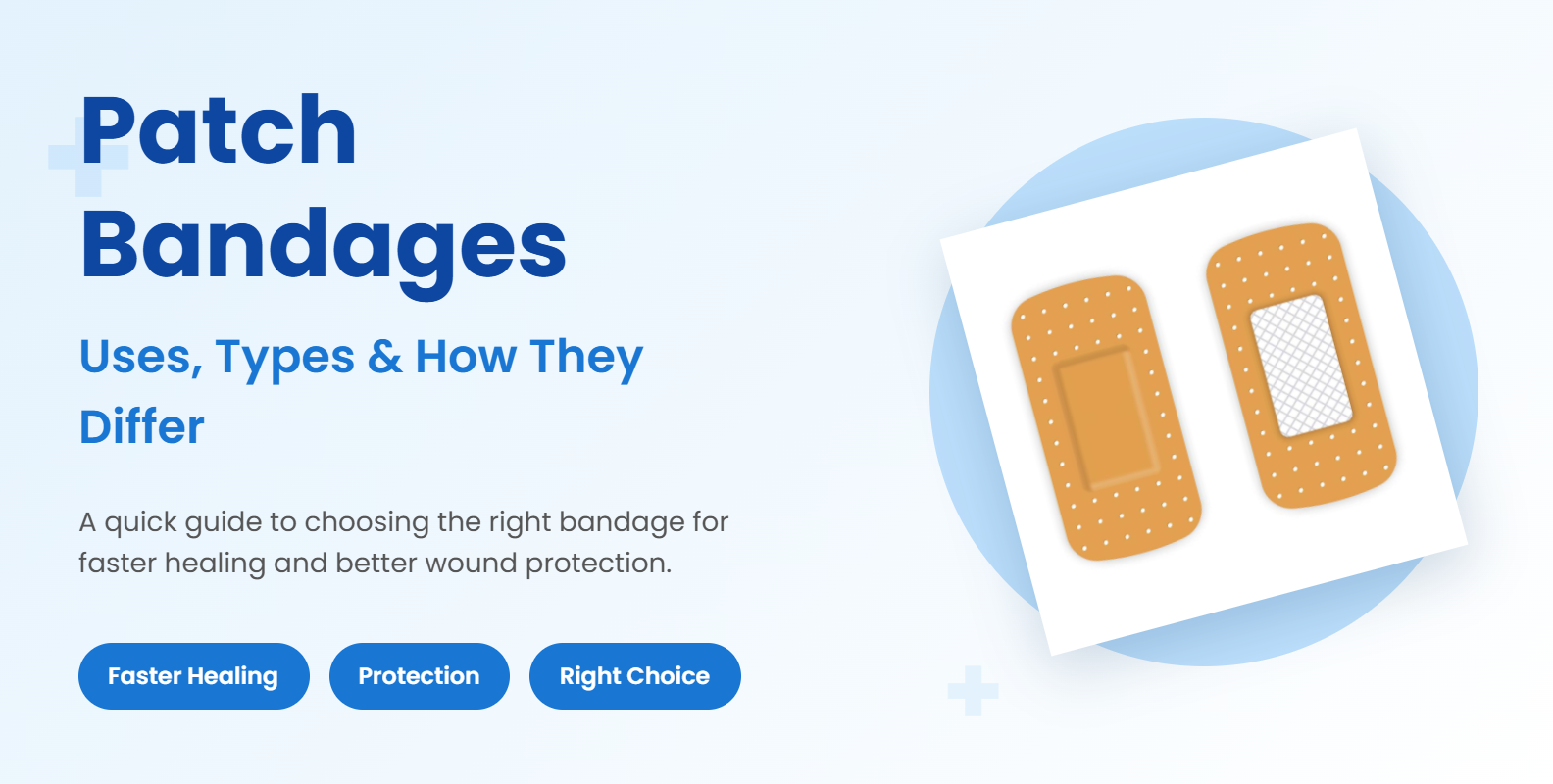
Patch bandages give essential protection for minor skin scrapes. Proper wound care starts with covering the hurt area right away. People find a wide assortment of these items at any drugstore.
They differ by material, size, and how hard they stick to the skin. Sometimes a simple plastic strip works best. Other times, a flexible cloth option does a better job.
Choosing the correct type helps the body heal much faster. It relentlessly stops nasty germs from starting an infection. It’s smart to keep a few different sizes at home. This makes treating sudden cuts very simple. A person should always see a doctor if a cut looks deep or will not stop bleeding.
Defining Patch Bandages and Their Core Functions
Patch bandages have two main parts. They feature a clean, sterile pad sitting right in the middle of a sticky backing. This sticky part creates strong adhesion so the bandage stays exactly where it belongs.
Together, these pieces form a tough bacteria barrier. This shield blocks dirt and harmful germs from getting inside the fresh cut. The smart design actually pulls the edges of the wound close together. Closed edges help the skin repair itself without trouble.
The soft pad also soaks up extra blood and clear fluid. Removing this extra moisture keeps the surrounding skin from getting too soggy and weak. Dry, safe skin heals much better. Anyone dealing with a tricky or painful injury should ask a medical professional for advice.
Diverse Types of Patch Bandages for Every Injury
Standard strips work for most everyday scratches and small cuts. They cover simple scrapes perfectly.
Hydrocolloid patch bandages create a moist environment for blisters. They build a damp space that protects raw skin while it heals.
Liquid bandages form a polymer seal over irregular skin areas. This clear liquid dries into a tough shield that blocks dirt.
Alginate versions use seaweed fibers to manage heavy discharge. People use these thick pads when an injury drains a lot of fluid.
Kirigami bandages provide high flexibility for complex body movements. Their clever cut patterns stretch right around busy joints.
It’s always smart to have a doctor check on deep wounds. A medical expert safely handles cuts that refuse to stop bleeding.
Advanced Patch Bandage Materials and Adhesives
Modern patch bandages often use bamboo fibers for eco-friendly healing. Bamboo creates a soft and natural cover for damaged skin.
Latex-free options prevent allergic reactions and skin rashes. These gentle materials stop itchy spots from forming around the hurt area.
Acrylic adhesives offer strong grip without leaving white residue. They hold the bandage firmly in place all day long.
Companies sometimes mix zinc oxide into the sticky tape. This soothing ingredient calms irritated skin right away.
Charcoal-infused pads help draw out impurities from the wound. They pull tiny bits of dirt away to keep the injury completely clean.
Picking the right supplies speeds up recovery times. A healthcare provider gives the best advice for treating bothersome skin problems safely.
Comparison Between Adhesive Patches and Traditional Bandages
People often compare different wound covers. Patch bandages stick to the skin entirely on their own. They hold the soft pad directly over the cut. This simple setup needs no extra tape.
Sometimes a person twists an ankle. Roller bandages provide better compression for sprains. They wrap securely around the swollen limb. This sturdy squeeze helps lower the swelling quickly.
The right choice always depends on the actual injury. Patches suit minor injuries like small everyday scrapes. Rollers manage larger trauma effectively.
Medical staff often put plain gauze on a wound. They add tape for dressing retention. This medical tape keeps the soft pad from slipping. Adhesive patches skip this annoying step.
Adhesive patches are faster to apply in sudden emergency situations. A person just peels the paper back. They press the cover firmly onto the skin. It’s a very quick fix.
Selecting the Right Patch Bandage Size and Shape
A tiny scratch needs a completely different cover than a huge scraped knee. Finding the perfect fit helps the damaged skin heal safely.
Spot bandage circles look tiny and neat. Spot patch bandages are perfect for covering medical injections or little acne spots. They hide the tiny mark without looking bulky.
Fingers bend constantly throughout the day. Normal strips easily fall right off these busy joints. Knuckle shapes completely fix this tricky problem. They allow full joint movement without peeling off the skin.
A bad fall leaves a messy scrape on the leg. Extra-large patches cover big scrapes on knees and elbows smoothly. They keep dangerous dirt out of the wide wound.
Fingertip designs wrap securely around the very end of a digit. They fold neatly right over the nail. This smart shape stays put during daily chores.
Specialized Patch Bandages for Joints and Extremities
People often struggle to keep bandages on moving body parts. Knees and elbows bend a lot. Flexible fabric patch bandages solve this annoying problem. The soft material stretches easily when a person moves a joint. This keeps the protective pad right over the scrape. It stops stray dirt from getting inside the wound.
Sometimes, a wrist or an ankle feels weak after a slight twist. Sleeve braces offer great help for this situation. These unique covers wrap snugly around the whole area. They create firm joint stability for the patient. A person can easily walk or type while the joint rests safely.
Deep cuts need careful attention. Butterfly closures act just like medical stitches. They smoothly pull the loose edges of a cut together. This tight hold keeps the wound closed so the skin can mend. It’s always smart to let a doctor check a deep cut first. Medical professionals make sure the area heals properly without infection.
When to Choose Waterproof vs Fabric Patch Bandages
The right bandage material changes how quickly a scratch gets better. Plastic patch bandages keep wet messes away from the healing skin. A person can take a warm shower without ruining the sticky glue. Waterproof covers block out water completely. Restaurant workers and cooks also need these waterproof types. The tight seal protects their hands during heavy food prep and wet chores.
Dry environments call for a different style. Breathable fabric works perfectly here. This soft material lets fresh air reach the skin easily. Good airflow helps the open scratch dry out fast. Also, these fabric options feel much gentler on the human body.
Some folks need to keep a wound covered for several days. Breathable materials provide great comfort for this long-term wear. They stop sensitive skin from getting red or angry. So, picking the correct cover simply depends on the daily task and the moisture nearby.
Conclusion
Picking the right patch bandages makes a big difference in recovery. A snug cover speeds up the overall healing process. People should always keep different sizes inside a home first aid kit. Tiny cuts are quite unpredictable. Having the correct supplies ready keeps small scrapes from becoming big issues. So, it helps to check the supply box often. Individuals must toss out old items. Buying fresh boxes brings real peace of mind.
Frequently Asked Questions
Can a person use patch bandages on a deep cut?
People must only use them for minor cuts. Deep wounds require immediate medical care. A doctor needs to examine severe injuries. A deep cut usually needs real medical stitches to close securely. Patients should always visit a local clinic for large open wounds.
Are there patch bandages for dark skin tones?
Yes, many modern brands offer a wide range of shades. Companies now make products to match all skin colors and skin tones. This helps the sticky adhesive blend naturally on the arm or leg. Everyone can find a perfect match easily today.
How often should someone change the bandage?
A person needs to change it every single day. Someone must also swap it out whenever the material gets wet or dirty. Filthy covers trap bad germs near the open skin. Fresh covers prevent nasty infections. A person shouldn’t leave a wet patch on a cut. Individuals should wash the skin with mild soap before applying a brand-new one.
