
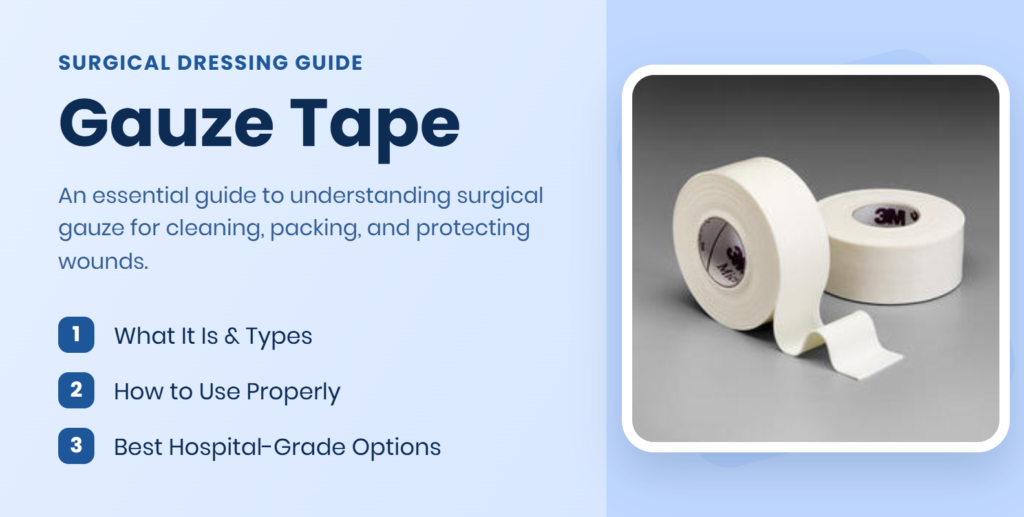
- Gauze tape is a medical adhesive used to keep dressings in place and protect wounds.
- Choosing the right tape depends on your specific skin type and where the wound is on your body.
- Proper application keeps the tape secure and prevents injury to your skin during wound care.
Understanding the Basics of Gauze Tape
Gauze tape is a pressure-sensitive adhesive strip designed to hold medical dressings like gauze pads in place while allowing the skin to breathe. Simply put, it is the sticky tape in your first aid kit that keeps bandages from falling off.
Quality matters when you select products for your health. Supplies from Nuvo MedSurg provide high biocompatibility and a strong grip. This tape is an essential tool for managing minor cuts, surgical incisions, and chronic wounds. Always talk to a doctor if a wound looks deep or does not heal properly.
Main Types of Medical Tape for Dressings
People use different gauze tape types to keep bandages in place. Each kind has specific uses based on how much hold is needed and how sensitive the skin is.
| Tape Type | Best Use | Key Benefit |
| Paper tape | Sensitive skin | Gentle and hypoallergenic |
| Cloth tape | Heavy dressings | Strongest hold |
| Silicone tape | Fragile skin | Can be repositioned |
| Clear plastic | Checking wounds | Transparent adhesive |
| Zinc oxide | Sports support | Provides rigid support |
How to Select Gauze Tape for Specific Wounds
Choosing the right gauze tape depends on how much fluid the wound leaks and where the injury is located on the body. A person must consider the sensitivity of the skin and whether the area needs to stay dry. High-quality adhesive choices prevent skin irritation and help the healing process by managing wound exudate properly. Professionals recommend looking at these factors before applying any dressing.
- Think about how much liquid the wound drains.
- Pick breathable paper tape for dressings that stay on for a long time.
- Use waterproof tape if the person needs to shower.
- Check for skin allergies before using strong adhesives.
Proper Steps to Secure a Gauze Dressing
Gauze tape application starts with proper skin prep to ensure the bandage stays in place. Follow these steps to cover an injury using sterile gauze:
- Clean and dry the skin around the wound thoroughly.
- Place the sterile gauze pad over the injury. Avoid touching the center of the pad to keep it clean.
- Cut strips of gauze tape. Make them at least two inches longer than the dressing.
- Press the tape firmly. Start from the center and move outward to remove air bubbles. This creates a good seal.
- Check the edges of the gauze tape. Ensure they lie flat against the skin so the dressing stays secure.
Effective Ways to Apply Gauze Tape on Joints
Gauze tape usage on joints requires a balance of flexibility and security to support natural joint movement. Use flexible cloth tape for knees and elbows because it stretches with your skin. Apply the tape while the joint is slightly bent. This stops the adhesive from pulling when you move. You should apply the tape in a picture frame pattern around the joint for general support. For a moving elbow, use an X pattern with the tape to keep the dressing in place. Always pick the right materials like conforming gauze for these areas. You can find more information on these techniques here. Always consult a doctor if you have concerns about a wound.
Painless Ways to Remove Adhesive Tape
Removing gauze tape often hurts because the sticky stuff pulls on your skin cells. You can make this much easier by using the low and slow method. Instead of pulling the tape straight up, fold the end back and pull it flat against the skin. This trick keeps the tension off the surface.
- Pull the tape back over itself rather than pulling it straight up toward the ceiling.
- Apply a little bit of baby oil or a dedicated adhesive remover if the tape is stuck to hair. This makes the bond slippery and less painful.
- Always pull the tape in the same direction that your hair grows.
- Use your free hand to hold the skin tight while you gently peel the tape away.
Common Errors When Using Medical Adhesives
Using gauze tape the wrong way can lead to skin irritation or even an infection. You should keep these common mistakes in mind to protect your skin. It is important to know that gauze dressings work best when you follow basic safety steps.
- Never wrap the tape so tightly that it stops your blood flow.
- Do not use tapes from around the house, like duct tape or masking tape, because these will hurt your skin.
- Always put a bandage or pad over a raw wound before you apply any tape.
- Stop using the tape right away if your skin turns red, itches, or develops blisters.
If you have concerns about your skin or a wound that does not seem to heal, talk to a doctor.
Conclusion
Gauze tape remains a basic part of effective wound healing and home care.
Frequently Asked Questions
Can I Use Gauze Tape on Sensitive Skin?
Yes, use paper or silicone tape as they are gentle on delicate skin.
How Long Should I Leave Gauze Tape On?
Change the tape and the dressing every day or whenever it gets wet or dirty.
Is Gauze Tape Waterproof?
Some types are waterproof, but standard paper or cloth versions are not.
Will Gauze Tape Leave a Residue?
High-quality tape options from Nuvo MedSurg often minimize sticky residue, but you can use a little oil to remove any leftover bits.
Can I Use Gauze Tape for Surgical Sutures?
Yes, it is a common choice to cover and protect surgical sutures and skin staplers.
Does Gauze Tape Expire?
Yes, the sticky part of the tape can wear out over time, so you should check the date on the package.


