
Quick overview
-
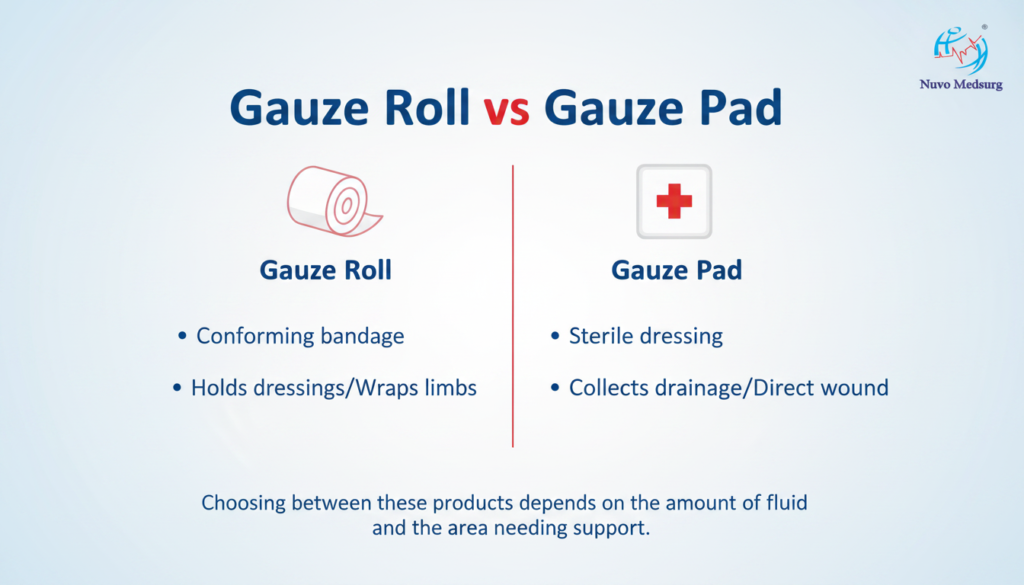
Gauze pads function as a sterile dressing applied directly to a wound to collect drainage.
-
A gauze roll acts as a conforming bandage used to hold dressings in place or wrap limbs.
-
Choosing between these products depends on the amount of fluid and the area needing support.
Understanding the fundamental properties of gauze rolls and gauze pads
A detailed comparison of gauze roll vs gauze pad performance starts with understanding their physical designs. Doctors make medical gauze from woven cotton or synthetic fiber blends that have a porous build. This loose weave lets air move freely around the injury. Proper airflow helps keep the wound bed dry and clean during the healing process. While pads provide a localized barrier against dirt, rolls offer a long, flexible strip for securing materials over joints or large areas. Understanding these basic traits helps clinicians select the right supply for patient care. It is essential to consult a doctor for specific wound needs.
What is a gauze pad?
Evaluating the difference between a gauze roll vs gauze pad reveals that a gauze pad is a pre-cut, multi-layered sterile dressing designed for direct placement on wounds. The textbook definition states it is a sterile, flat, multi-layered fabric dressing applied directly to a wound bed to absorb blood and exudates while maintaining a clean barrier. A simple way to understand it is a pre-cut fabric square that goes on top of a cut to soak up fluids. Standard sizes include 2×2 and 4×4 inches. These items exist as sterile options or within our Non-Sterile Dressings category.
What is a gauze roll?
Evaluating the gauze roll vs gauze pad difference shows that a gauze roll is a continuous length of woven or conforming fabric wound onto a central core. The textbook definition describes a continuous roll of medical-grade fabric used primarily as a secondary dressing to wrap, secure, and apply compression to a wound site. The simplified explanation is a long bandage roll used to wrap around a limb to hold a separate sterile pad in place. Standard widths are 2, 3, and 4 inches. These rolls work alongside our premium conforming Bandages to ensure proper wound management.
Core differences between a gauze roll and a gauze pad
People often compare the gauze roll vs gauze pad to choose the right material for wound care. These two products differ in their physical shape, how they absorb fluid, and how they stay on the skin. Woven gauze rolls consist of long strips of cotton. You must cut these to the desired length. Cutting often creates loose threads, known as linting. These fibers might irritate an open wound bed. In contrast, non-woven pads contain synthetic materials like polyester. These fibers bond together to prevent linting. This makes them less likely to stick to the wound. Proper exudate absorption remains a vital factor when selecting the right dressing for a patient.
|
Parameter |
Gauze Pad |
Gauze Roll |
|---|---|---|
|
Shape |
Pre-cut square or rectangle |
Long continuous strip |
|
Function |
Direct wound coverage |
Wrapping or securing limbs |
|
Absorbency |
High |
Moderate to high |
|
Linting risk |
Low |
High when cut |
When to use a gauze pad: Primary wound contact and protection
Selecting a gauze pad in the gauze roll vs gauze pad decision works best for localized incisions, minor cuts, or highly exuding wounds. Healthcare providers place sterile dressing pads directly onto wound beds to absorb exudate and form a barrier against germs. Abdominal pads, or ABD pads, offer heavy absorption for surgical incisions that have significant drainage. These pads also serve as a clean surface to apply topical ointments or antiseptics during routine dressing changes. Always place pads in direct contact with an open wound to maintain a clean environment, but consult a doctor for specific treatment protocols.
When to use a gauze roll: Securing dressings and providing support
Selecting the correct item in the Gauze Roll vs Gauze Pad dilemma depends on the specific injury. Use a gauze roll when you need to secure a primary dressing or wrap limbs to provide stability. A conforming bandage stretches easily over moving joints like knees and elbows without slipping. These rolls provide compression to control minor swelling and bleeding on extremities. Wrapping a roll around a limb keeps primary dressings clean and secure without using adhesive skin tape. Always prioritize this method for appendages where movement is expected. This approach helps maintain a consistent, firm hold during the healing process.
How to choose between gauze rolls and gauze pads for specific injuries
Choosing the correct option in the Gauze Roll vs Gauze Pad selection depends on wound location, depth, fluid levels, and joint movement. For example, if a kitchen worker sustains a deep forearm cut, the responder places a sterile absorbent pad on the wound to stop bleeding and wraps a gauze roll over it to hold the pad secure. A common mistake involves wrapping a non-sterile gauze roll directly over a raw burn. This causes fiber integration and painful tissue damage during removal. Never use woven cotton gauze rolls on dry, sensitive skin tears because fibers interlock with healing tissue.
Quality standards and manufacturing in medical gauze production
Manufacturers must follow Indian Pharmacopoeia standards to produce safe items. Making a gauze roll vs gauze pad requires careful attention to detail. The plant processes Nuvo Absorbent Gauze Cloth to improve surgical results. With decades of experience, the company provides reliable and non-linting wound care products for every hospital.
Conclusion
Correctly choosing between a gauze roll vs gauze pad promotes proper wound healing. Medical facilities keep both sterile pads and secure rolls in stock to handle different injuries. This practice allows staff to manage traumatic wounds with complete reliability. Medical professionals must always select supplies that match specific clinical needs.
Frequently asked questions
Q: What is the main purpose of a gauze pad?
A: A gauze pad acts as a sterile dressing placed directly onto a wound bed to absorb fluids and block dirt.
Q: When should a healthcare provider choose a gauze roll?
A: A gauze roll is used to wrap limbs, provide light compression, and hold primary dressings securely in place.
Q: Can I put a woven gauze roll directly on an open burn?
A: You should never apply a woven roll directly on a burn because the fibers will interlock with the healing tissue.
Q: Which gauze product is less likely to leave lint in a wound?
A: Non-woven gauze pads use bonded synthetic materials that prevent the linting commonly caused by cutting woven cotton rolls.
Q: Why are conforming gauze rolls better for treating injured joints?
A: They stretch easily over moving areas like knees and elbows to maintain a secure hold without sliding off the skin.


