
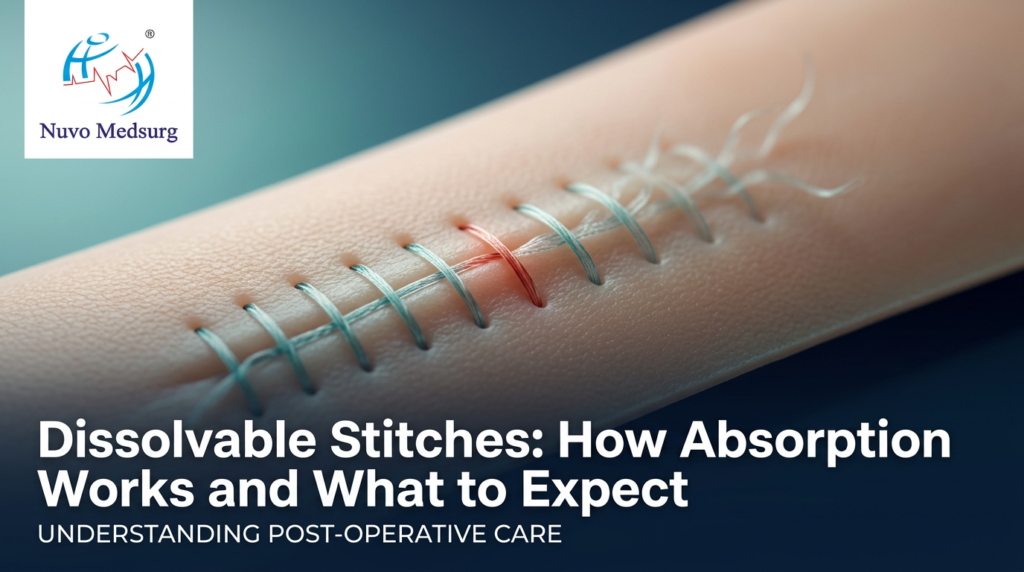
Dissolvable stitches close a surgical wound and then break down inside the body, so nobody has to remove them later. Surgeons choose them for internal repairs, pediatric cases, and any situation where a follow-up visit for suture removal is impractical for the patient. Understanding how these sutures absorb, how long that process takes, and how to care for the wound afterward helps hospital staff set correct patient expectations and reduces unnecessary follow-up calls to the clinic.
Quick Answer
Dissolvable stitches are absorbed by the body through enzymatic action or hydrolysis, usually within one to eight weeks depending on the material used. The wound itself typically closes and regains most of its strength well before the suture material fully disappears from the tissue, so patients rarely need to track the exact absorption date.
How Dissolvable Sutures Are Made
Dissolvable sutures are made from polymers the body can break down safely, such as polyglycolic acid, polydioxanone, and catgut derived from purified collagen. Manufacturers select the polymer based on how much tensile strength a wound needs and for how long that strength must last during healing. A synthetic braided suture used in a hernia repair behaves differently from a fine monofilament used on the face, so the material is matched to both the tissue type and the healing timeline the surgeon expects for that particular procedure. Packaging and sterilization standards also affect how the material performs once it is opened in theatre.
Enzymatic Action Versus Hydrolysis
Natural dissolvable sutures, like plain or chromic catgut, break down mainly through enzymatic digestion, where the body's own enzymes gradually digest the collagen fibers over time. Synthetic sutures such as polyglactin or polydioxanone break down through hydrolysis, a chemical reaction where water molecules slowly split the polymer chains apart. Hydrolysis tends to produce a more predictable and gentler tissue reaction than enzymatic breakdown, which is one reason synthetic absorbable sutures have become the more common choice across modern surgical practice, including in India's private and government hospitals.
How Long Absorption Takes
Absorption time depends on the polymer and the suture's thickness, not on how the wound looks on the surface. Plain catgut loses strength within days and fully absorbs in about one to two weeks, while chromic catgut lasts a little longer than that because of an added chromium salt treatment. Synthetic options like polyglactin retain strength for two to three weeks and fully absorb by around two months, and polydioxanone can remain present in tissue for close to six months. Surgeons pick the material based on how long the underlying tissue needs mechanical support, not on how fast the skin surface appears to heal, which is why two patients can look similarly healed while carrying different suture materials underneath.
Where Dissolvable Stitches Are Commonly Used
Dissolvable stitches are used for internal layers such as fascia, muscle, and subcutaneous tissue, where removal is not possible without a second procedure. They also appear often in pediatric lacerations, oral and dental surgery, and episiotomy repairs, where avoiding a suture-removal visit reduces distress for the patient and saves clinic time for busy outpatient departments. Nuvo Medsurg manufactures a range of absorbable and non-absorbable sutures so surgical teams can match the material to each procedure without switching suppliers or compromising on certification standards.
Aftercare and Wound Monitoring
Aftercare for dissolvable stitches focuses on keeping the site clean and dry for the first 24 to 48 hours, then gently washing it as advised by the surgical team. Patients should avoid soaking the wound in a bath or pool, picking at visible suture ends, or applying tight dressings that trap moisture against the skin. Some knots or ends may work their way to the skin surface as the deeper material dissolves, which is normal and not on its own a sign of infection. Staff should give clear, written instructions on what level of redness, swelling, warmth, or discharge would warrant a return visit to the clinic rather than waiting for the next scheduled appointment.
When to Seek Medical Attention
Most dissolvable stitches cause no problems, but patients should contact the clinic if they notice increasing pain, spreading redness, pus, fever, or a wound that reopens after appearing to heal well. A suture that is rejected by the body sometimes surfaces as a small lump or a stitch abscess, which a clinician can address quickly if the patient is seen early rather than waiting several weeks. Clear discharge instructions, given in the patient's own language where possible, reduce the number of unnecessary emergency visits and help catch genuine complications sooner rather than later in the healing process.
Conclusion
Dissolvable stitches give surgeons a reliable way to close wounds without a removal appointment, provided the material is matched correctly to the tissue and patients receive clear aftercare guidance from the start of treatment. Hospitals and clinics that stock a dependable range of absorbable sutures reduce follow-up burden on staff and improve patient comfort after every procedure. Nuvo Medsurg supplies ISO 13485 and CE certified sutures designed for consistent absorption and tensile performance; review the full range at https://nuvomedsurg.com/.
Reviewed by the Nuvo Medsurg clinical content team.
Frequently Asked Questions
Do dissolvable stitches hurt when they dissolve?
No, the breakdown process itself is not felt by the patient, though the wound area may itch slightly as it heals underneath the skin.
Can dissolvable stitches fall out too early?
Occasionally a knot loosens before the wound has fully healed, which is why follow-up checks matter for larger surgical repairs and layered closures.
Are dissolvable stitches as strong as non-dissolvable ones?
Yes, synthetic absorbable sutures are engineered to match the tensile strength needed for the specific tissue layer being closed during the procedure.
Is it normal to see a piece of stitch poking through the skin?
Yes, this can happen as deeper material dissolves and is usually harmless unless it is paired with redness, swelling, or discharge.
Do all surgeries use dissolvable stitches?
No, surgeons still choose non-absorbable sutures or skin staplers for wounds that need longer mechanical support or easier visual inspection during healing.


