
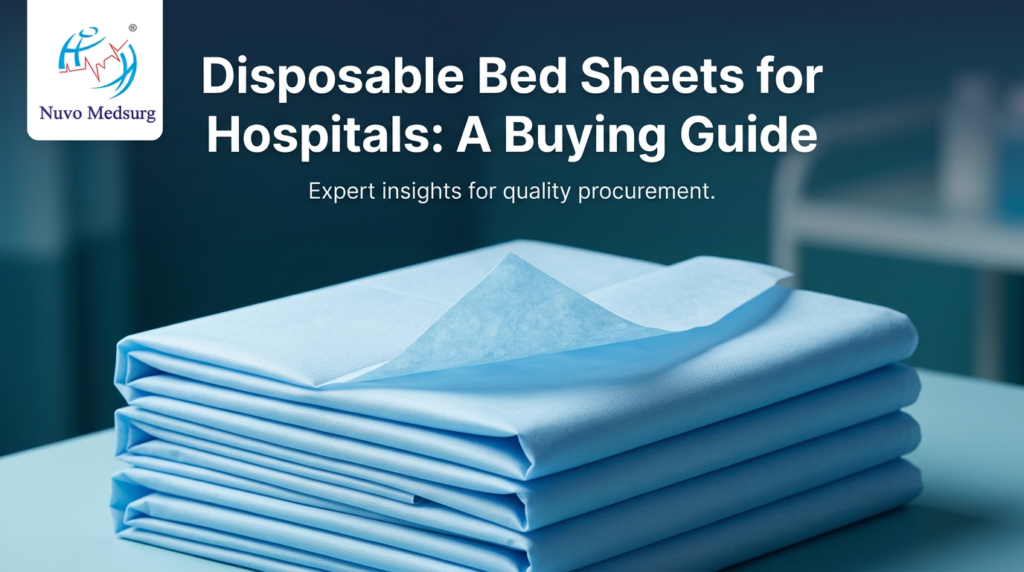
Disposable bed sheets are single-use linen made to cover examination tables, stretchers, and hospital beds for one patient before being discarded. Hospitals, clinics, and surgical centres use them to cut cross-contamination risk between patients and to reduce the laundry load on housekeeping staff during busy shifts. This guide covers what these sheets are made of, when disposable linen makes more sense than reusable cloth, and how procurement teams should evaluate quality before placing a bulk order for their wards.
Quick Answer
Disposable bed sheets are non-woven, single-use sheets made from materials such as spunbond polypropylene or cellulose blends, meant to be discarded after one patient use. They suit high-turnover areas like emergency departments and outpatient wards, while durable reusable linen still works well for long-stay inpatient beds.
What Disposable Bed Sheets Are Made Of
Most disposable bed sheets are made from non-woven fabric, typically spunbond polypropylene, sometimes blended with a cellulose or tissue layer for added absorbency. The non-woven structure gives the sheet enough strength to withstand a single use without tearing, while keeping the material light enough to manufacture and transport in bulk across large hospital networks. Some variants include a fluid-resistant film layer on one side, which helps in departments where spills or minor fluid exposure are common, such as labour rooms or minor procedure areas. The material is chosen for one-time performance rather than repeated laundering, so weave count and thread durability are not relevant the way they are for cloth linen.
Disposable Versus Reusable Hospital Linen
Reusable linen is woven cotton or a cotton blend that is laundered and reused many times, while disposable sheets are used once and discarded. Reusable linen costs less per sheet to purchase but requires ongoing laundering, water, detergent, and staff time, and it carries a small but real risk of cross-contamination if washing standards slip. Disposable sheets cost more per unit but remove the laundering step entirely and are discarded after each patient, which lowers infection risk in high-turnover settings. Verdict: reusable linen suits long-stay wards with reliable in-house laundry, while disposable sheets suit fast-turnover areas where minimising cross-contamination matters more than per-unit cost.
| Factor | Disposable Sheets | Reusable Linen |
| Cross-contamination risk | Lower, discarded after one use | Depends on laundry quality |
| Cost per use | Higher per sheet | Lower per sheet, plus laundry cost |
| Best setting | High-turnover, outpatient, emergency | Long-stay inpatient wards |
Best Use Cases in a Hospital Setting
Disposable bed sheets work well on examination tables, in emergency departments, and in outpatient procedure rooms where patient turnover is fast and laundering between every patient is not practical. They also suit ambulance stretchers, diagnostic imaging tables, and physiotherapy plinths, where a fresh surface is needed quickly between appointments. Surgical centres often use disposable sheets on pre-operative and recovery trolleys, reserving reusable linen for longer inpatient stays where comfort and cost per bed-day matter more than single-use convenience.
Infection Control Benefits
Disposable bed sheets reduce the chance that a pathogen survives on linen from one patient to the next, since the sheet never returns to circulation. This matters most in departments handling patients with unknown infection status, such as emergency rooms and isolation areas, where laundering delays would otherwise force a bed to sit empty. Infection control teams often specify disposable linen for these areas as one part of a broader precaution protocol that also includes hand hygiene and surface disinfection between patients.
What to Check Before Buying in Bulk
Buyers should check the sheet's material weight, since a thin non-woven sheet may tear during transfer of a heavier patient. It helps to confirm whether the sheet includes a fluid-resistant layer, and whether the manufacturer states a maximum safe load for the product. Procurement teams should also ask for the manufacturing certification, since a reliable supplier will hold ISO quality certification and provide batch documentation on request without delay. Packaging should protect the sheets from dust and moisture during storage and transport between the warehouse and the ward, and cartons should carry a clear manufacturing date for stock rotation purposes.
Storage and Handling Guidance
Disposable sheets should be stored flat or rolled in their original packaging, away from direct sunlight and damp storage areas that could weaken the non-woven material. Ward staff should open packs only as needed rather than exposing a full carton to open air, which keeps the remaining stock clean and ready for use. Nuvo Medsurg manufactures disposable bed sheets designed for consistent thickness and tear resistance across every batch, which helps housekeeping and nursing staff handle them with the same technique each time.
Conclusion
Disposable bed sheets give hospitals a practical way to reduce cross-contamination risk in fast-turnover areas, while reusable linen still has a place in long-stay wards with dependable laundry facilities. Choosing the right mix depends on patient flow, infection control priorities, and budget for each department. Nuvo Medsurg supplies disposable bed sheets and other surgical disposables built for consistent quality across bulk orders; explore the range at https://nuvomedsurg.com/.
Reviewed by the Nuvo Medsurg clinical content team.
Frequently Asked Questions
Are disposable bed sheets safe for patients with sensitive skin?
Yes, most non-woven disposable sheets are designed to be soft and low-irritant, though a cotton reusable sheet may still be preferred for extended bed rest.
Can disposable bed sheets be recycled?
Recycling depends on local waste management rules and whether the sheet was exposed to bodily fluids, in which case it must follow biomedical waste disposal procedures.
How much weight can a disposable bed sheet safely hold?
This varies by product thickness and manufacturer specification, so buyers should check the stated load rating before using it for heavier patient transfers.
Do disposable bed sheets replace the need for a mattress cover?
No, they work best as a top layer over a wipeable mattress cover, not as a substitute for it.
Is it more economical to switch fully to disposable linen?
It depends on patient turnover, laundry costs, and infection control priorities in each department, so many hospitals use a mix of both types.


