
Quick overview
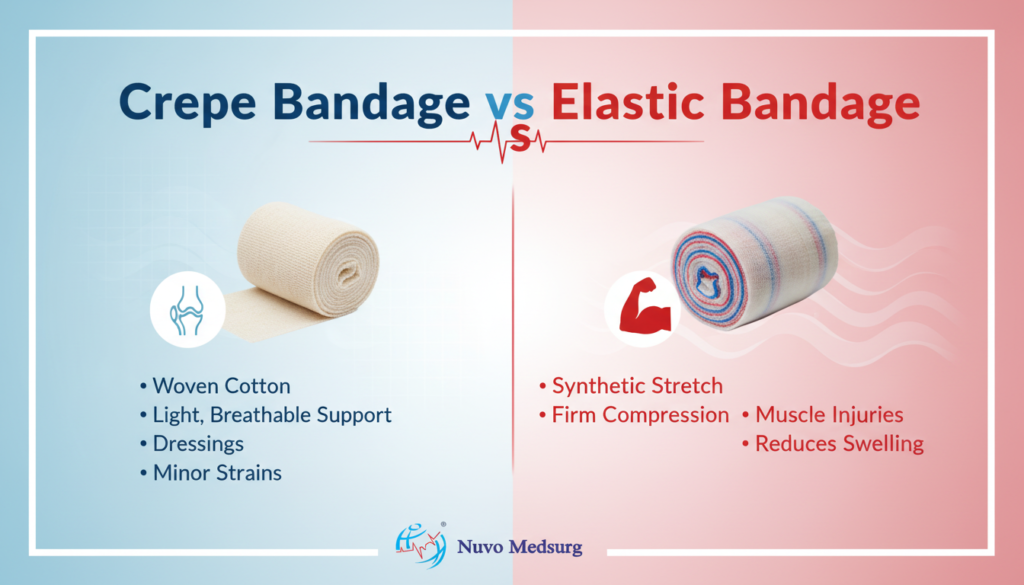
- Crepe bandages consist of woven cotton and provide light, breathable support for holding medical dressings or managing minor joint strains.
- Elastic bandages include synthetic stretch fibers to provide firm, continuous compression for stabilizing moderate muscle injuries and reducing tissue swelling.
Nuvo Medsurg provides high-quality medical supplies to assist with your recovery process.
Understanding Crepe Bandage and Elastic Bandage
Selecting the correct option in the Crepe Bandage vs Elastic Bandage comparison is necessary for proper patient recovery. These tools represent distinct, standard medical equipment used for specific physiological rehabilitation goals.
Crepe bandages primarily utilize cotton fabric to create a soft, lightweight layer. They do not contain synthetic rubber. Because of this composition, they offer a low level of tension. Doctors often choose these wraps when a patient requires protection for a wound dressing or very mild joint support that allows for full movement.
Elastic bandages contain synthetic materials or latex to create a distinct rebound effect. This design allows the bandage to apply firm, steady pressure to a specific body part. Healthcare providers apply these to manage muscle injuries or to help move fluid away from an area that has painful swelling. Patients should discuss their specific needs with a medical professional to ensure they choose the right medical bandage for their situation.
Definition of Crepe Bandage
A crepe cotton bandage is a woven, highly breathable medical wrap made entirely of cotton fibers textured to create a characteristic crinkled surface. Manufacturers use a specialized process to weave the cotton into this unique shape.
This non-latex structure allows the bandage to conform comfortably to body contours while applying light, non-restrictive compression to soft tissues. It is essentially a piece of woven cotton fabric that stretches slightly because of its shape rather than added plastic fibers. People often use it for minor support when they do not need heavy pressure.
Definition of Elastic Bandage
An elastic compression bandage is a stretchable medical wrap manufactured from a blend of cotton, polyester, and elastane or latex fibers. These synthetic components allow the material to stretch significantly and exert sustained, high-level pressure on muscles and joints.
The inclusion of these rubber-like materials provides a persistent force that stays in place over a joint. This type of wrap offers a more firm hold than plain cotton options. Doctors often recommend these when a person needs to limit movement or reduce swelling in a specific area. Always talk to a medical professional to decide which wrap is right for your situation.
Key Differences Between Crepe and Elastic Bandages
Choosing the right wrap for an injury depends on the specific needs of the patient. The choice often comes down to a crepe bandage vs elastic bandage. These tools provide different levels of compression and comfort. The following table compares these medical items to help with clinical decisions.
| Feature | Crepe Bandage | Elastic Bandage |
|---|---|---|
| Material | Cotton | Synthetic fibers and elastomer |
| Compression | Light to moderate | High |
| Breathability | High | Low |
| Stretch | Moderate | High |
Material Composition and Texture
Crepe bandages consist of pure, crinkled cotton. This material provides natural ventilation and helps prevent skin irritation during use. The texture is rougher than synthetic alternatives, which allows the layers to grip each other better without needing many clips.
Elastic bandages combine synthetic fibers like nylon or polyester with strong elastomer threads. This blend creates a smooth and high-tension wrap. These bandages provide much more pull than cotton versions. Because the fabric is tighter, it offers less airflow but gives superior support for joints that need firm stabilization.
Clinical Performance and Application
The primary difference between these products involves the level of compression. A crepe bandage works well for light injuries or holding a dressing in place. It offers enough support to reduce mild swelling without being too tight.
Elastic bandages work better for injuries that need firm pressure. They apply significant force to the area, which helps manage heavy swelling or provides structure to a weak joint. A doctor or nurse will decide which type fits the situation based on the injury site. Always consult a healthcare professional before applying compression to ensure it does not cut off blood flow.
Compression Levels and Support
A crepe bandage offers light to moderate pressure. It works well to hold wound dressings in place. It keeps the area protected without stopping healthy blood flow. This type of wrap provides enough support for minor needs.
An elastic bandage delivers heavy, continuous compression. This high level of tension helps with joint stabilization for injuries like sprained ankles. It works to manage tissue swelling by keeping the injured area firm. The strong material restricts movement more than a crepe wrap does. This helps prevent further strain on the joint.
Reusability and Durability
People often reuse cotton crepe wraps. You can wash them after use. However, these bandages lose their crinkled shape over time. Hot water cycles weaken the fibers and reduce their elasticity. Eventually, the bandage becomes less effective at providing a snug fit.
Elastic bandages contain synthetic fibers. These materials handle washing well. They keep their structural tension even after many trips through a clinical machine. You will find that an elastic, reusable bandage maintains its strength for a longer period. Proper care ensures the material remains reliable for future needs. Always check the fabric for signs of wear before you use it again. If the bandage looks frayed or loses its stretch, you should replace it.
Recommended Sizes and Medical Applications
Choosing the correct width during the Crepe Bandage vs Elastic Bandage selection process prevents secondary tissue injury. Proper sizing ensures effective joint stabilization for various sprains and injuries. Doctors follow standard medical practices to match the bandage to the limb size.
| Bandage width | Clinical application |
|---|---|
| 5 cm | Fingers and wrists |
| 7.5 cm | Ankles |
| 10 cm | Knees and thighs |
| 15 cm | Torso |
Using Nuvo absorbent gauze cloth as a base layer can provide extra protection under a bandage. This helps keep skin dry and comfortable during recovery.
How to Safely Apply a Support Bandage
Applying either option in the Crepe Bandage vs Elastic Bandage debate demands strict adherence to safe clinical techniques. Proper application helps with PRICE therapy goals, which include protecting the area and reducing swelling. Follow these steps to ensure safe dressing retention:
- Start wrapping below the injury site. Move upward toward the heart to support natural blood flow back to the center of the body.
- Overlap each spiral layer by one-third of the bandage width. This step distributes pressure evenly and prevents painful ridges from forming against the skin.
- Check the tension often. The wrap should feel snug but never tight enough to cause numbness or tingling.
- Perform a capillary refill check. Press the nail bed below the wrap. The normal blood color must return within two seconds.
If you feel increased pain, numbness, or if the skin turns pale or blue, remove the bandage immediately. Always consult a doctor if the injury seems severe or if pain does not improve with rest.
When To Avoid Using Crepe Or Elastic Bandages
Safety is important when you use medical wraps. You must understand the risks of using crepe and elastic bandages to prevent tissue ischemia, which is a condition where your cells do not get enough oxygen. Follow these rules to protect your health:
- Do not wear compression wraps while you sleep. Your arterial pressure drops during rest, and tight bandages may restrict blood flow to dangerous levels.
- Never place a support bandage directly onto an open wound. You must apply a layer of sterile dressings over the wound first to protect the skin and keep the area clean.
- Avoid these wraps if you have advanced peripheral arterial disease or severe venous insufficiency. Consult your doctor if you have these conditions because compression can cause serious harm.
Always talk to a medical professional if you are unsure if a bandage is safe for your specific health needs.
Multilayer Bandaging in Clinical Rehabilitation
Physiotherapists sometimes use both crepe and elastic bandages together. This method is called multilayer bandaging. It helps manage tissue swelling and provides strong joint stabilization for patients.
Clinicians follow a specific process to keep the skin safe. They apply a soft layer of crepe cotton directly against the skin. This layer acts as a barrier that absorbs perspiration. It also keeps the skin comfortable under the wrap. After this layer is secure, the clinician wraps a high-tension elastic bandage over the top. The bottom layer prevents the elastic material from rubbing against the skin, which stops skin abrasion. This protocol allows for effective compression while maintaining a high level of comfort for the patient, as noted in research published by the National Center for Biotechnology Information.
Conclusion
Selecting between a Crepe Bandage vs Elastic Bandage depends on whether the injury requires light protection or firm compression. Nuvo Medsurg supports healthcare facilities by manufacturing a wide range of reliable, medical-grade bandages and surgical disposables for superior surgical outcomes.
Frequently Asked Questions
Is a Crepe Bandage the Same as an Elastic Bandage?
No. A crepe bandage is a crinkled cotton wrap providing light support, whereas an elastic bandage contains synthetic stretch fibers to deliver heavy, sustained compression.
Can You Sleep with a Crepe Bandage On?
No. It is not recommended to wear support wraps overnight because resting blood circulation slows down and tight bandages can cause tissue numbness.
Are Crepe Bandages Washable and Reusable?
Yes. Pure cotton crepe wraps can be washed and reused, though they gradually lose their original elasticity and tension over time.
What Is the Main Medical Use of a Crepe Bandage?
A crepe bandage is primarily used to secure wound dressings, absorb small exudates, and support minor muscle strains or sprains.
How Do You Know If a Compression Bandage Is Wrapped Too Tightly?
If the skin below the wrap feels cold, turns pale or blue, or experiences a tingling sensation, the bandage is too tight and requires immediate loosening.


