
Quick overview
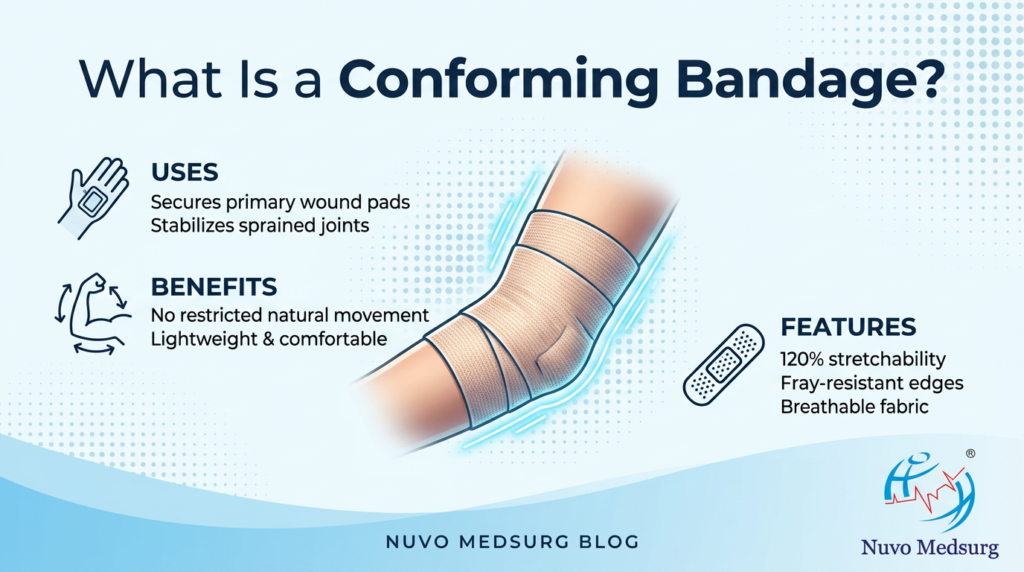
A conforming bandage secures primary wound pads and stabilizes sprained joints without restricting natural movement using a lightweight, stretchable fabric. These wraps stretch to 120% of their resting length and feature fray-resistant edges that adapt evenly against complex anatomical contours. Woven cotton and synthetic blends deliver breathability alongside localized compression, making these rolls a standard requirement across 2026 surgical and trauma care settings.
Understanding conforming bandages in modern wound care
Elasticized gauze retains secondary dressings over active knee and elbow joints. Medical staff unroll this soft fabric across a high-quality cotton pad to pin it against the skin while allowing patients full bending motion. Unlike rigid surgical tapes that restrict movement and trap sweat, Medikit Ltd notes that the primary advantage of this construction is an exceptionally high stretch profile, which prevents moisture accumulation immediately above the healing site.
Core medical features and structural benefits
The material weave in these non-sterile dressings stretches out repeatedly during post-operative care without snapping like standard rigid tape.
- According to Praxisdienst, advanced cohesive models achieve an extensibility of 120% to maintain elasticity over bending joints.
- Treated fray-resistant edges minimize the chances of loose threads dropping into a sterile surgical tray.
- Formulations containing 40% cotton absorb exuding fluid.
- Hospital suppliers completely remove chlorine and manufacture 100% latex-free variants so allergy-sensitive patients avoid skin reactions.
Primary clinical uses for hospitals and clinics
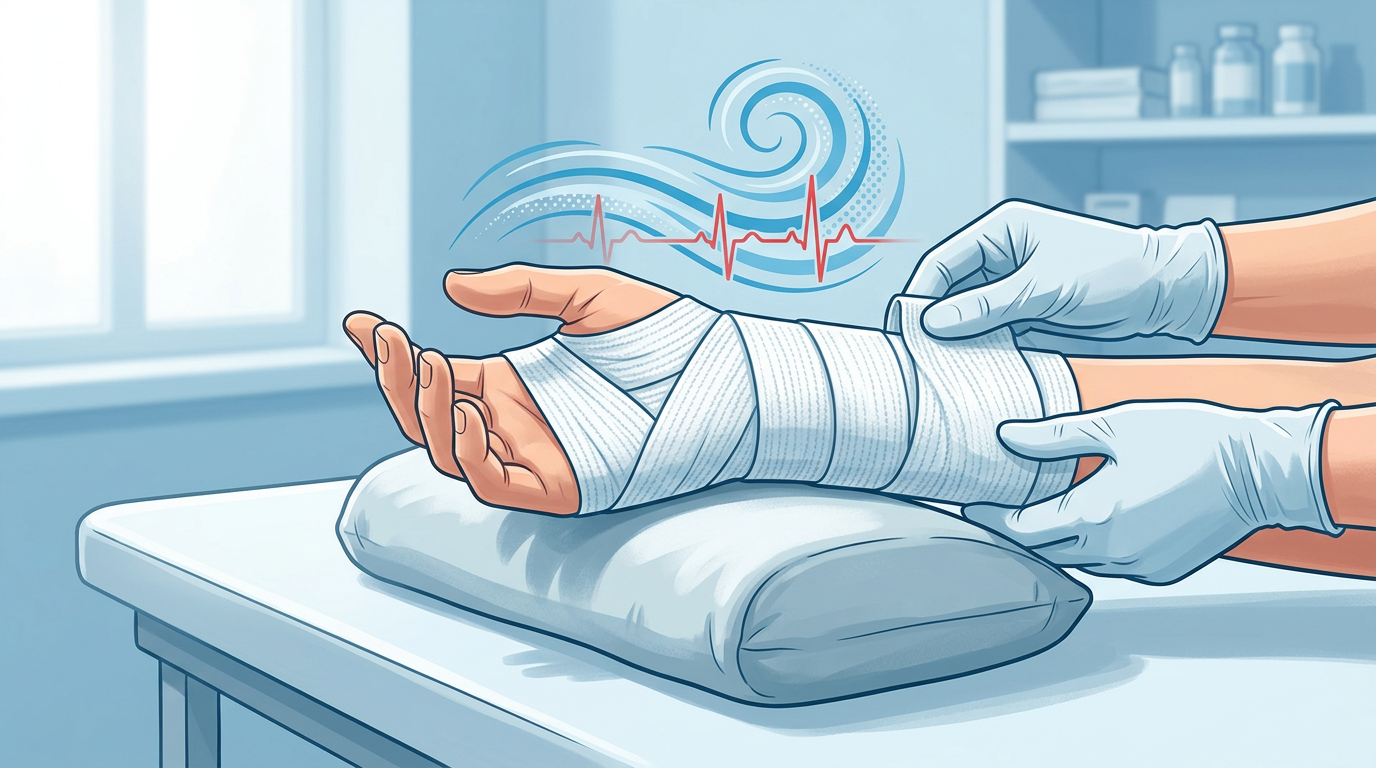
Nurses apply these elastic rolls to handle dressing retention during the early inflammatory phase of healing. They unspool the wrap across a Nuvo absorbent gauze cloth to lock the clean pad onto a bleeding cut. Beyond fixing surface wounds in place, the fabric exerts mild tension over bruised muscle layers and sits beneath plaster casts as an anchoring underlay for emergency room splint fixation.
If a patient arrives holding a deeply lacerated forearm, the responding clinician lays down a primary non-adherent pad first. The doctor then winds a 10-centimeter conforming roll around the arm to pin down that base layer. Finally, the practitioner anchors the end in place using standard surgical tape, giving the wounded limb unhindered wrist mobility while keeping pressure against the injured tissue.
Standard dimensions and extensibility metrics
Medical supply manufacturers like Velform and Datt Mediproducts Pvt Ltd classify their woven rolls by width to match specific anatomical zones, with standard stretched lengths extending up to 3.5 or 4 meters depending on the brand.
| Roll Width | Stretched Length | Clinical Application |
|---|---|---|
| 4 cm – 5 cm | 4 m (Praxisdienst standard) | Fingers, toes, and small pediatric joints |
| 7.5 cm – 8 cm | 4 m | Hand, wrist, and forearm lacerations |
| 10 cm – 12 cm | 4 m | Ankle sprains and lower leg trauma injuries |
| 15 cm | 3.5 m (Velform specification) | Broad chest, shoulder, or thigh stabilization |
Conforming bandages vs crepe bandages
A common hospital error involves using a crepe bandage and a conforming wrap interchangeably, despite structural differences dictating completely separate clinical roles.
Tightly woven cotton yarns exert heavy, localized pressure over an injured ankle or wrist, making these dense rolls the strict medical choice for managing severe joint sprains and reducing edema.
Conforming variations prioritize lightweight breathability to bend with a moving joint rather than restricting it. Nurses rely on these thinner weaves strictly to hold sterile wound pads securely against the skin instead of forcing structural immobilization.
Step-by-step application protocol
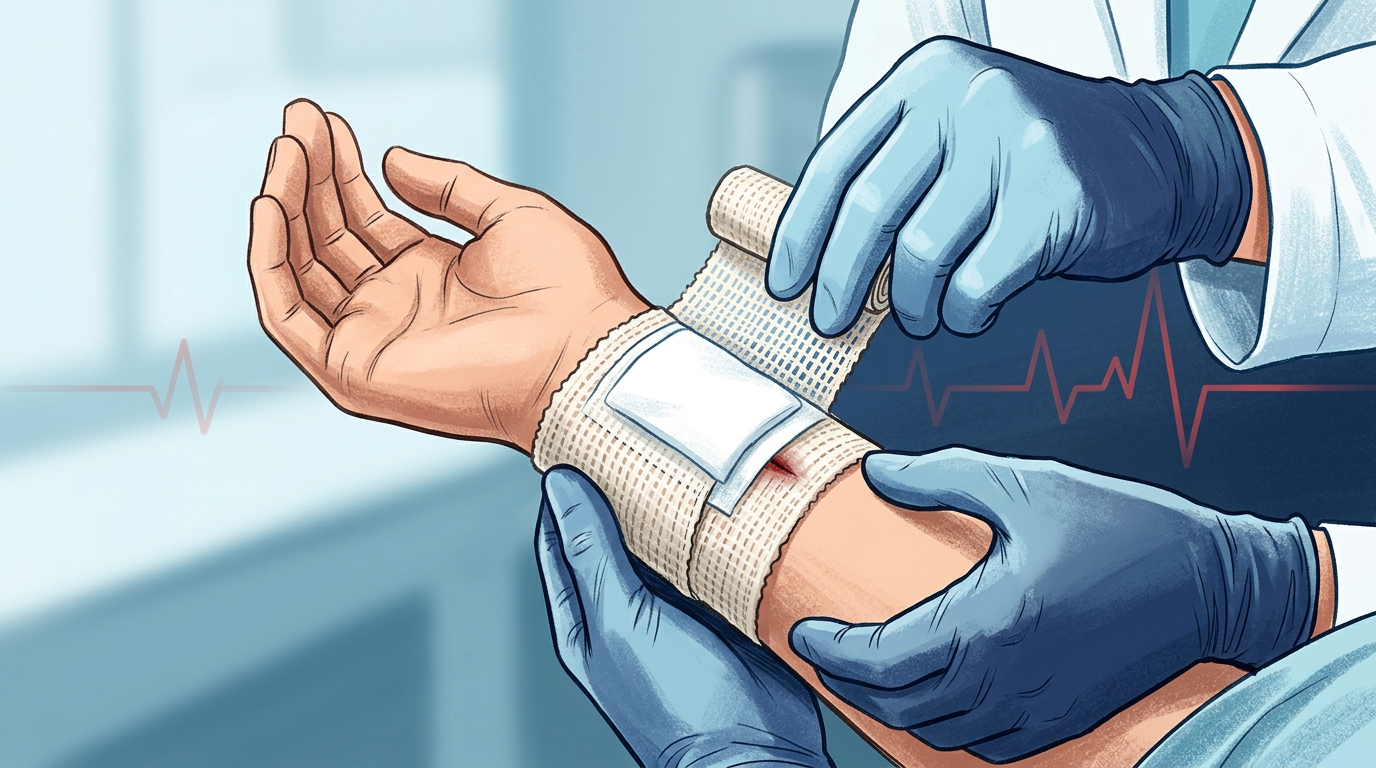
- Review the enclosed Direction for Use, then clean and dry the wound area entirely before applying the primary sterile pad so the skin surrounding the injury carries no excess moisture.
- Unroll three to four inches of the fabric and place the leading edge firmly against the base of the dressing.
- Wrap the material in overlapping figure-eight turns, maintaining a steady but gentle tension level to establish baseline compression.
- Secure the final edge over healing surgical sutures using safety clips, medical tape, or rely on self-adhesion if applying a cohesive variant.
Safety precautions and contraindications
Applying excessive tension remains the most frequent application failure recorded in clinical Safety Information logs, which artificially restricts venous blood flow and causes distal numbness in a patient’s extremities.
Netmeds documentation explicitly warns that medical staff should check capillary refill times below the wrapped site to ensure circulatory health remains intact.
Hospital staff wearing disposable gloves discard these specific soft rolls immediately after a single dressing change to maintain strict hygiene protocols and prevent cross-contamination across a clinical setting, since the porous fabric is not reusable.
Conclusion
Selecting the correct medical disposable from Nuvo Medsurg guarantees better dressing retention, faster patient healing, and superior surgical outcomes in any clinical environment.
Frequently asked questions
Are conforming bandages reusable?
Nurses discard these items immediately after completing a single dressing change to maintain hospital hygiene protocols. The soft cotton mesh captures blood and bacteria from the injury site upon contact. Hot water degrades the elastic threads and destroys the tension necessary to support a damaged limb. A clinician opening a fresh wrapper prevents transferring an infection between patients, which strictly satisfies the safety precautions established earlier in this guide.
Can clinicians use them on sensitive skin?
Yes, the 100% latex-free cotton configurations detailed in the features section prevent contact dermatitis during patient recovery. A doctor leaves this material wrapped securely against an allergy-prone patient for days without causing rashes or skin breakdown.
What sizes do conforming wraps come in?
Medical supply factories cut these rolls into varying widths to treat specific injuries. A 4-centimeter version secures a splint on a pediatric finger, while a 15-centimeter width covers broad chest trauma. Regardless of the starting width, the folded elastic webbing stretches to exactly 4 meters in total length.
Do these wraps restrict blood flow?
Nerves and blood vessels compress only when a caregiver stretches the elastic threads beyond their intended tension limit. A nurse applying the fabric with a gentle overlap retains the dressing securely without causing the dangerous tissue numbness warned about earlier.
What is the difference between cohesive and standard conforming rolls?
A standard hospital roll requires a metal clip or a separate strip of medical tape to fasten the final layer. Cohesive models bypass this step completely by relying on a textured exterior that grips itself immediately upon contact. The interlocking threads refuse to adhere to skin or surgical gloves, protecting arm hair and delicate wound margins during removal.


