
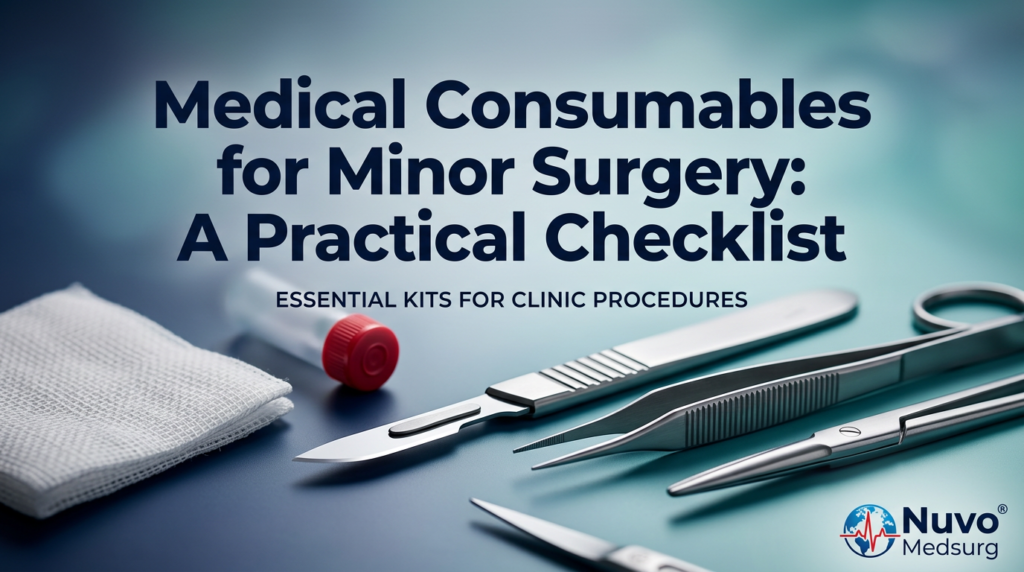
Minor surgery in a clinic or outpatient department depends on having the right consumables ready before the patient sits down, not halfway through the procedure. Missing a suture size or the wrong dressing type slows the surgeon and adds risk. This checklist-style guide covers what qualifies as minor surgery, the core consumables every kit needs, and how to select sutures and dressings correctly.
Quick Answer
A minor surgery consumables kit needs sterile gloves, antiseptic solution, gauze, sutures or skin staplers, a scalpel, dressing material, and local anaesthetic supplies at minimum. The exact mix depends on the procedure, but every kit should be assembled and checked before the patient enters the room, not during the procedure.
What Qualifies as Minor Surgery
Minor surgery generally refers to procedures done under local or no anaesthesia, with a short recovery time and low risk of major complications. Common examples in an Indian outpatient or clinic setting include suturing lacerations, incision and drainage of an abscess, skin lesion excision, mole and cyst removal, and simple wound debridement. These procedures do not usually require a full operation theatre, though they still demand sterile technique and the correct consumables. The distinction matters for procurement because minor surgery kits are built around portability and quick turnover, unlike the larger instrument trays used for major operations.
Core Medical Consumables Every Minor Surgery Needs
Every minor surgery, regardless of type, draws on a common base of consumables. Sterile surgical gloves protect both patient and practitioner, and should be available in multiple sizes since fit affects dexterity. Antiseptic solution and sterile drapes prepare the surgical field. Gauze swabs manage bleeding and clean the wound site during the procedure. A disposable scalpel or surgical blade, suture material or a skin stapler for closure, and a final dressing complete the core list. Disinfectant wipes for the surrounding surfaces and cotton wool for post-procedure cleanup round out a well-stocked kit.
Choosing the Right Sutures for Minor Procedures
Suture choice depends on the tissue being closed and how long the wound needs support. Absorbable sutures break down in the body over time and suit internal tissue layers or patients who cannot return for suture removal. Non-absorbable sutures hold their strength longer and are commonly used for skin closure where the practitioner plans to remove them at a follow-up visit. Absorbable material saves the patient a return visit for removal, while non-absorbable sutures generally give the practitioner more control over the final cosmetic result at the skin surface. Verdict: absorbable sutures suit patients with limited follow-up access, while non-absorbable sutures suit procedures where precise, visible closure matters most. Nuvo Medsurg manufactures both suture types across a range of sizes for outpatient and minor surgical use.
Selecting Dressings and Wound Care Materials
Dressing choice should match the wound's exposure and drainage level. A simple dry gauze dressing works for a clean, low-drainage incision, while an absorbent pad suits wounds expected to drain moderately in the first day. Adhesive island dressings are convenient for small excisions since they combine a pad and fixation in one piece. For wounds near joints or high-movement areas, a secondary roller bandage helps keep the primary dressing in place during normal activity. Staff should also stock hypoallergenic tape for patients with sensitive skin, since standard adhesive can cause irritation around a fresh wound.
Building a Minor Surgery Procedure Kit
A well-built kit groups consumables by the stage of the procedure rather than by product type. The preparation layer holds gloves, drapes, and antiseptic. The procedure layer holds the scalpel, gauze, and suture or stapler. The closure and aftercare layer holds the dressing, tape, and any bandage needed to secure it. Clinics that see a steady volume of minor procedures often pre-pack these layers into single-use trays so staff can grab one complete kit instead of assembling supplies item by item under time pressure. Reordering should be tied to kit usage counts, not calendar guesses, so stock levels match actual procedure volume.
Restocking and Inventory Tips for Minor Surgery Supplies
Consumables used in minor surgery move faster than most other hospital stock, so inventory tracking matters. Set a reorder point for each item based on average weekly usage, and keep a small buffer for unplanned procedure days. Rotate stock on a first-expiry, first-out basis, checking suture and dressing packaging for damage before each use since a compromised sterile barrier makes the item unsafe regardless of its printed expiry date. Keep a simple log of which kit components run out fastest, since this points to which items deserve a larger buffer or a bulk order.
Conclusion
A dependable minor surgery consumables checklist reduces delays, protects sterile technique, and gives practitioners confidence that the right suture or dressing is within reach for each case. Reviewing kit contents against actual procedure types on a regular basis keeps the checklist accurate rather than theoretical. Nuvo Medsurg supplies sutures, skin staplers, gloves, gauze, and dressings suited to minor surgery kits for clinics and surgical centres across India; visit https://nuvomedsurg.com/ for the full range.
Reviewed by the Nuvo Medsurg clinical content team.
Frequently Asked Questions
What is the difference between minor surgery and major surgery consumables?
Minor surgery consumables are built for quick, low-risk, often local anaesthesia procedures, while major surgery draws on larger instrument sets, more extensive draping, and additional monitoring supplies.
How many suture sizes should a clinic stock for minor procedures?
Most outpatient clinics stock at least three to four suture sizes to cover different tissue types, from fine sizes for facial skin to heavier sizes for thicker skin or subcutaneous closure.
Can skin staplers replace sutures for minor surgery?
Yes, for straight linear incisions on the scalp, trunk, or limbs, skin staplers offer a fast closure option, though sutures remain preferred for facial or intricate wound closures.
How should a minor surgery kit be sterilised and stored?
Pre-packed disposable kits come pre-sterilised and should be stored in a clean, dry cabinet away from direct light until use; any opened but unused sterile item should be discarded rather than reused.
What consumable is most often forgotten when preparing a minor surgery tray?
Hypoallergenic tape and a secondary securing bandage are commonly overlooked, since staff often focus on the suture or stapler and treat the dressing as an afterthought.


