
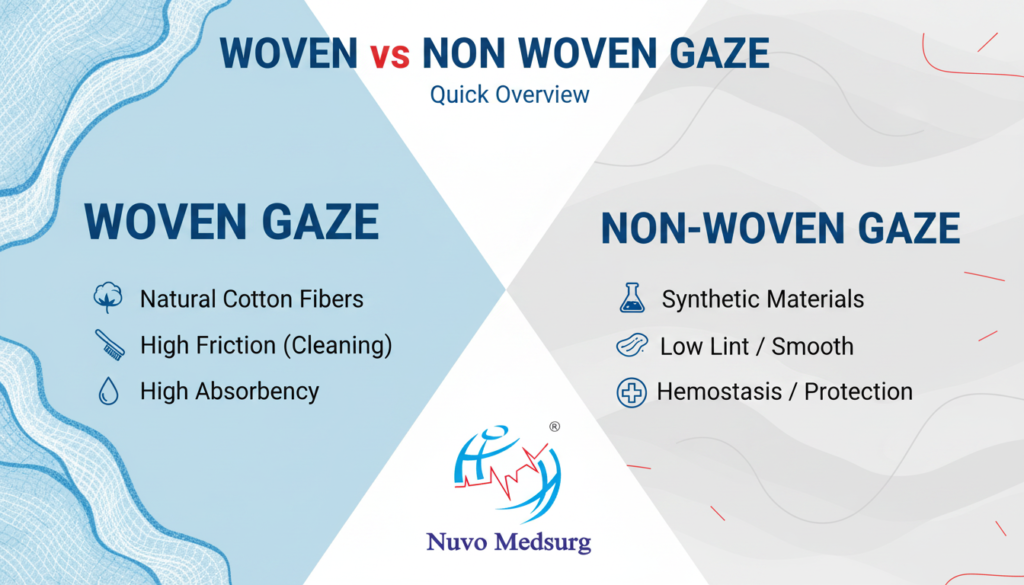
Quick Overview
-
Medical professionals select materials for wound care based on how the fibers are made, how much liquid they hold, and if they leave behind loose threads.
-
Woven products use natural cotton and offer high friction to clean wounds, whereas non-woven types use synthetic materials to stop the bandage from sticking.
-
Clinics can find absorbent gauze cloth that fits their needs by comparing these two main material types for better patient outcomes.
What Is Woven Gauze
Understanding woven vs non woven gauze begins with the traditional structure of woven options made from 100% natural cotton threads. Woven gauze is a medical dressing made from 100% cotton threads woven into a loose crisscross pattern. This method makes a fabric that breathes and stays flexible. It has visible holes that soak up blood and body fluids well during surgeries. Think of it as a basic cotton cloth made of intersecting threads. It is like a standard shirt but has wider gaps between the fibers to help clean or pack wounds.
-
Woven cotton gauze uses natural fibers that swell and tighten when they get wet, which adds strength when there is heavy bleeding.
-
The loose pattern creates a rough surface that acts like a manual tool to scrape away dead tissue from a wound.
-
Healthcare workers at places like Nuvo Medsurg often use this material for quick bleeding control after dental work or for general wound cleaning.
This type of dressing is effective, but it can sometimes leave small fibers behind if it is not handled carefully. Always talk to a doctor to ensure a specific dressing is appropriate for a patient’s healing needs.
What Is Non Woven Gauze
Woven vs non woven gauze differences start with how makers build the fabric. Non woven gauze is a medical dressing made by bonding synthetic fibers like rayon and polyester. Instead of weaving threads, makers use heat, chemicals, or pressure. It is a soft fabric made of fibers pressed together, much like how people make felt or paper. This non-woven dressing is an inscrutable material for many medical uses.
-
Non-woven gauze uses synthetic polymers to create a dense fiber matrix. This structure improves wicking, which pulls fluid away from a wound.
-
The manufacturing process creates a smooth surface. Because there are no loose thread ends, the risk of linting or fiber contamination in a wound is very low.
-
Doctors and nurses choose these dressings for long-term wound care. They are often used in dermatology or plastic surgery because they stay clean and do not stick to sensitive skin.
Comparing Woven And Non Woven Gauze
Analyzing properties of woven vs non woven gauze reveals distinct differences in how they feel and perform when someone changes a dressing. The table below compares the two materials based on standard performance tests.
|
Property |
Woven Gauze |
Non-Woven Gauze |
|---|---|---|
|
Fiber Type |
100% Cotton |
Rayon and Polyester Blend |
|
Texture |
Coarser and Flexible |
Smooth and Soft |
|
Absorbency Rate |
Lower |
Higher |
|
Fiber Shedding (Linting) |
Higher |
Lower |
|
Adherence to Wound Bed |
Higher |
Lower |
|
Wet Tensile Strength |
Higher |
Lower |
Cotton gauze is strong and reliable, but it can leave lint behind. Non-woven materials are softer and hold more fluid, which can keep a wound site cleaner. Always consult a doctor if you are unsure which type of dressing fits your specific recovery needs.
Absorbency And Fluid Management
Fluid movement in woven vs non woven gauze depends on fiber density. Woven gauze relies on twisted cotton threads. These threads absorb liquid slowly. The fluid often gathers in the spaces between yarns. This can cause liquid to pool right on the wound bed.
Non-woven gauze uses a dense, uniform arrangement of synthetic fibers. This structure creates a vast network for capillary action. This system pulls fluid away from the wound at a rapid pace. This wicking action keeps the wound site dry and protects the surrounding skin from damage. You can find more information about absorbent gauze options for managing heavy exudate through professional medical suppliers.
Tensile Strength And Linting Resistance
Wet strength and fiber shedding vary when you compare woven vs non woven gauze. Woven gauze keeps its shape well when wet. The cotton fibers tighten and lock together as they absorb moisture. People often believe cutting this material is safe. However, cutting woven gauze releases loose threads. These stray fibers enter the wound and act as foreign objects. They may cause a painful granuloma and slow down the healing process.
Non-woven gauze is different. It lacks the high wet strength of cotton. It stays completely intact when you cut it to size. This lack of loose fibers prevents contamination in deep incisions. It is a critical factor for doctors choosing materials for surgical procedures. Always consult with a healthcare professional to determine which dressing suits your specific wound care needs.
When To Use Eeach Type of Medical Gauze
Selecting between woven vs non woven gauze requires matching the fabric properties with specific clinical procedures. For a molar extraction, use woven cotton gauze immediately. Its coarse texture and high wet strength allow for firm mechanical pressure to control heavy bleeding and help a stable clot form. Once bleeding stops and the patient needs dry socket packing, switch to non-woven gauze. This prevents scratchy fibers from sticking to the healing socket or leaving loose lint when removed. Use non-woven gauze for dressing changes, sensitive skin, and dialysis to reduce patient pain. Avoid non-woven options if the patient has allergies to synthetic fibers like polyester. Nuvo Medsurg provides both sterile and non-sterile bandages from India to support these diverse clinical needs.
Cost Efficiency and Clinical Performance
Evaluating woven vs non woven gauze from a purchasing standpoint reveals that synthetic options reduce total consumption. A clinical study published in PubMed confirms that non-woven swabs are a highly cost-effective alternative for routine wound management. Because non-woven gauze has a higher fluid capacity, medical professionals use fewer pieces per dressing change than cotton gauze. Reducing the volume of supplies used lowers hospital waste and total procurement expenses over time. Nuvo Medsurg manufactures high-absorbency surgical disposables in India under strict quality standards. This ensures competitive pricing for healthcare facilities seeking reliable, superior clinical outcomes.
Conclusion
Hospitals improve recovery and lower costs by choosing the right dressing when comparing woven vs non woven gauze. Nuvo Medsurg provides high-quality surgical disposables for better outcomes. This company supplies reliable wound care solutions across India with a deep focus on manufacturing excellence.
Frequently Asked Questions
Q: Is woven or non-woven gauze better for tooth extraction?
A: Woven gauze works best immediately after an extraction. Its flexibility and wet strength help the patient apply firm pressure to stop bleeding. Non-woven gauze is a better choice for later dry socket packing.
Q: Does non-woven gauze stick to wounds?
A: No, it typically does not stick to healing tissue. This makes dressing changes less painful.
Q: Can you cut woven gauze?
A: No. Cutting woven gauze causes cotton threads to unravel. This creates loose fibers that can enter the wound and lead to infection.
Q: When should you avoid using non-woven gauze?
A: You should avoid it if a patient has a known allergy to synthetic materials like rayon or polyester. Always check the patient history for sterile sensitivity before use.


