Quick overview
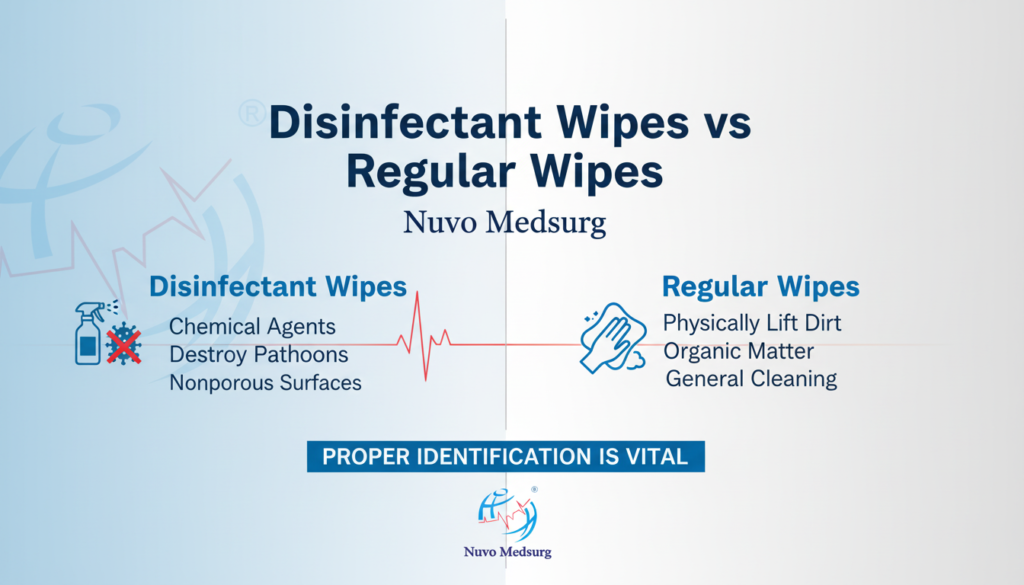
Disinfectant Wipes vs Regular Wipes represent different tools for hygiene. Nuvo Medsurg provides professional supplies for these specific needs. Proper identification of each product type remains vital for effective surface sanitation.
- Disinfectant wipes destroy pathogens on nonporous surfaces through chemical agents.
- Regular wipes physically lift dirt and organic debris through mechanical action without chemical eradication.
Choosing the correct product depends on the desired level of cleanliness. You must check labels to identify if a product kills germs or simply removes grime. Strict adherence to manufacturer instructions ensures safety. Always consult medical guidelines regarding appropriate use in clinical environments.
Understanding Disinfectant Wipes Vs Regular Wipes
The comparison of Disinfectant Wipes vs Regular Wipes shows that their primary modes of action differ completely. Disinfectant wipes are EPA-registered antimicrobial pesticides. They kill 99.9% of bacteria, viruses, and fungi on hard, nonporous surfaces. Regular wipes often function as cleaning or detergent wipes. They contain soaps or surfactants. These ingredients lift organic matter and grease through mechanical action rather than chemical destruction. Sanitizing wipes represent an intermediate tier. They reduce microbial loads to safe levels but lack the potency of high-level disinfectants. Nuvo Medsurg manufactures professional-grade disinfectant wipes to support hospitals seeking superior surgical outcomes.
| Feature | Disinfectant Wipes | Regular Wipes |
|---|---|---|
| Primary Goal | Kill pathogens | Remove debris |
| Active Agents | Chemicals | Surfactants or soap |
| Regulation | EPA registered | General consumer product |
Definitions of Wipe Categories
- Germicidal wipes: These are high-potency products formulated to eliminate specific dangerous pathogens. They require precise contact times on surfaces to function.
- Cleaning wipes: These products rely on friction and soap to clear away dust or spills. They do not effectively kill microorganisms.
- Sanitizing wipes: This category sits between the two options. They lower the number of germs to a level considered safe by public health standards.
Always follow label directions for correct use. If a surface requires total decontamination, use an EPA-registered product. If the surface only needs light cleaning, a regular wipe is sufficient. Professionals should verify the specific requirements for their environment. Contact a healthcare administrator for guidance on facility protocols.
Composition and Active Ingredients in Wipes
Disinfectant wipes vs regular wipes differ mainly because of their active ingredients. Manufacturers use specific chemicals to kill germs on surfaces. Most commercial disinfectant wipes contain quaternary ammonium compounds or accelerated hydrogen peroxide. These chemicals destroy the outer shell of viruses.
Research from the National Library of Medicine (PMC6909403) shows how effective these products are. The study looked at peroxygen-based and quaternary ammonium-based wipes on hospital surfaces like keyboards. These products achieved up to a 94.9% reduction in pathogen colony-forming units. Regular wipes work differently. They contain mild surfactants, water, and fragrance. These ingredients dissolve dirt and grime but do not kill bacteria or viruses. Nuvo Medsurg provides high-quality medical disposables to help keep healthcare settings safe.
Key chemical differences include:
- Quaternary ammonium compounds: These are standard cleaners found on the EPA List N.
- Accelerated hydrogen peroxide: This is a fast-acting peroxygen-based cleaner.
- Surfactants: These are the main ingredients in regular wipes for basic cleaning.
Proper Usage Guidelines and Wet Contact Time
Understanding disinfectant wipes vs regular wipes requires knowledge of wet contact time. Many people wipe a surface once and let it dry instantly. This method does not kill germs. The surface must remain visibly wet for a specific dwell time to destroy pathogens. Most wipes require a wet contact time of two to four minutes.
Surface disinfection also relies on proper technique to prevent the spread of germs. Follow these steps to clean surfaces safely:
- Put on Nitrile Examination Gloves to protect skin from harsh cleaning chemicals.
- Use a new wipe for each separate surface to avoid cross-contamination of bacteria.
- Apply the wipe to the surface and ensure the liquid covers the entire area.
- Keep the surface wet for the full dwell time listed on the product label.
- Dispose of the used wipe in the trash and remove gloves properly.
- Wash hands immediately after finishing the cleaning process.
Always check with a medical professional if you have questions about specific cleaning protocols in a clinical environment.
When To Use Which Wipe Option
Choosing between disinfectant wipes vs regular wipes depends on the infection risk of the specific environment. You must pick the right tool to keep things clean without damaging the surface.
In medical settings, people often use both types of wipes. You should clean surfaces first with regular wipes or non-sterile dressings to remove loose dirt. This step is a prerequisite for effective sanitation. After that, you can use a chemical disinfectant. Nuvo Medsurg provides hospitals with the tools needed for this type of thorough environment preparation.
Use these lists to help you decide which wipe fits your needs:
High-touch surfaces for disinfectant wipes:
- Clinical examination tables
- Public doorknobs
- Light switches
- Other shared areas with high infection risk
Everyday cleaning tasks for regular wipes:
- Dusting furniture
- Wiping food preparation areas where you want to avoid harsh chemicals
- Lifting physical dirt from electronic keyboards
Conclusion
Disinfectant wipes vs regular wipes have distinct roles that ensure both optimal hygiene and material safety. Regular wipes handle superficial soil removal, while disinfectant wipes deliver critical germ-killing power. Always check the surface type before you clean to avoid potential damage. Nuvo Medsurg remains a reliable partner by manufacturing elite surgical solutions and medical disposables to safeguard patient health. When in doubt about a specific cleaning protocol in a clinical environment, consult your facility guidelines or a medical supervisor.
Frequently Asked Questions
What Is the Main Difference Between Disinfectant Wipes Vs Regular Wipes?
Disinfectant wipes contain active chemical pesticides that kill 99.9% of germs on hard surfaces. Regular wipes only physically remove dirt and grime from a surface.
Can You Use Disinfectant Wipes on Human Skin?
No. Disinfectant wipes are registered pesticides. They can cause severe skin irritation. Use hand-sanitizing or personal care wet wipes for skin safety. Always check the label if you are unsure.
How Long Must a Surface Remain Wet After Using a Disinfectant Wipe?
The surface must remain wet for the full dwell time specified on the label. This is a crucial, or rather, an essential step to ensure the product works correctly. This time is typically between thirty seconds and four minutes.
Do Regular Baby Wipes Kill Viruses?
No. Regular baby wipes do not contain disinfecting agents. They are designed only to clean skin. They do not sterilize surfaces or electronics.


