
Quick overview
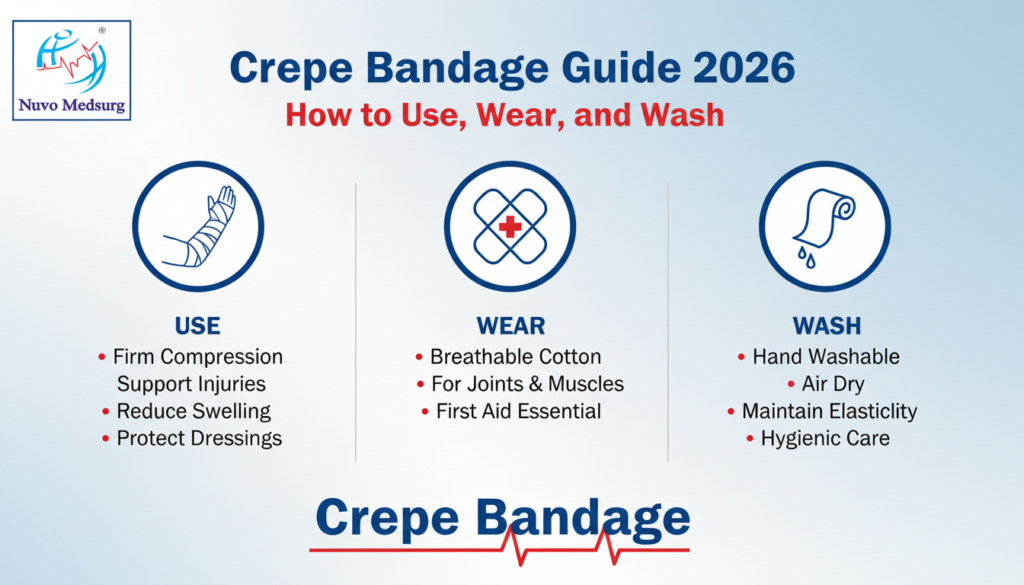
- Crepe bandage products provide firm compression and support for muscle and joint injuries.
- These breathable cotton wraps help reduce swelling and protect dressings.
- They are reusable, washable, and essential for any home first aid kit.
What is a Crepe Bandage?
A crepe bandage is a stretchy cloth wrap. It keeps an injured joint steady and stops it from puffing up. These bandages offer firm support while letting the skin breathe. Many people use them to manage sprains or strains at home. You can find different types of bandages that fit various needs.
A crepe bandage uses a blend of cotton and viscose. This combination provides elasticity and comfort. It creates a stable, flexible hold on an injured limb.
Common Uses for Crepe Bandages in Daily Life
People often keep crepe bandages in their home first aid kits because they are versatile tools for minor injuries. You might find them helpful in the following situations:
- Athletes use these wraps to prevent further damage to strained ligaments during recovery.
- Doctors recommend them for managing varicose veins by improving blood return to the heart.
- They act as a protective secondary layer over primary wound dressings, such as nuvo absorbent gauze cloth.
- If you twist your ankle during a morning run, wrapping it immediately with a crepe bandage can prevent massive swelling before you reach a clinic. This is a quick way to manage sprains and strains.
These bandages provide steady support. Always see a doctor if your pain continues or if the injury feels severe.
Managing Swelling and Edema
Effective compression is the main way to treat edema because it helps push interstitial fluid back into the circulatory system. Crepe bandage application is the most common non-drug way to control this fluid buildup in a specific area.
When you wrap an injured limb, you create firm support. This pressure stops the area from expanding further. It also helps manage internal bleeding or excess fluid. Proper wrapping provides comfort while your body heals. If you have concerns about persistent swelling, a medical professional can check the area to rule out deeper issues.
Support for Sprains and Muscle Strains
- A crepe bandage provides useful support for minor muscle tears and helps shorten recovery time.
- The bandage offers partial immobilization. This keeps the joint stable while allowing for some movement.
- It is quite effective for joint effusion. This condition happens when extra fluid collects inside the joint capsule.
- Proper use of the bandage assists the ligaments by providing necessary joint support during the healing process.
How to Wrap a Crepe Bandage Correctly
You can find non-sterile dressings here to help with your recovery. Follow these steps to apply a bandage safely:
- Hold the roll with the bulk of the bandage on top. This gives you better control over the tension.
- Wrap the bandage around the limb two times to anchor it firmly in place.
- Use a figure of eight pattern when you wrap joints like the knee or ankle. This technique helps keep the bandage secure.
- Make sure each new layer covers two-thirds of the layer underneath it.
- Fasten the end with the provided metal clips or use medical tape.
Source: Hansaplast Clinical Guide 2026.
Always check your skin and toes after wrapping. If you feel numbness or see a color change, the wrap is too tight and is cutting off your circulation. Please consult a doctor if the pain continues or if the swelling gets worse.
Safety Tips for Wearing Bandages at Night
You need to be careful when you wear a crepe bandage while you sleep. A tight wrap can stop your blood circulation. This is a big problem. You should always make the wrap looser before you go to bed. Your body moves and changes while you sleep, so it needs more room.
Many people make a mistake. They think a tighter wrap helps the injury heal faster. This is wrong. A wrap that is too tight often causes numbness in your skin. It can also cause more pain.
Do not wear a tight bandage at night if you have certain health issues. This rule applies to people with peripheral vascular disease or severe diabetes. These conditions change how your blood moves through your body. If you have any concerns about your injury or health, talk to a doctor. They provide the best advice for your specific situation.
Choosing the Right Size for Your Injury
Using the correct size is very important for proper support. You can find many options at Nuvo Med Surg. Each width serves a different body part. This table shows which size works best for common injuries.
| Bandage width | Recommended body area |
|---|---|
| 6cm | Fingers and small wrists |
| 8cm | Ankles and elbows |
| 10cm | Knees |
| 15cm | Thighs or chest area |
Check the size of your injury before you buy your supplies. Using a bandage that is too small might pinch your skin. A bandage that is too wide will not stay in place well. Using the right fit makes your recovery much more comfortable.
How to Wash and Reuse Your Bandage
Many people wonder if their crepe bandage is washable. It is, but you need to follow specific steps to keep it working well. Proper care helps the fabric keep its elasticity for future use. Follow these steps to clean your wrap:
- Wash your bandage by hand in a sink filled with lukewarm water and a little bit of mild soap.
- Do not wring or twist the fabric when you rinse it. This motion ruins the tiny fibers that give the wrap its stretch.
- Lay the bandage flat on a clean towel or surface to dry. Drying it this way helps the material regain its shape and full tension.
Conclusion
A reliable crepe bandage is the first line of defense for minor physical injuries. Always check the fabric for holes or lost stretch before you use it again. If you have questions about a persistent injury, please consult a doctor for a proper assessment.
Frequently Asked Questions
Can I Wash a Crepe Bandage?
Yes. You can hand wash it in lukewarm water. Let it air dry to reuse it later.
How Tight Should I Wrap It?
It should feel firm against your skin. It must not cause any tingling or numbness. If your fingers or toes feel cold or blue, the wrap is too tight. Take it off and try again more loosely.
Do I Need Clips to Secure It?
Most bandages come with metal clips. You can also use medical tape if the clips are missing or uncomfortable.
Can I Use It for a Broken Bone?
No. Broken bones need a rigid cast to stay in place. These bandages only provide light support for soft tissue injuries like sprains. See a doctor for any suspected broken bone.


