
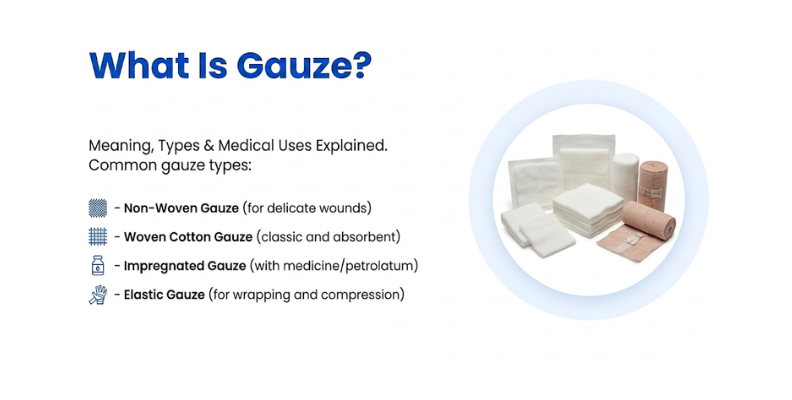
- Gauze is a thin, clear fabric with an open weave.
- People use it mainly for medical dressings.
- It comes in woven and non-woven types to manage wound fluids.
- The right choice stops infection and helps the body heal itself.
Basic Gauze Meaning and Materials
The gauze meaning is a light fabric with an open weave made from cotton, silk, or man-made fibers like rayon and polyester. It acts like a mesh cloth that allows air to flow while it soaks up liquids from a cut or scrape. History shows this fabric first came from the city of Gaza and stayed a standard tool in medicine for a long time (Source: Wikipedia). Today, makers produce gauze from bleached cotton or synthetic mixes to keep it clean and highly absorbent. You can find more information on supplies at Nuvo Med Surg.
In short, it is a porous textile designed to cover skin injuries so they stay dry and protected.
The Difference Between Woven and Non-Woven Gauze
Woven gauze consists of 100% cotton threads in a loose, crisscross pattern. It has a rougher texture. This texture works well when you need to scrub a dirty abrasion to remove debris. Because the threads move, it can leave behind small fibers.
Non-woven gauze uses synthetic fibers like rayon and polyester. Machines press these fibers together, similar to felt. This process creates a smoother material that creates much less lint. Non-woven gauze offers better absorbency. According to ScienceDirect, non-woven gauze typically absorbs 2-3 times more fluid than woven cotton. Use this type to cover a wound so the material does not stick.
| Feature | Woven gauze | Non-woven gauze |
| Material | 100% Cotton | Rayon and polyester |
| Best use | Scrubbing debris | Covering wounds |
| Linting | Higher | Lower |
| Absorbency | Standard | High |
Sterile Versus Non-Sterile Gauze Options
Sterile gauze comes in individual packages. These packages keep the product free of bacteria and other microorganisms. Always use sterile gauze on open wounds or surgical sites to support infection control. If you have questions about medical supplies, nuvomedsurg offers various options.
Non-sterile gauze sells in bulk. It works well for cleaning closed wounds or minor scrapes. You can also use it as padding. It works as a secondary layer when the primary dressing already contains sterile protection. Do not use non-sterile products directly on an open incision.
Common Types of Medical Gauze Dressings
Gauze sponges act as simple square pads. Doctors use them to clean wounds and soak up extra fluid during minor medical tasks.
Gauze rolls are also known as conforming bandages. You wrap these around arms or legs to hold other bandages in place. They stay tight and do not slip off easily.
Impregnated gauze contains petrolatum or medicine. It keeps the wound area wet. This prevents the bandage from sticking to the skin while it heals.
Packing gauze comes in long, thin strips. Health workers use these to fill deep holes or tunnels in a wound. This helps the skin heal from the inside out.
Ply count tells you how thick the fabric is. A 12-ply sponge is much thicker and holds more fluid than a 4-ply version. According to Omnisurge, the ply count is a sign of how well the pad absorbs liquid. Always choose the right thickness for the specific wound.
Key Medical Uses for Gauze in Wound Care
Gauze helps with hemostasis by giving blood a place to clot quickly when you apply pressure. Proper use of skin staplers often follows this step to close larger cuts.
Mechanical debridement happens when a damp gauze dries against the wound. When you pull the dressing away, it removes old or dead tissue. This helps the healthy skin grow back.
The fabric manages exudate by wicking moisture away from the wound bed. This keeps the surrounding area dry and stops the skin from getting too soft or damaged.
It serves as a strong physical barrier against dirt and bacteria. This protection keeps the area clean while the body works on healing the skin. This simple method remains a staple in most medical kits because of its reliability.
How to Choose the Right Gauze for Your Injury
You must pick the right gauze based on your wound type and how much drainage it has. A deep wound or a cut with heavy fluid requires different supplies than a simple scrape. You should look for specific features to keep the healing area clean and safe.
- Use non-woven gauze if your wound has heavy drainage because it holds more fluid and saves you from constant changes.
- Pick impregnated gauze for burns or sensitive areas where the skin needs extra protection while it regrows.
- Buy gauze with a lint-free label for deep wounds to stop loose fibers from staying inside your body, which is an anomalous risk.
Safe Application and Removal to Prevent Sticking
People often complain that gauze sticks to their skin and hurts when they pull it off. This happens when the dressing dries out and bonds with the scab. You can prevent this discomfort with a few simple steps.
- Soak the old dressing in sterile saline before you peel it away. This softens the material and protects the new tissue.
- Never pull dry gauze off a fresh scab. You will restart the bleeding and damage the healing skin.
- Put a thin layer of antibiotic ointment on the wound or use a non-adherent pad to stop adhesion.
- Replace your bandage every day. This keeps the wound clean and helps you watch for signs of infection.
Conclusion
Gauze is a helpful item for your medical kit when you pick the right kind. Using the correct material for your specific wound helps the skin heal faster. It also makes the process much less painful. Always match the gauze type to your injury to get the best outcome.
Frequently Asked Questions
Is Gauze the Same as a Bandage?
No. Gauze is the soft material that touches the wound. A bandage holds that gauze in place.
Can I Use Gauze on a Burn?
Yes, but use non-stick gauze. This prevents the fabric from clinging to damaged skin.
How Often Should I Change Gauze?
Change it at least once every day. You must also change it if it gets wet or dirty.
Does Gauze Expire?
Sterile packs have an expiration date. Non-sterile gauze does not expire, but you must keep it clean.
Why Does My Gauze Leave Fuzz in the Wound?
Woven cotton sheds tiny fibers. Use non-woven gauze to avoid this weird linting issue.


