
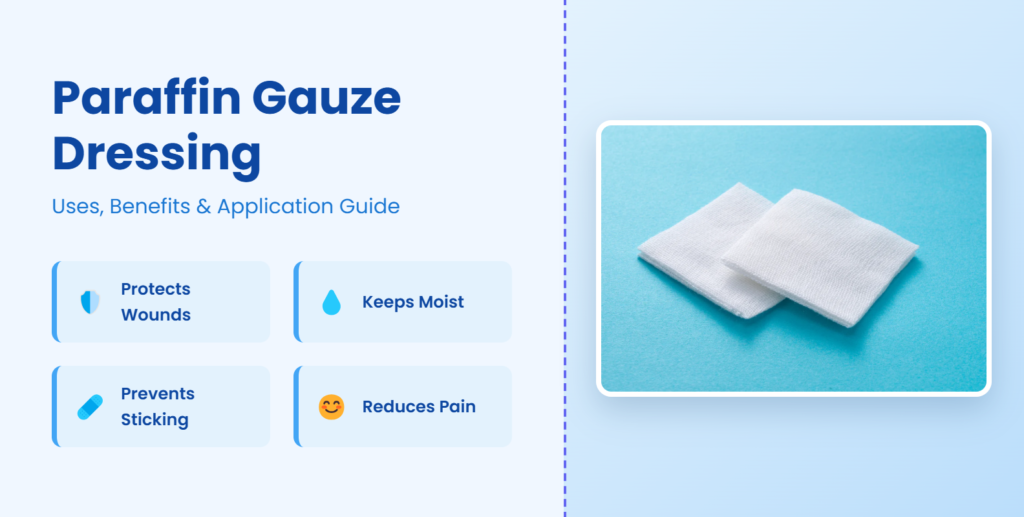
- Paraffin gauze dressing is a non-sticky medical fabric used to keep wounds moist and protected.
- This tool works best for burns, ulcers, and skin grafts by preventing the bandage from sticking to the skin.
- Users must apply it with sterile tools and cover it with a secondary absorbent pad for best results.
- Proper wound care relies on using these dressings to lower the chance of skin damage during bandage changes.
What is Paraffin Gauze Dressing?
Paraffin gauze dressing is a sterile, non-medicated medical dressing. It contains a leno weave cotton fabric coated with white soft paraffin or petroleum jelly. The paraffin creates a barrier that stops the gauze mesh from sticking to the new skin forming inside a wound. Medical workers use this to keep the area moist, which helps the body repair itself faster. You can find more information on Nuvo Med Surg regarding these medical supplies.
Think of it as a mesh bandage soaked in a thick jelly. This layer stops the wound from drying out and prevents the cloth from clinging to the healing tissue. This unique composition makes it a standard choice for protecting sensitive skin injuries.
How Paraffin Gauze Supports the Healing Process
A paraffin gauze dressing helps wounds heal by keeping the area moist. It traps natural fluids right against the skin. This extra moisture helps with epithelialization. That is the fancy word for new skin cells growing over the wound. Because the surface stays damp, cells move across the skin much faster. The paraffin also keeps the dressing from sticking to the injury. It protects the fresh, delicate tissue underneath. When it is time to change the bandage, the new tissue stays in place. The wound does not get pulled or hurt during the change. This method makes the healing time shorter. It also helps the skin recover in a steady, predictable way.
Best Uses for Paraffin Gauze in Wound Care
A paraffin gauze dressing is very useful for treating first and second-degree burns and scalds. It keeps the damaged skin soft and prevents a crust from forming. Doctors also put this dressing on skin graft sites. It keeps the new skin hydrated so it does not dry out. Chronic wounds like leg ulcers and pressure sores also improve with this type of care. The paraffin layer does not stick to the wound. It stays comfortable for a long time. People who have had surgery also use it for their incisions. It stops clothes or other bandages from rubbing against the area. Even wounds closed with surgical sutures often get a layer of paraffin gauze. This layer keeps the stitches from getting stuck to the outer bandage. It reduces irritation while the incision closes up.
Key Benefits of Non-Adherent Paraffin Dressings
A paraffin gauze dressing is a non-adherent option that promotes pain reduction during healing. It does not stick to a raw wound bed. This makes changing bandages much easier for the patient.
The special leno-weave structure allows wound fluid to move away from the injury. This fluid travels into a secondary dressing layer. It keeps the area clean and prevents pooling.
This type of dressing is hypoallergenic. It is also soothing on the skin. It works well for people who have very sensitive skin.
Every piece comes in sterile packaging. This ensures the dressing stays free of germs until a person opens it. It stays clean until the exact moment of use. This helps stop infections before they start.
How to Apply Paraffin Gauze Correctly
Paraffin gauze dressing application needs careful steps to keep the wound clean. A nurse might treat a kitchen scald this way. The nurse applies a 10x10cm Jelonet dressing to the burn. This prevents the bandage from fusing to the blistered skin.
- Clean the wound area first with a simple saline solution.
- Open the sterile pouch carefully.
- Use sterile forceps to lift the gauze. This prevents any contamination from fingers.
- Place the paraffin gauze directly over the burn or wound. Make sure it covers the whole area.
- Apply a secondary dressing, like a soft cotton pad, over the paraffin layer. This pad soaks up excess fluid.
- Secure the whole dressing with medical tape or a bandage roll.
When You Should Not Use Paraffin Gauze
A paraffin gauze dressing is not the right choice for heavily infected wounds. This type of cover traps bacteria inside the wound area. It also creates an environment where germs multiply.
Do not use this dressing if the skin around the wound shows signs of maceration. Maceration happens when the skin gets too soft from trapped moisture. This makes the surrounding tissue fragile and prone to breakdown.
Keep these products away from open flames. Paraffin is a flammable substance and catches fire easily.
Users often make a mistake by leaving the dressing on for too long. If it stays in place for several days, the wax dries out. The gauze then sticks firmly to the wound bed. This stubborn adherence destroys the new skin that started to grow.
Tips for Removing a Stuck Dressing
Paraffin gauze dressing removal is usually painless. However, the mesh sometimes dries and grips the skin tightly.
If the dressing sticks to the area, soak it with a sterile saline solution. Let it sit for several minutes to soften the hardened paraffin. This makes the material pliable again.
Peel the gauze back slowly at a low angle. This careful motion prevents the edges from pulling on the new tissue.
People sometimes rip the dressing off quickly like a standard bandage. This action hurts the healing wound bed and sets back the recovery. Patience during the process is a mandatory requirement for safe care.
Safety Precautions and Risk Factors
You should change a paraffin gauze dressing every 2 to 3 days. This depends on how much fluid leaks from the wound. Check the area for signs of infection during each change. Look for redness, a bad smell, or extra heat in the skin. If a surgeon used a skin stapler to close the cut, watch the dressing closely. Make sure the gauze does not snag on the metal staples. You must wash your hands well before and after you touch any wound care items. This simple step stops cross-contamination. It keeps the wound clean and avoids a nasty complication.
Medicated Versus Non-Medicated Paraffin Options
A paraffin gauze dressing comes in two main types. You can buy the standard non-medicated version or an antiseptic medicated version. A non-medicated product like Jelonet creates a moist barrier. It does not have any active drugs. It just protects the raw skin. Some people need extra help against germs. These medicated versions often contain Chlorhexidine or Framycetin. These chemicals kill bacteria in wounds that have a high risk of infection. According to Smith & Nephew product data, Jelonet is a standard non-medicated option. It works best for clean wounds that do not need extra medicine.
How to Store Your Sterile Dressings
Paraffin gauze dressing stays in the best shape when you keep it in a cool, dry area away from direct sunlight. High temperatures can cause the wax to melt or seep, which makes the product messy and hard to use.
- Keep the dressings in their original sealed pouches to maintain the sterile condition until you need them.
- Check the expiration date on the package, as the shelf life of the product is limited because the paraffin can degrade over several years.
Conclusion
Paraffin gauze remains a staple in medical kits because it is simple, effective, and keeps healing wounds comfortable. This item provides a reliable barrier for skin while it heals.
Frequently Asked Questions
Can I Use Paraffin Gauze on an Open Wound?
Yes. You can use it on wounds like burns and skin ulcers. It stops the bandage from sticking to the sore area.
How Long Can I Leave the Dressing On?
Change the dressing every 48 to 72 hours. Your doctor might suggest a different time based on the healing progress.
Is Paraffin Gauze Flammable?
Yes, it is. The petroleum in the gauze catches fire easily. Keep it away from cigarettes, lighters, and candles.
Can I Cut the Gauze to Size?
You can cut it to fit your wound. The special weave keeps the edges from fraying or leaving loose threads in the wound.
Do I Need Another Bandage Over It?
Yes. You must place an absorbent secondary dressing on top. This holds the gauze in place and catches extra fluid from the wound.


