


Subtotal ₹0.00

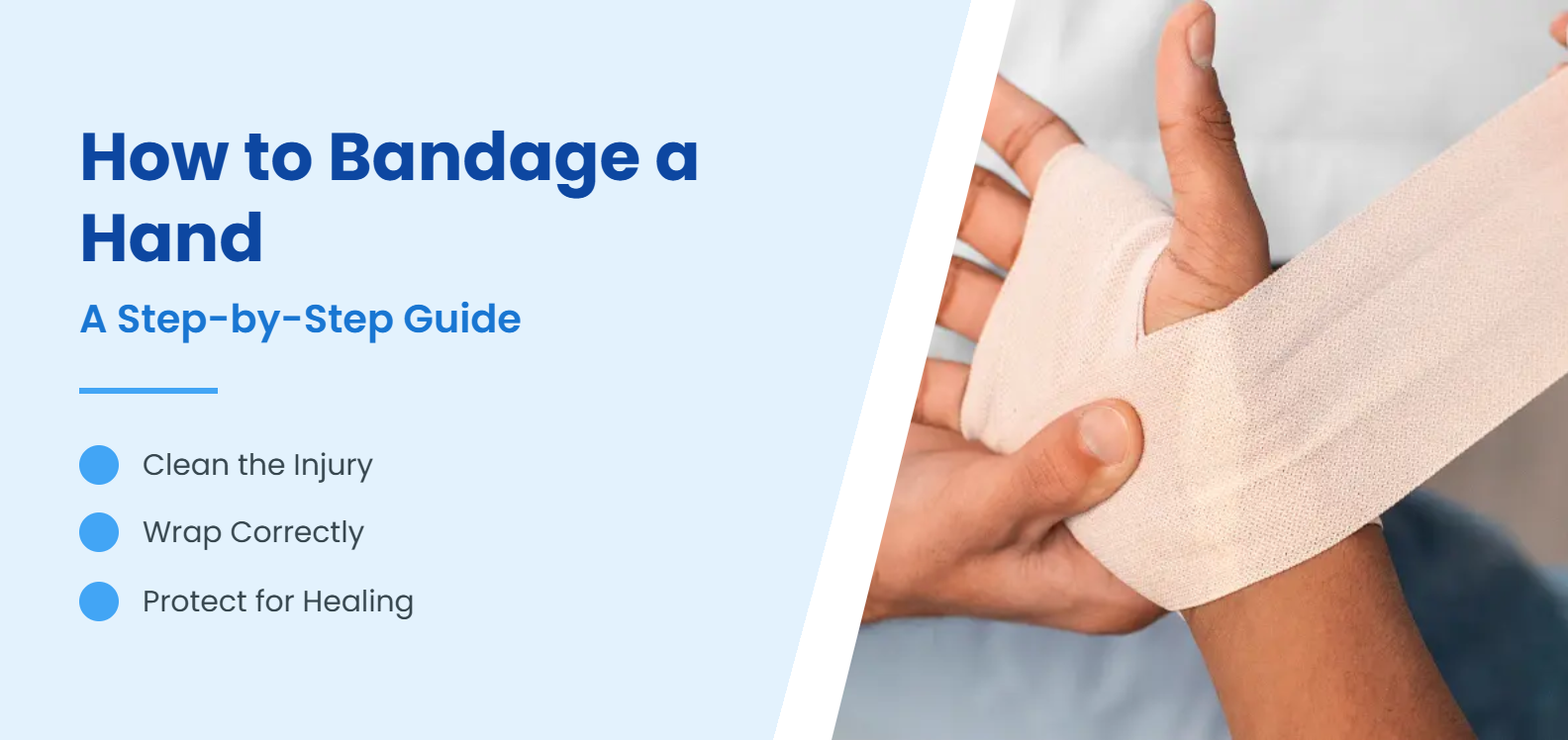
Quick overview
- Clean the wound well with soap and water before you put on any wrap.
- Use the figure-eight method so you can still move your fingers.
- Check the blood flow every ten minutes to keep the skin safe and healthy.
Why Proper Hand Bandaging Is Critical for Healing
Learning how to bandage a hand correctly helps stabilize the 27 bones in that small area. A proper wrap protects the dense network of nerves and blood vessels under your skin. Good technique also keeps dirt and nasty bacteria out of open cuts. A secure dressing manages swelling and helps your hand mend at a faster velocity. Using the right steps limits the chance of a bad infection.
Essential Supplies for Your Hand First Aid Kit
You need the right tools to treat a hand injury. High-quality supplies from Nuvomed Surg help keep wounds clean. These items work well for most small cuts.
- Conforming roller bandage (6-8 cm wide for adults). This helps hold everything in place.
- Sterile gauze pads that are larger than the wound size. These keep the area protected.
- Adhesive tape or clips to secure the final wrap.
- Mild soap and clean water for initial wound prep.
Also, keep some antibiotic ointment in your kit to prevent infection. It is a smart addition to your supplies.
Preparing the Hand by Removing Jewelry and Cleaning
Proper wound preparation prevents later trouble. You must act fast to keep your hand safe.
- Remove all rings and watches right away.
- Your hand will swell quickly. This swelling makes it hard to take off jewelry later.
- Rinse the cut under cool running water. Do this for several minutes to wash away dirt.
- Wash the skin around the injury with mild soap. Do not put soap directly inside the open wound.
- Pat the skin dry with a clean paper towel.
Follow these steps for cleaning cuts before you apply any bandage. Taking these precautions makes the healing process much smoother.
Choosing Between Adhesive Strips and Roller Bandages
The right way to bandage a hand depends on the size and location of the cut. Small scratches need different supplies than large scrapes or deep cuts. You should match the tool to the specific injury.
| Bandage Type | Best Use |
| Adhesive bandage | Small scratches and minor punctures |
| Roller bandage | Large wounds or injuries near joints |
| Butterfly bandage | Holding the edges of a slice together |
| Pressure bandage | Heavy bleeding that will not stop |
Applying Sterile Gauze to Palm or Back of Hand Wounds
You should apply a sterile gauze pad over the injury when you treat a palm wound or a cut on the back of the hand. First, center the pad on the skin. Ensure the pad extends at least one inch beyond the edges of the cut. This helps keep the area clean. Apply a very thin layer of antibiotic ointment to the wound before you put the pad on. This prevents the material from sticking to the skin when you eventually remove the wound dressing. Always hold the gauze by the corners to keep the center part clean.
Tip: Never touch the middle of the sterile pad with your fingers because bacteria from your skin might get into the cut.
Mastering the Figure Eight Bandaging Technique
The figure eight technique helps people support an injured hand while keeping the joint mobile. This specific pattern stops the bandage from sliding around when a person moves their fingers or wrist. It distributes pressure evenly across both the palm and the back of the hand. Unlike simple circular wraps, this method prevents the dreaded tourniquet effect. It keeps blood flowing properly because it avoids tight, restrictive rings of fabric.
- It keeps the hand steady but flexible.
- It stops the bandage from moving out of place.
- It spreads tension across the whole surface.
- It creates a safe, comfortable hold.
Starting the Anchor Wrap at the Wrist
Knowing how to bandage a hand starts with a solid wrist anchor. This base keeps the wrap in place for the rest of the job. Follow these steps to set the foundation.
- Find the inner part of the wrist.
- Put the end of the roller bandage against the skin there.
- Bring the bandage around the wrist two times.
- Smooth the material flat against the skin to avoid any bumps or bunching.
- Check that the wrap feels snug but does not pinch the skin.
Wrapping the Palm and Knuckles for Maximum Coverage
A palm wrap protects the hand well. Pull the bandage across the palm in a diagonal line. Move the wrap over the knuckles and bring it back down to the wrist. Use overlapping layers to keep the bandage tight. Cover about half or two-thirds of the width of the last layer each time you wrap. Do this until the gauze is hidden. This method gives you excellent knuckle protection.
- Start the wrap at the wrist.
- Cross the palm diagonally.
- Wrap around the knuckles.
- Move back to the wrist.
- Repeat until the pad stays put.
How to Secure a Bandage on a Fingertip Injury
A fingertip bandage needs careful placement because the skin there moves a lot. Buy an hourglass bandage for a good fit. Place the first set of finger wings on the nail side of the finger. Fold the middle pad over the very tip of the finger. Seal the other set of wings down the sides. Press the edges to your skin firmly. Make sure your skin is dry so the adhesive holds tight.
Using Padding Between Fingers to Prevent Skin Irritation
Using interdigital padding keeps your hand healthy when you wear a bandage for a long time. Skin-on-skin contact traps sweat easily. This moisture leads to skin maceration or painful sores between your digits. You should tuck small pieces of a soft gauze separator into each space between your fingers before you start the main wrap. This simple step creates a dry barrier. It also helps the bandage distribute pressure evenly across the entire hand rather than bunching up in tight spots.
Checking for Proper Circulation and Bandage Tightness
A good circulation check is a necessary step whenever you learn how to bandage a hand. You must make sure your wrap is not a tight bandage that cuts off blood flow. Press down on one of your fingernails until the pink bed turns white. Release the pressure quickly. The pink color should flow back into the nail bed in two to three seconds. This is your capillary refill test. If your fingers feel cold, numb, or tingly, you have likely wrapped the area too tightly.
Imagine a person cuts their hand while cooking in the kitchen. They quickly wrap the wound to stop the bleeding. A few minutes later, they notice their pinky finger turning a slight blue color. The person recognizes the signs of poor blood flow immediately. They undo the wrap right away. After letting their skin breathe for a moment, they reapply the material with much less tension. This adjustment keeps the blood moving while still protecting the cut.
When to Replace Your Hand Dressing
You should change the bandage on your hand every day to keep the wound clean and prevent infection. Proper wound care is necessary for your health.
You must replace the wrap right away if it gets wet or dirty. Moisture can trap germs against your skin. You also need to take off the old wrap once every 24 hours. This lets you check how the cut or scrape looks.
Look closely at the skin while you clean the area. Check for these signs of infection:
- You see redness that starts to spread away from the wound.
- The area has a bad smell.
- Yellow or green liquid comes out of the cut.
- The skin feels very hot to the touch.
Call your doctor if you notice these signs. You should also seek medical help if you get a fever or if the pain in your hand gets worse over time. These symptoms indicate a systemic reaction that needs professional care.
Conclusion
Knowing how to look after your injury stops small cuts from becoming big health issues. Keeping the area clean and dry helps your hand move better and heals the skin faster.
Frequently Asked Questions
Can I use super glue on a hand cut?
No. You should not use super glue on skin. Use medical-grade butterfly bandages instead. They close deep slices safely.
How do I wrap a palm wound that keeps sweating off?
You should first clean the skin around the wound with alcohol. This removes natural oils. Then, use a roller bandage. A standard adhesive strip will not stick well on a sweaty palm.
Should I use hydrogen peroxide?
No. Do not use hydrogen peroxide on your skin. Use mild soap and water to clean the area. Hydrogen peroxide hurts healthy tissue and slows down the healing process.
