


Subtotal ₹0.00

Quick overview
- Cotton bandages come in many types for different medical needs.
- These tools provide support, protection, and compression for injuries.
- Natural cotton offers great breathability and comfort for skin.
What are cotton bandages and why they are essential
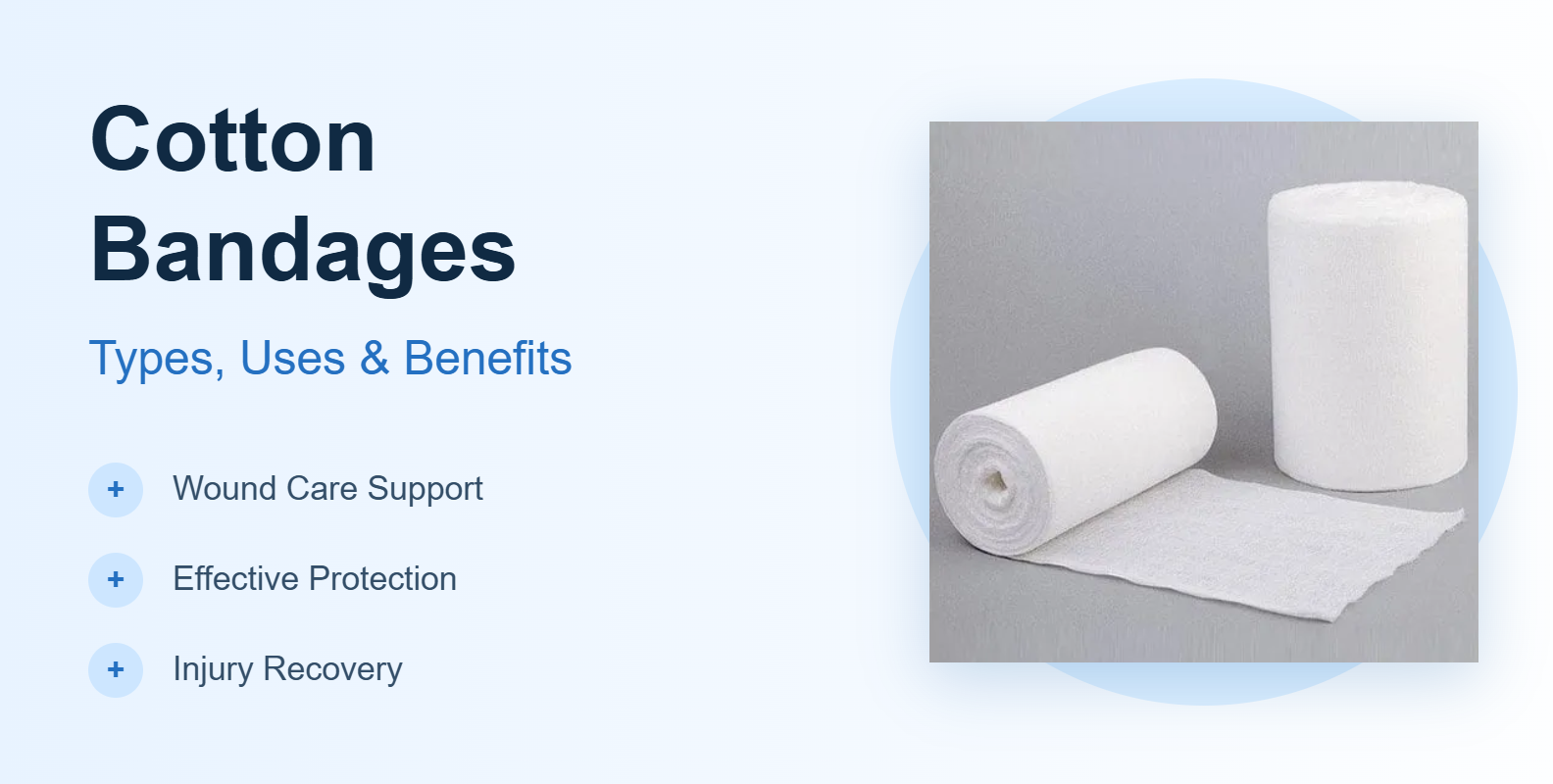
Cotton bandages are soft wraps made from natural fibers. People use these items for wound care. Every first aid kit needs these supplies to handle sudden accidents. They act as a secondary layer to hold primary dressings in place. Medical professionals rely on them because they absorb fluids well and have a soft texture. It’s a fundamental medical supply for any home.
Discovering the different types of cotton bandages
Different injuries need different types of support. You should choose the right wrap to help your body heal.
| Bandage type | Best use |
| Crepe bandage | Elastic wraps for sprains and muscle support |
| Gauze bandage | Lightweight strips to hold dressings over wounds |
| Tubular bandage | Circles for even pressure on arms or legs |
| Triangular bandage | Large cloth pieces for slings or splint support |
| Cohesive bandage | Wraps that stick to themselves but not your skin |
A crepe bandage stretches well when you move a sore joint. Gauze bandage fabric is very thin. It protects a cut without adding extra weight. You slide a tubular bandage over a limb like a sleeve. It stays in place without clips or tape. Doctors use a triangular bandage when a person needs to rest a broken arm in a sling. Cohesive wraps offer a quick fix because they do not need pins to stay tight.
Understanding the unique benefits of 100% cotton materials
Choosing 100% cotton makes a big difference for your skin. This material feels gentle and works well for most people.
- Cotton fibers are hypoallergenic. They do not usually cause itchy rashes or bad reactions on sensitive skin.
- These bandages allow high breathability. Air moves through the fabric easily to keep the wound fresh.
- Cotton has great absorbency. It soaks up moisture to keep the hurt area clean and dry.
- The soft texture helps a lot. It prevents rubbing and stops your skin from getting red or sore.
Real cotton stays comfortable even when you wear it all day. It helps your skin breathe while it guards a scrape or a bruise. Because it absorbs sweat well, it keeps the bandage from feeling damp or gross against your body. Soft fibers also mean you will not feel that annoying scratchy sensation against your wound. This simple material provides a safe way to cover an injury while it mends.
Practical uses of cotton bandages in daily healthcare
People often use cotton bandages for basic wound care at home. A clean bandage holds gauze over a cut or scrape so dirt stays out. This protects the skin while it heals. People also wrap these bandages around weak joints like wrists or ankles to give them extra stability.
These wraps provide compression when someone bumps a knee or twists an ankle. The pressure helps keep swelling down after an injury. Hospitals also use soft cotton bandages as padding under heavy plaster casts. This layer keeps the hard cast from rubbing against the skin and causing discomfort.
Why cotton crepe bandages are best for joint support
A cotton crepe bandage is the smartest choice when a person deals with a sprain or strain. It has a high amount of elasticity. This lets the user wrap a joint firmly while still keeping the ability to move that part of the body. These bandages help people follow the PRICE technique. This method includes protection, rest, ice, compression, and elevation to fix injuries quickly.
Here are a few reasons why these bandages work so well:
- The woven edges stop the fabric from fraying. This helps the bandage last through many uses.
- They exert firm pressure on the injury.
- They do not cut off blood flow if a person wraps them correctly.
- The material feels gentle against the skin.
Role of gauze and rolled cotton in wound management
A gauze bandage lets air reach a wound. This helps the skin stay dry and helps it heal the right way. Rolled cotton adds a thick layer for injuries that bleed a lot or have deep cuts. These supplies keep dirt and germs away when you pick a sterile product. They are light and stay in place well on small areas like fingers.
- Gauze bandages are highly breathable to keep wounds from getting soggy.
- Rolled cotton provides thick padding for heavy bleeding or deep cuts.
- Sterile options prevent bacteria from entering a fresh wound.
- These materials are lightweight and easy to wrap around fingers.
How to apply cotton bandages safely for maximum recovery
A runner trips on a trail and sprains an ankle. They pull a cotton crepe bandage from their bag. They wrap the bandage around the joint in a figure-eight pattern. This keeps the ankle stable. Now, the runner can walk slowly to the car without hurting the foot more. You can follow these steps to use these bandages at home.
- Clean the wound thoroughly before you start the wrapping process.
- Wrap the bandage firmly but do not cut off blood circulation.
- Overlap each layer by two-thirds to ensure even pressure.
- Check for numbness or blue skin to ensure it is not too tight.
- Secure the end with medical tape or small metal clips.
Conclusion
Choosing the right cotton bandages makes healing faster and more comfortable. Keep a variety of these items in your home kit so you stay ready for any injury. Proper supplies help you handle minor cuts or sprains quickly. It’s a simple step that pays off when you need relief.
Frequently asked questions
Can I wash and reuse cotton bandages?
Yes, you can wash most crepe and tubular bandages in warm water to keep them clean.
Is a cotton bandage the same as gauze?
No, gauze is a thin fabric for dressings, while a bandage is a wrap that holds the gauze in place.
