
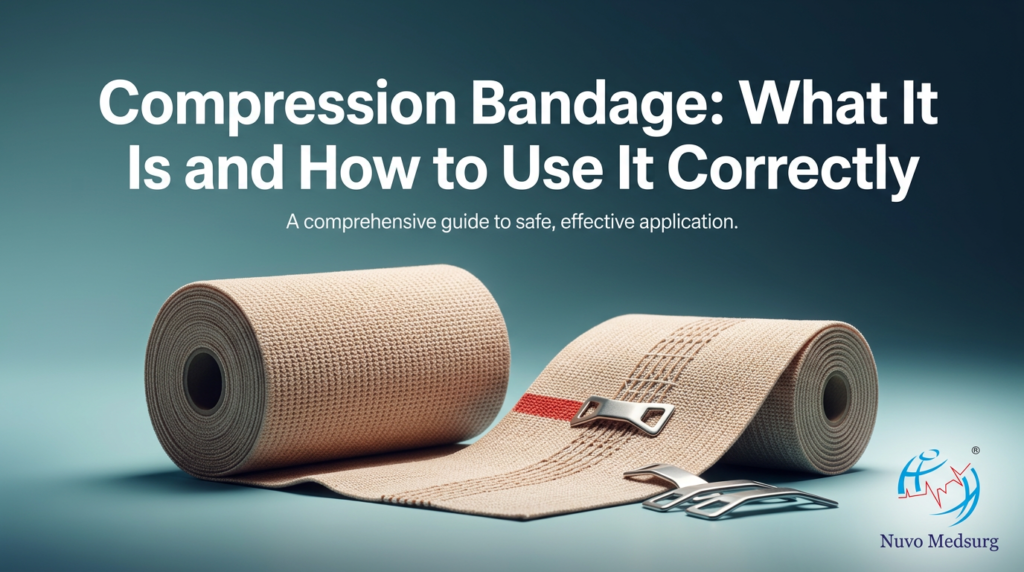
A compression bandage looks like nothing more than a long strip of elastic fabric. What it actually does is apply carefully graded pressure along a limb, tightest near the ankle or wrist and looser as it moves up. Wards use it for swelling, for varicose veins, for the hours after a sprained ankle walks through the emergency door. Get the tension wrong, though, and a bandage meant to help circulation can choke it instead. That gap between wrapped correctly and wrapped tightly is where most training time actually goes.
Quick Answer
A compression bandage delivers graduated pressure to boost venous return and control swelling, while a standard pressure bandage just holds a dressing down or stops a bleed at one point. Surgeons prescribe compression bandaging for varicose veins, venous ulcers, sports injuries, and DVT prevention after long surgeries. Short-stretch, long-stretch, and multi-layer systems each suit a different clinical picture.
What a Compression Bandage Actually Does
Blood pooling in the lower leg is the problem compression bandaging solves. Veins in the leg rely on the calf muscle to push blood back up toward the heart, and when that pump weakens, from age, from prolonged standing, from a clot, fluid backs up into the tissue. A compression bandage squeezes the limb from outside, narrowing the veins and helping the one-way valves inside them close properly again. Nurses see the effect within days on a patient with early venous insufficiency: less swelling by evening, less aching after a shift on the ward. The pressure is measured in millimetres of mercury, and most therapeutic bandages fall somewhere between 20 and 40 mmHg depending on the class prescribed.
How It Differs From a Standard Pressure Bandage
A pressure bandage is a first-aid tool. Wrap it firmly over a wound, and its job is done: stop the bleeding, protect the site, move on. A compression bandage is a treatment in itself, applied over days or weeks, with the pressure gradient built into how it is wound rather than how hard someone pulls it. Confusing the two in a busy casualty ward is an easy mistake. A junior nurse wrapping a leg ulcer the way she would wrap a laceration will apply even pressure top to bottom, which does nothing for venous return and can bruise the skin under the tightest turns.
Where Surgeons and Nurses Reach for It
Vascular surgery clinics use compression bandaging on chronic venous insufficiency and leg ulcers almost daily. Sports medicine departments wrap acute ankle and knee injuries within the first 48 hours, right alongside ice and elevation. Orthopaedic wards apply it post-operatively on hip and knee replacement patients as one layer of DVT prophylaxis, working together with early mobilisation and, where indicated, pharmacological anticoagulation. A general surgeon closing a long varicose vein stripping procedure will often finish the case with a compression wrap rather than a simple dressing, because the wrap is doing real physiological work, not just covering an incision.
The Main Types on the Shelf
Short-stretch bandages have low elasticity and build high working pressure during movement, which is why they are favoured for active patients and for treating venous ulcers over a full course of therapy. Long-stretch, or elastic, bandages extend more and give a gentler, more constant pressure, better suited to sports injuries and short-term swelling control. Multi-layer compression systems combine both, layering an absorbent wool bandage, a crepe layer, and an elastic outer wrap. Crepe bandages, the plain cotton ones every ward keeps in bulk, sit at the lighter end and are used more for support and mild swelling than genuine therapeutic compression.
Getting Graduated Compression Right
The whole point is a pressure gradient: highest at the ankle, tapering off toward the knee. Most clinicians apply the bandage in a spiral, overlapping each turn by about half its width, starting at the base of the toes and working upward with even, deliberate tension. Wrap the ankle too loosely and the bandage slides down within hours. Wrap the calf too tight relative to the ankle and blood pools above the constriction instead of draining. This is a skill that takes supervised practice, not a one-time demonstration, and it is why hospitals often run a short competency check before letting new staff bandage patients unsupervised.
Choosing Width, Material and Stretch
Width matters more than most buying decisions admit. A 10cm bandage suits a forearm; wrap an adult calf with it and you will need so many overlapping turns that the pressure becomes uneven. Most procurement teams stock 4cm, 6cm, 8cm, 10cm, and 15cm widths to cover the range from fingers to thighs. Nuvo Medsurg manufactures its compression bandages with consistent stretch recovery across the roll, so the tenth wrap of the day applies roughly the same pressure as the first, which matters when a ward nurse is bandaging a dozen post-op legs before lunch. Cotton-elastic blends are the most common; some ranges add a light adhesive strip to stop the bandage from unwinding.
Conclusion
Compression bandaging sits at an odd intersection: simple to wrap, easy to get subtly wrong, and genuinely effective when the technique and the product are both right. Hospitals that standardise on a dependable bandage range spend less time troubleshooting slipped or uneven wraps and more time on the patient in front of them. Nuvo Medsurg supplies compression and pressure bandages, along with the wider range of surgical disposables Indian hospitals order on repeat, through https://nuvomedsurg.com/.
Reviewed by the Nuvo Medsurg clinical content team.
Frequently Asked Questions
How tight should a compression bandage feel?
Snug enough that the patient notices it, not so tight that toes go pale, cold, or start tingling within the first hour.
Can compression bandages be reused?
Most elastic and short-stretch bandages can be washed and reapplied for a defined course of treatment, though hospitals generally replace them once the elasticity visibly sags.
Is a compression bandage the same as a compression stocking?
No. A stocking is a fitted, graduated garment; a bandage is wound by hand and gives the clinician more control over pressure at each level, which matters for irregular limb shapes or open ulcers.
Who should avoid compression bandaging?
Patients with significant peripheral arterial disease, since squeezing an already poorly perfused limb can worsen ischaemia. An ankle-brachial pressure index is usually checked first.
How long can one stay on?
For venous ulcer therapy, multi-layer systems are often left in place for up to a week; for acute sprains, bandages are typically reapplied daily so the clinician can reassess swelling.


