
Quick overview
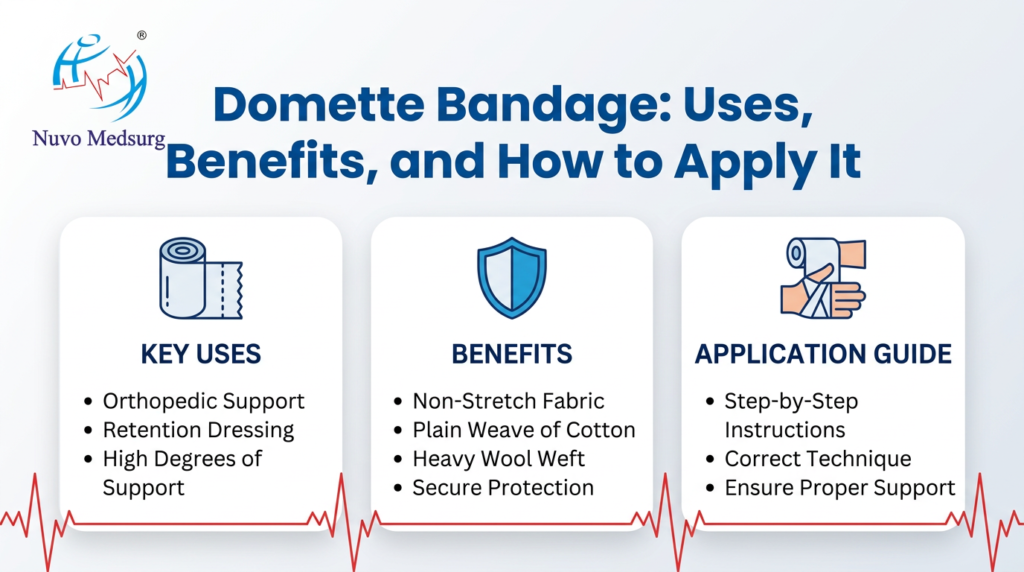
A domette bandage is a non-stretch fabric retention dressing built from a plain weave of cotton threads and a heavy wool weft. Medical academics at SVKM’s NMIMS classify the roll specifically for orthopedic purposes, where patients require a high degree of support and protection. Because the heavy wool weft provides structural rigidity, doctors apply this wrap to immobilize joints rather than to absorb wound exudate.
What is a domette bandage?
Ms. Shivanee Vyas authored research defining this cotton roll at SVKM’s NMIMS. Her paper for the School of Pharmacy and Technology Management details a non-stretch fabric retention bandage composed of standard cotton threads crossed by a heavy wool weft, which forms a dense plain weave.
In everyday clinical use across 2026, doctors unpack a thick, rigid medical wrap. Instead of stretching like a modern elastic roll, the tight cotton and wool construction locks a limb in place. Hospital staff tie this sturdy outer layer to secure primary surgical dressings directly over an injury.
Material composition and key properties
Standard cotton threads cross a heavy wool weft to form the horizontal yarn woven across the bandage fabric. This pairing gives the dressing sufficient tensile strength to stop it from tearing when nurses pull the wrap tight around an injured joint. Medical guidelines mandate that an ideal surgical dressing remain porous to water vapour so sweat does not accumulate underneath the weave. Manufacturers like Nuvo Medsurg emphasize that any surgical dressing must remain free from foreign substances to avoid triggering allergic tissue reactions.
Primary uses of domette bandages in orthopedics
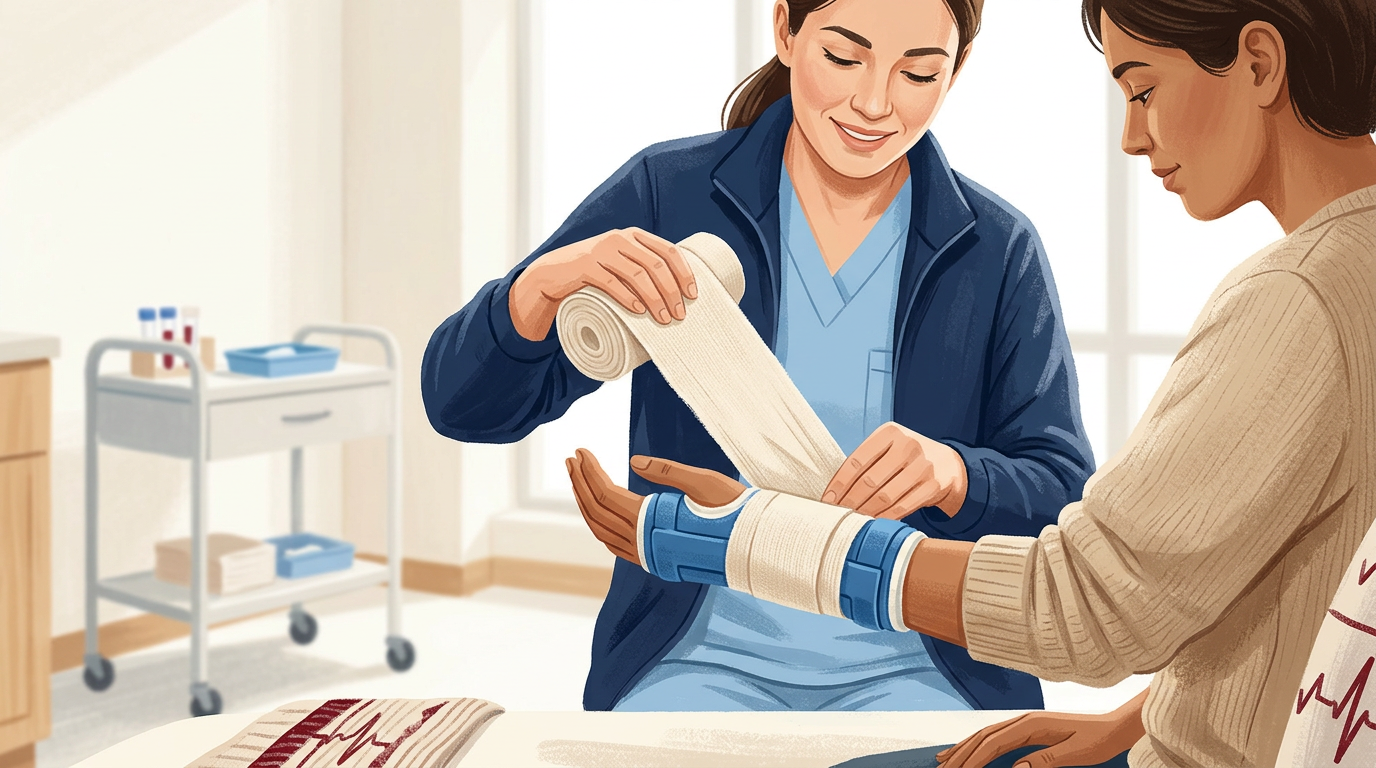
- Medical teams apply domette rolls mainly for orthopedic purposes, where a broken bone or severe sprain requires a high degree of support and protection.
- The heavy wool weft pads a plaster cast or splint and protects the patient's skin from rough edges.
- Because it is a non-stretch retention bandage, clinicians wrap the roll over primary absorbents to hold those base dressings firmly against a wound without constricting blood flow.
- As a reliable partner with decades of expertise, Nuvo Medsurg provides a wide range of products—including surgical sutures and dressings—to satisfy the demanding needs of the healthcare sector during these exact orthopedic procedures.
How domette bandages compare to other retention dressings
| Feature | Domette Bandage | Triangular Calico Bandage |
|---|---|---|
| Category | Non-stretch fabric retention bandage | Non-stretch fabric retention bandage |
| Material composition | Cotton threads with heavy wool weft | Unbleached cotton cloth |
| Weave style | Plain weave | Plain weave |
| Primary medical use | Orthopedic support and protection | Used as a sling for broken skin areas |
| Sterilization requirement | Sterilized by conventional methods | Must be sterilized if contacting broken skin |
| Official reference | Documented in SVKM's NMIMS materials | Historically listed in the British Pharmacopoeia BP 1993 |
Although both categories denote non-stretch fabrics, the triangular calico acts as a sling while the domette roll wraps directly around the limb.
Important steps for applying a domette bandage safely
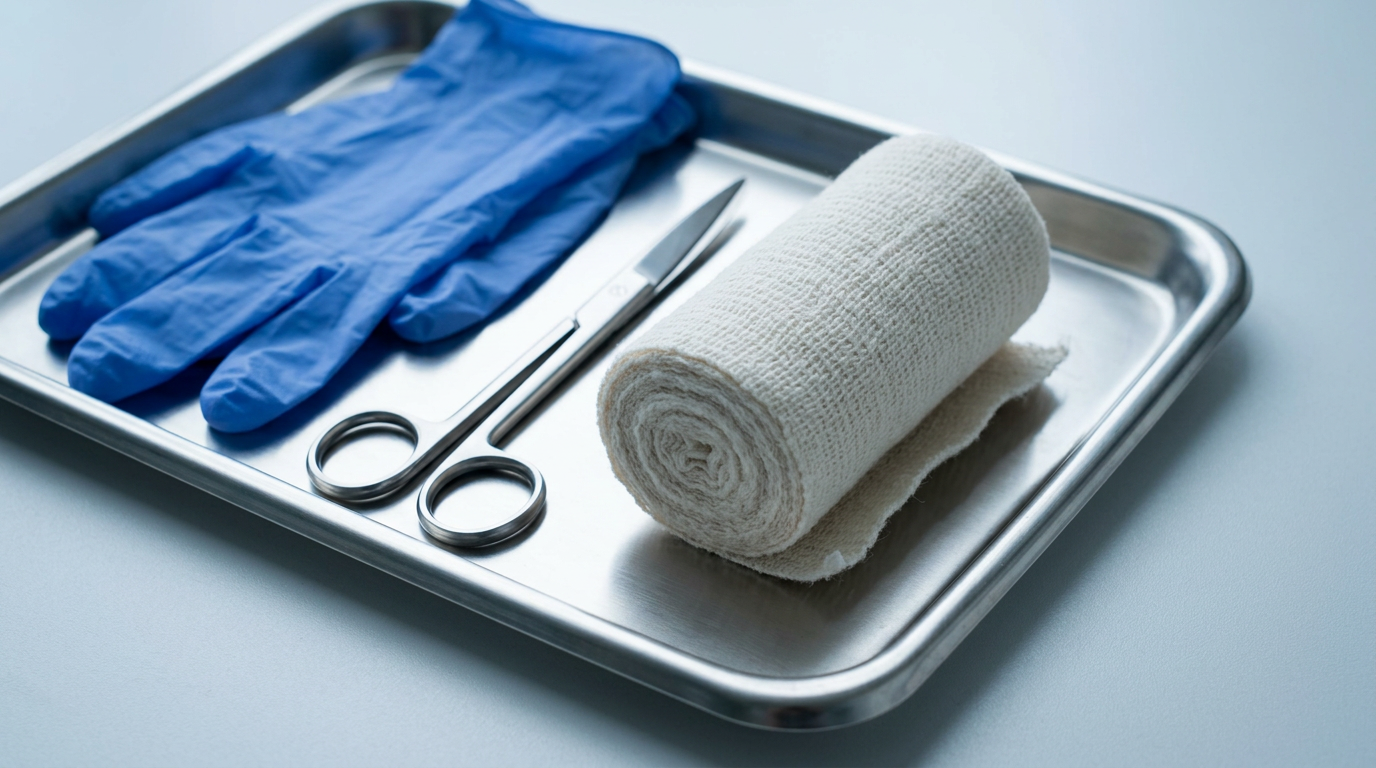
Before wrapping an orthopedic injury, a checking nurse verifies the underlying primary dressing covers any open wounds to absorb exudate, since the domette fabric acts as a retention layer rather than a fluid absorber.
The clinician unrolls the fabric across both surfaces of the limb, pulling the cotton threads tight enough to utilize the material's tensile strength without creating pressure points on the skin.
Treating a fractured forearm requires a doctor to place a non-adherent sterile pad directly over skin abrasions before introducing an outer layer. The doctor wraps the bandage over the pad and splint, letting the heavy wool weft lock the structure together. Facilities relying on world-class manufacturing facilities like Nuvo Medsurg ensure these non-sterile dressings remain free of industrial solvents before application.
Conclusion
A domette bandage gives a registered nurse a dependable, non-stretch method to stabilize orthopedic injuries, relying on the cotton and heavy wool construction to protect patients while healing progresses.
Frequently asked questions
Is a domette bandage elastic?
To determine elasticity, medical workers consult references like SVKM's NMIMS materials, which classify the material as a non-stretch fabric retention bandage. The cotton and wool construction holds a specific shape rather than expanding over a moving joint.
What material is inside the dressing?
Textile machines weave cotton threads together with a heavy wool weft to create the thick padding needed for orthopedic protection.
How does it differ from a triangular calico sling?
As the comparison table earlier in this guide shows, a calico dressing uses unbleached cotton to suspend an arm, whereas the domette roll wraps directly around the limb to hold rigid splints in place.
Can you use it directly on an open wound?
Because the retention roll detailed in the previous section acts as an outer support layer rather than a fluid absorber, a primary care nurse places an absorbent or non-adherent dressing over the broken skin first.
Why is water vapour porosity important?
Sweat accumulates on human skin under a heavy orthopedic cast. The plain weave allows this trapped moisture to escape, preventing tissue breakdown during the consecutive weeks a patient wears the wrapping.


