
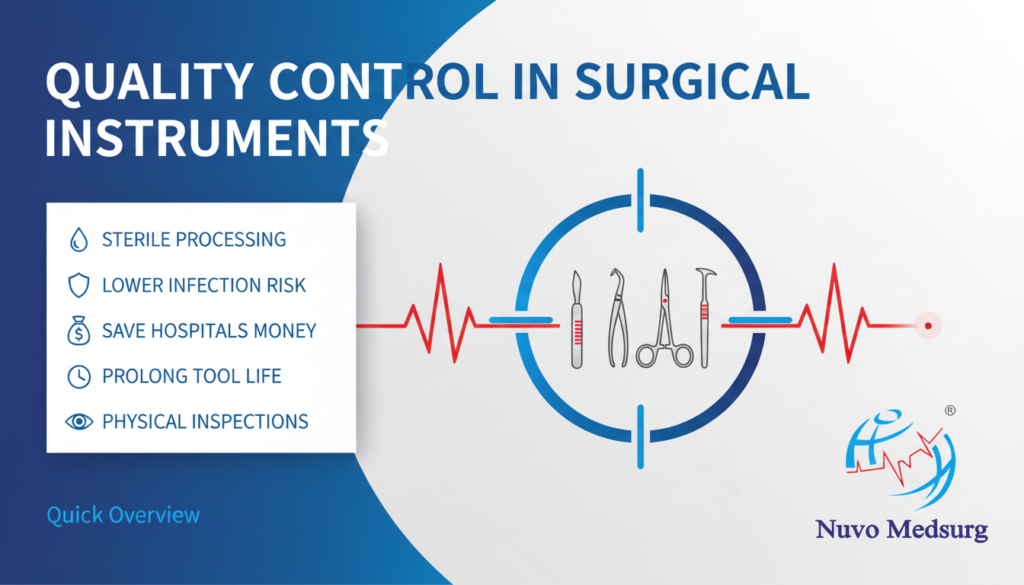
Quick Overview
-
Quality control in surgical instruments provides a technical plan for keeping tools clean in sterile processing.
-
These protocols lower the risk of patient infections and save hospitals money.
-
Regular checks help surgical tools last longer.
-
Staff must perform decontamination at the point of use.
-
Strict physical inspections ensure the hospital follows international safety rules.
Why Quality Control In Surgical Instruments Matters For Patient Safety
Quality control in surgical instruments acts as the main shield against infections and issues during surgery. When cleaning and validation processes fail, they leave behind dirt or bacteria. This residue leads to cross-contamination when doctors use the tools on the next patient. Uncleaned devices allow germs to enter the sterile tissue of a patient. This direct link often causes nosocomial infections.
Faulty or rusted tools create other problems. They cause longer surgeries and increase the risk of errors. Hospitals also face higher legal liabilities when equipment does not meet standards. Nuvo Medsurg works to solve these problems by helping teams maintain high standards for Superior Surgical Outcomes.
|
Situation |
Potential Impact |
|---|---|
|
Residual dirt on tools |
High risk of cross-contamination |
|
Poor instrument calibration |
Longer surgical procedures |
|
Rusted or damaged metal |
Increased risk of patient injury |
|
Strict quality checks |
Improved safety and device lifespan |
Understanding Surgical Instrument Grades and Material Standards
Quality control in surgical instruments depends on the type of metal used. Manufacturers group these materials into premium, mid-grade, and economy categories.
Premium instruments use German stainless steel. This material meets DIN standards for high durability. Surgeons prefer these tools for long procedures.
Mid-grade instruments serve general clinical and academic needs. Makers produce these tools according to ISO 13485 standards. They balance performance with lower costs.
Economy or floor-grade instruments consist of lower-quality stainless steel. These tools suffer from rapid corrosion. They often change shape after repeated use.
Passivation is a key chemical treatment for these tools. It removes free iron from the surface of the steel. Technicians use an acid solution for this process. It creates a thin, protective chromium-oxide barrier. This layer acts as an invisible shield. It stops water and air from rusting the underlying metal.
The passive chromium oxide film works as an active barrier. Once free iron leaves the surface, the remaining chromium reacts with oxygen in the air. This forms a molecular layer that resists chemical degradation. This process prevents rust and keeps the metal strong.
A technician might use Nitrile Examination Gloves to handle a premium scalpel handle. The gloves help keep the tool clean. The satin finish on the scalpel resists glare under bright surgical lights.
The Critical Distinction Between Cleaning, Disinfection, and Sterilization
Quality control in surgical instruments requires clear steps for decontamination. Each stage serves a specific purpose in safety.
Cleaning is the physical removal of dirt, blood, and other debris from instruments. Staff use water, detergents, and enzymes for this task. It is essentially washing away visible soil so the next steps reach the metal surface.
Disinfection follows cleaning. This process uses heat or chemicals to destroy most germs. It removes pathogenic microorganisms from the surface. However, it cannot kill tough, dormant bacterial spores. Think of this as killing most germs while leaving behind very hardy life forms.
Sterilization is the final step. It destroys all forms of microbial life. This includes highly resistant bacterial spores. Facilities use tools like an autoclave, ethylene oxide, or dry heat to reach this goal. It makes the instrument entirely free of any living microbe.
Some technicians mistakenly believe that autoclaving a dirty instrument makes it safe. This is wrong. Steam cannot reach through dried blood or tissue. Organic debris protects active pathogens during the heating cycle. Use Disinfectant Wipes to help maintain surfaces in the area, but follow official facility protocols for the instruments themselves. Always talk to a doctor or a qualified infection control officer for specific medical safety procedures.
The Point-of-Use Pre-Treatment Process To Prevent Biofilm Formation
Quality control in surgical instruments begins immediately after a surgery ends. Staff must prevent bioburden from drying on tools. Biofilm is a sticky layer of bacterial slime. It glues itself to metal surfaces and forms a protective shell around germs. This shield blocks cleaning agents from killing the bacteria underneath. Technicians have a 30-minute window to act. If they wait longer, the residue hardens and becomes difficult to remove. Proper pre-treatment keeps instruments moist, stops surface pitting, lowers the total count of microbes, and keeps the workflow moving quickly. This meticulous process is ephemeral yet vital for patient safety.
Steps For Point-of-Use Pre-Treatment
-
Wipe off all heavy blood and tissue with a damp towel.
-
Apply an enzymatic foam spray to all instrument surfaces.
-
Keep the tools moist inside the transport container.
-
Send the container to the Sterile Processing Department within 30 minutes.
A Structured Visual Inspection Protocol For The Sterile Processing Department
Quality control in surgical instruments continues with a thorough visual inspection protocol inside the Sterile Processing Department. Technicians must check specific areas where debris hides. They should look closely at box locks, deep serrations, and small crevices. Any leftover dirt suggests the cleaning process failed. A magnified lamp helps staff spot these issues quickly. This inspection is mandatory for every single tray.
-
Check box locks, serrations, and crevices for any remaining bioburden.
-
Test the sharpness of cutting edges on scissors, chisels, and curettes to prevent tissue trauma.
-
Verify the tension and alignment of hinged instruments like clamps and forceps.
-
Inspect plated instruments for chips or worn areas that could hide bacteria or lead to rust.
-
Use care with ultrasonic cleaners. Do not use these machines for chrome-plated items or delicate micro-surgical tools. The intense vibrations from the machine can crack the plating or bend fragile tips.
Always consult a doctor or hospital protocols if an instrument appears damaged or if cleaning results remain uncertain.
Using Quality Control Circle Activities To Reduce Instrument Failures
Hospitals often look for better ways to manage the cleaning and care of medical tools. One effective strategy involves the use of Quality Control Circle activities. These groups bring staff together to solve specific problems in sterile processing departments.
A clinical study recently looked at how these circles change results. Before the study, failure rates for cleaning instruments sat at 2.9%. After teams started using these structured activities, the rate dropped to 1.1%. This shows a clear path to safer outcomes.
Teams often use the 5W2H method to find why errors happen. They ask Who, What, Where, When, Why, How, and How much. This system helps workers pinpoint exactly where a process breaks down. Once the team knows the root cause, they can build better rules and start regular audits. Staff training also stops mistakes before they occur.
Nuvo Medsurg supports these efforts to keep tools like surgical sutures and ligatures in top shape. Continuous improvement remains a priority in modern medicine.
Global Standards And Compliance Frameworks For Reusable Medical Devices
Safety depends on following strict rules for quality control in surgical instruments. Healthcare facilities must use recognized guidelines to manage cleaning and sterilization. These frameworks keep patients safe from harm during medical procedures.
Several groups and standards define how medical teams must handle equipment:
-
ANSI/AAMI ST79: This is the main guide in the United States for steam sterilization and how to run a sterile processing department.
-
ISO 17664: This standard tells manufacturers exactly what information they must provide to users for cleaning reusable tools.
-
CDC: The Centers for Disease Control and Prevention provides guidance to help hospitals stop infections.
-
WHO: The World Health Organization sets global rules for infection control.
Facilities must align their work with these documents to ensure reliability. Proper care allows tools like a skin stapler to function safely. Consistent adherence to these protocols protects both the staff and the patient.
Conclusion
Rigorous quality control in surgical instruments keeps patients safe and improves results. Hospitals achieve superior surgical outcomes by following strict metal standards, checking instruments visually, and sticking to global sterilization rules.
Frequently Asked Questions
Q: What is the primary difference between cleaning and sterilization?
A: Cleaning removes physical dirt and debris, but sterilization kills all microscopic life and spores.
Q: Why is passivation necessary for surgical steel?
A: Passivation builds a protective layer of chromium oxide that stops rust and keeps the metal strong.
Q: How quickly does biofilm form on surgical instruments?
A: Biofilm starts to develop in minutes, so staff must begin cleaning instruments within 30 minutes of use.
Q: What are the consequences of poor quality control in sterile processing?
A: Bad quality control leads to patient infections, ruins expensive tools, raises hospital costs, and creates legal trouble.


