
Quick overview
Healthcare facilities use medical gloves to stop the spread of germs. It is important to know the difference between types of gloves to keep patients safe.
-
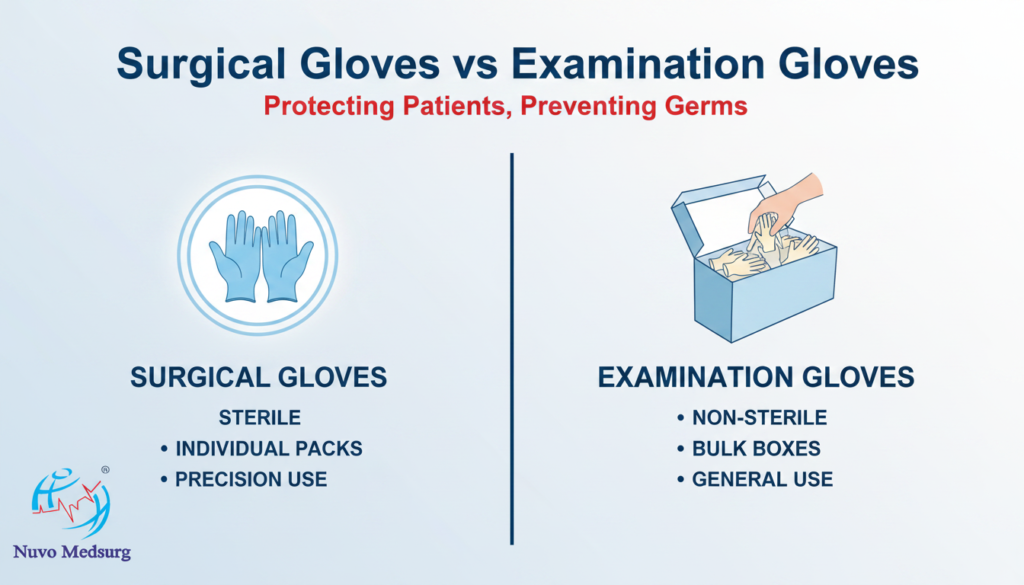
Surgical gloves are sterile and come in individual packs.
-
Examination gloves are usually non-sterile and sold in bulk boxes.
The choice between surgical gloves vs examination gloves depends on the specific task.
What are surgical gloves
A surgical glove is a sterile barrier device. It follows strict rules to protect patients and doctors from cross-contamination during surgery. These gloves must meet specific quality standards like ASTM D3577.
These are high-quality gloves that fit each hand like a second skin. This fit helps surgeons feel and hold tools with great care.
Surgical gloves go through a harsh cleaning process to remove germs. This process is called sterility. It keeps patients safe from infections acquired during their time in the hospital. The gloves have a curved finger shape to stop hand cramps during long surgeries.
Surgeons often use these high-strength gloves alongside surgical sutures from Nuvo Medsurg to get the best results. This combination is a vital part of many successful medical procedures. Always talk to a doctor or medical supply expert if you have questions about which gloves to use for specific tasks.
What are examination gloves
An examination glove is a disposable medical glove. Doctors use them for routine checkups and simple tasks. They act as a barrier to keep germs away from both the staff and the patient. You will often see these gloves packed in large boxes for easy access.
These gloves are for daily tasks. They differ from surgical gloves, which doctors wear during operations. Surgical gloves vs examination gloves evaluations show that examination gloves are designed for non-invasive medical diagnostics. Many medical offices choose nitrile examination gloves because they protect against blood-borne germs.
Staff can pull these gloves out of the box quickly to perform a fast exam. They are a smart, budget-friendly choice for clinics. You can find these disposables at Nuvo Medsurg to keep your medical facility stocked and ready. These products meet the ASTM D3578 standards for quality.
Key differences between surgical gloves and examination gloves
Surgical gloves vs examination gloves evaluations point to distinct manufacturing standards and clinical applications. Healthcare providers must select the correct category to ensure proper barrier performance and medical safety. Surgical gloves vs examination gloves differences are clear when analyzing their manufacturing processes, sizing, and durability. Always talk to your supervisor or doctor if you are unsure which glove type is right for a specific task.
Sterilization standards and packaging
Surgical gloves vs examination gloves comparisons show that sterilization processes are the primary difference between the two. Surgical gloves require a high degree of cleanliness because doctors use them during invasive procedures. Manufacturers pack these gloves in sterile, individually wrapped pairs. This packaging prevents germs from touching the gloves before the doctor puts them on. To reach this level of safety, the factory treats these gloves with ethylene oxide or gamma radiation.
Examination gloves do not need this same level of treatment. These gloves are for general tasks that do not involve internal body cavities. They come in bulk box dispensers rather than individual wraps. This makes them easy to grab quickly during routine checkups. The process is quite idiosyncratic for each type of glove.
Sizing and anatomical fit
Surgical gloves vs examination gloves sizing systems influence hand dexterity and tactile sensitivity during clinical use. Surgeons need a perfect fit for their work. Because of this, surgical gloves use precise numerical sizes. The sizes range from 5.5 to 9.0 in increments of 0.5. These numbers represent the measurement of the palm in inches. This specific sizing ensures an excellent anatomical fit for long tasks.
Examination gloves use a simpler method. They typically come in standard sizes like small, medium, large, and extra-large. This system works well for basic exams where the doctor does not need the same level of grip or finger control.
|
Glove type |
Sizing method |
|---|---|
|
Surgical gloves |
Numerical (5.5 to 9.0) |
|
Examination gloves |
Lettered (S, M, L, XL) |
Always talk to a healthcare professional if you have questions about which gloves are right for a specific medical setting.
Material durability and puncture resistance
Surgical gloves vs examination gloves have different strength levels. Manufacturers test both types to see how well they resist tears. Doctors and nurses need gloves that stay intact during long procedures.
Surgical gloves must meet a lower Acceptable Quality Limit, or AQL, of 1.5. This score means these gloves have fewer defects. The tighter AQL gives higher barrier security for surgery. Examination gloves often have an AQL of 2.5. This is enough for routine clinical safety. These tests ensure the material holds up under pressure. Surgical gloves vs examination gloves strength standards require higher puncture resistance in operating room settings. Higher strength keeps patients and staff safe.
Regulatory standards and fda classifications
The law treats these gloves differently. Surgical gloves vs examination gloves regulatory paths classify surgical gloves as Class II devices. Manufacturers usually categorize examination gloves as Class I devices. Both types require a 510(k) premarket notification to the FDA before they reach the market. This submission proves the gloves are safe and effective.
Specific rules like ASTM D3577 also apply. These guidelines regulate latex surgical gloves to ensure standard compliance across the industry. Surgical gloves vs examination gloves regulations categorize surgical gloves under stricter medical device classes because of the high-risk work performed during surgery. Always talk to a medical professional if you have questions about specific glove needs for your workplace. These legal steps ensure that every pair of gloves meets a predictable standard of quality.
Clinical application guidelines
Choosing between surgical gloves and examination gloves depends on the procedure. Sterile surgical gloves are mandatory for all surgical operations to prevent infection. Medical professionals use examination gloves for low-risk tasks like physical exams and basic patient care. During a major abdominal surgery, a surgeon might choose sterile nitrile gloves of numeric size 7.5 for better sensitivity. Operating rooms combine these sterile gloves with surgical sutures and a skin stapler from Nuvo Medsurg to protect wounds. Clinical staff use bandages and non-sterile dressings to manage patients after minor procedures where exam gloves were appropriate.
The critical risk of powdered gloves
The debate over surgical gloves vs examination gloves shifted significantly when the FDA banned powdered medical gloves in 2016. This prohibition exists because loose powder particles cause severe health complications. They trigger postoperative adhesions, interfere with wound healing, and cause airway inflammation. Modern medical glove lines now use polymer coatings or chlorination to help with easy donning. These methods remove the need for corn starch, making the environment safer for everyone. Always consult a healthcare professional regarding specific equipment protocols.
Conclusion
The selection between surgical gloves vs examination gloves remains vital for hospital safety and clinical hygiene. Nuvo Medsurg provides premium Nitrile Examination Gloves. These products help maintain excellent patient protection across healthcare facilities. Always choose the right gear for the specific medical task.
Frequently Asked Questions
Q: Can standard exam gloves be used during surgery?
A: No. Surgical gloves vs examination gloves differences mean exam gloves are not sterile. They also lack the precise fit required for operations.
Q: What are the primary surgical glove materials?
A: Surgical gloves often consist of natural rubber latex, synthetic polyisoprene, or nitrile butadiene rubber. These materials provide high elasticity for surgeons.
Q: What is the Acceptable Quality Limit for medical gloves?
A: This limit is a leak standard. Surgical gloves need a rating of 1.5 or lower. Exam gloves require a rating of 2.5.
Q: How are surgical gloves packaged differently?
A: Surgical gloves come wrapped as sterile pairs. Exam gloves sit in loose bulk boxes.
Q: Why did the FDA issue a ban on powdered medical gloves?
A: The FDA banned these because corn starch powder causes post-surgery granulomas. It also triggers airway inflammation. This is a precarious issue for patient safety.


