
Quick Overview
-
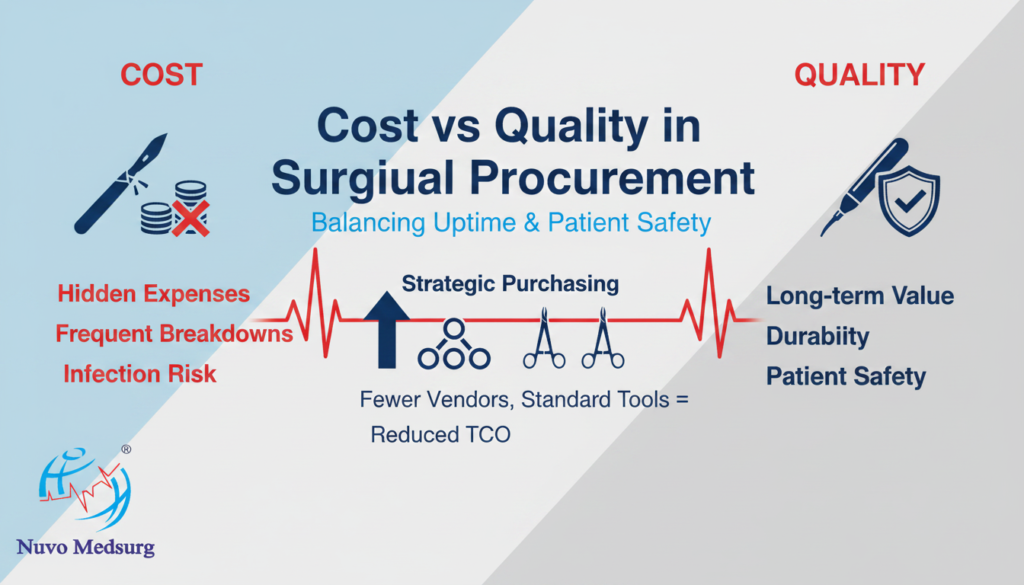
Hospitals must balance upfront spending with long-term clinical value to maintain operating room efficiency.
-
Low-quality medical tools create hidden expenses because they break often, harbor more bacteria, and risk patient safety.
-
Strategic purchasing habits, like using fewer vendors and choosing standard tools, can cut total cost of ownership by up to 21 percent.
Understanding the cost vs quality dilemma in surgical procurement
Hospitals face a difficult choice when they buy surgical supplies. They must control operating expenses while ensuring surgeons have the tools they need for safe patient care. This constant friction defines the search for balance between Cost vs Quality in Surgical Procurement.
Surgical procurement is the process hospitals use to find, buy, and track medical tools and supplies. The goal is to get reliable products that keep patients safe without wasting money.
Purchasing teams often feel pressure to lower costs. This pressure might tempt them to pick the cheapest items available. However, this approach ignores the total cost of ownership. A product might have a low price tag, but it costs more if the staff must replace it constantly or if it breaks during a procedure.
Successful facilities, such as Nuvo Medsurg, look at the full life of a product. They know that a strong, durable tool that survives hundreds of uses is cheaper than a fragile tool that fails quickly. Smart buying habits protect the budget and keep the surgery schedule on track.
Defining surgical procurement and the sourcing paradox
Cost vs quality in surgical procurement affects hospital budgets deeply. Surgical supply costs take up 15 percent of total hospital operating expenses. Buying cheap items creates a paradox. The total cost of ownership goes up because low-cost supplies need frequent replacement. This mess of hidden fees makes cheap look expensive.
The hidden financial and clinical costs of substandard instruments
Cost vs quality in surgical procurement often comes down to what happens inside the operating room. Surgeons need tools that work correctly every single time. When tools fail, hospital staff lose valuable time. This friction hurts operating room efficiency and patient outcomes.
-
High failure rates: Cheap tools break often. A surgeon might need to open three inferior skin staplers when one good one would do the job. This forces staff to waste supplies and money.
-
Clinical complications: Bad tools can cause issues like infections or injuries. Patients might stay in the hospital longer because of these problems. This costs the facility thousands of dollars per patient.
-
Operational bottlenecks: Poor products slow down the surgery. When instruments like skin staplers or surgical sutures perform poorly, the whole schedule shifts. This creates a backlog that disrupts the entire surgical department.
Always talk to a medical professional if you have questions about how these tools impact patient safety or recovery. Proper equipment is a key part of standard care.
Bioburden management and sterilization complexity
Rough surfaces on poorly made instruments trap bacteria and bioburden easily. These microscopic crevices force staff to run longer sterilization cycles and spend more time on manual cleaning. This extra work increases your total cost of ownership. Proper Disinfectant Wipes help your team maintain hygiene effectively.
Patient risks and operating room delays
A single delayed surgery can cost a hospital over $10,000 in lost revenue, according to a study by Surgical Directions. Low-quality Surgical Sutures may snap during a procedure. This mistake risks patient safety and extends anesthesia times. Strong materials improve surgical outcomes and support overall operating room efficiency by avoiding unnecessary revisions.
Collaborative procurement strategies to balance budgets and quality
Healthcare facilities often struggle to manage spending while keeping high standards for patient care. They can solve this problem by using data to guide their buying choices. Smart procurement models help hospitals save money while they continue to provide excellent medical results.
|
Strategy |
Operational Method |
Financial Impact |
Clinical Quality Impact |
|---|---|---|---|
|
Vendor Rationalization |
Consolidate purchasing from multiple suppliers to a single or dual-vendor model. |
Reduces acquisition costs by 21% through volume discounts. |
Maintains consistent quality by standardizing product lines. |
|
Reference Pricing |
Standardize maximum prices for similar medical devices across all manufacturers. |
Saves millions of dollars on high-volume items like implants. |
Preserves clinical autonomy without paying premium brand surcharges. |
|
Capitated Pricing |
Negotiate flat-rate price ceilings with suppliers for specialized medical devices. |
Eliminates hidden price variances and simplifies budget planning. |
Guarantees access to specialized equipment for complex cases. |
Vendor consolidation and single-source contracting
Moving to a single-vendor procurement framework removes administrative headaches and strengthens ties with suppliers. For example, the Cleveland Clinic reduced its spine implant suppliers from ten down to just one. This move lowered costs by 21% while surgical quality remained stable (Source: PMC6902802). Single-source contracting makes inventory management easier and prevents delays linked to managing too many different suppliers.
Competitive price benchmarking and sourcing action analysis
Teams use medical equipment price comparison to find price gaps and save money. This strategy stops budget leaks. According to Nexdigm market analysis, sourcing action analysis drops supplier price variance by 17% to 21% for surgical gear. Also, capitated pricing keeps costs steady. It stops suppliers from adding random markups on expensive items using reference pricing methods.
Evaluating material specifications for superior surgical outcomes
Getting the best value for cost vs quality in surgical procurement means looking closely at how tools are made. Professionals check metal traits to ensure instruments survive tough hospital cleaning routines. High-quality gear lasts longer, which keeps replacement costs low over time. A quick glance at the specs shows why certain materials work better than others in the operating room.
-
Stainless steel: This common material needs high chromium levels. It creates a layer of chromium oxide to stop rust after repeated sterilization.
-
Rockwell hardness: Manufacturers use this rating to measure metal strength. For example, needle holders need a rating between 40 and 48 HRC so they grip needles firmly without slipping.
-
Durability additives: Surgical scissors often use tungsten carbide inserts. These keep the blades sharp much longer than regular steel options.
-
Regulatory audits: Always look for official paperwork. Good suppliers hold ISO 13485 certification and current FDA registration to prove they meet strict safety rules.
Manufacturing standards and quality certifications
High-quality stainless steel instruments require strict oversight to prevent rust and surface damage during sterilization. Certified factories use precise quality management to keep tools strong and uniform. Always check for ISO 13485 certification and FDA registration. These credentials indicate that a facility follows global safety rules for medical equipment.
Reliable disposables for safe wound closure
Good wound care relies on disposables that absorb fluids and provide a strong barrier. Nuvo Medsurg offers Bandages, Absorbent Gauze, Non-sterile Dressings, and Absorbent Cotton Wool to meet these needs. Using consistent clinical consumables and Nitrile Examination Gloves helps prevent tears and contamination. This practice protects patients during busy clinic hours.
Conclusion
Achieving balance in cost vs quality in surgical procurement requires a move away from looking only at the initial purchase price. Facilities must focus on the total value of items over their entire life. Buying high-quality instruments and certified disposables stops clinical errors and prevents delays in the operating room. This approach supports better surgical outcomes for every patient. Healthcare centers can lower their operational expenses by using structured benchmarking and working with reliable manufacturers.
Frequently Asked Questions
Q: What are the risks of choosing cheap surgical instruments?
A: Low-cost tools often break during surgery. They also have higher failure rates during cleaning. These problems cause long delays in the operating room. Any money saved on the initial purchase disappears quickly because of these complications.
Q: How does single-vendor procurement reduce surgical costs?
A: Hospitals buy from one source to get bulk discounts. This process makes paperwork easier for the staff. It also stops the chaos of managing too many different supply chains.
Q: Does reducing procurement costs compromise patient care?
A: No, it does not. Data shows that hospitals keep patient outcomes stable while they lower costs. Strategies like comparing prices and using fewer vendors can cut expenses by over 20 percent without hurting surgical quality.
Q: Why is material quality important in surgical procurement?
A: Surgeons need tools made from surgical-grade stainless steel. This material stops rust from forming. It also stays strong through many rounds of intense heat sterilization. Using bad materials creates an unpredictable outcome for the patient.
Q: How do standardized surgeon preference cards limit waste?
A: These cards tell the staff exactly which items a surgeon needs for a specific task. Teams only open the supplies on the card. This stops the common habit of opening boxes that never get used, which saves money and prevents waste.


