
Quick Overview
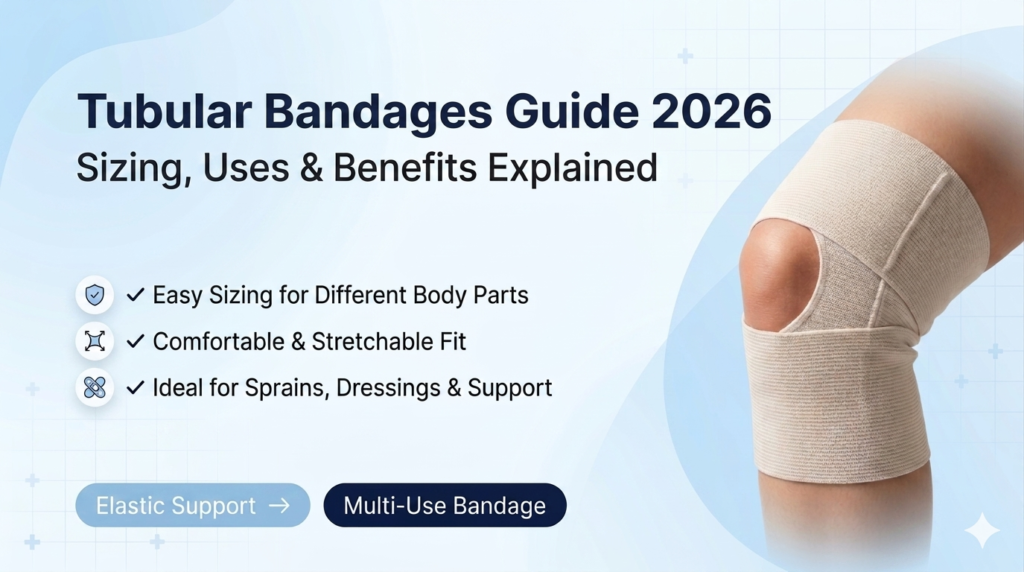
- Tubular bandages provide uniform pressure and support for joints and muscles.
- Users do not need pins or tape for these bandages.
- These elasticated tubes come in various sizes.
- They fit fingers, limbs, or the torso well.
- People wash and reuse them for injury recovery.
- They apply easier than traditional wrap-around compression gear.
Understanding Tubular Bandages and Their Purpose
Tubular bandages are cylindrical, elasticated fabric sleeves. They provide continuous and even pressure across a limb or body part. A tubular bandage is a lightweight, knitted medical sleeve made of cotton, viscose, or elasticated yarn. Medical teams use it for dressing retention or light compression therapy, according to ScienceDirect.
Think of it as a stretchy, medical-grade sock without a heel. You slide it over your arm or leg to keep the area tight and supported. Unlike flat bandages, these do not require clips. The special knit structure grips the skin naturally. You can find more information about these medical supplies at Nuvo Med Surg. These items offer an idiosyncratic solution for keeping bandages in place or reducing swelling.
Common Medical Uses for Tubular Support
Tubular bandages are helpful tools for managing health issues at home or in a clinic. These bandages apply steady pressure around a limb. This compression helps move fluids away from an area to reduce edema. Many people use them to stabilize joints after common sprains or strains. They provide a reliable way to keep a dressing in place over a wound. This is a common method for covering an area after a doctor uses a skin stapler to close an incision.
Patients often use these supports for specific health needs:
- Edema management: The bandages apply light pressure to help fluid drain from swollen tissues.
- Joint stabilization: They keep joints steady after minor injuries to prevent further pain.
- Dressing retention: They hold gauze or pads firmly against surgical sites.
- Varicose veins: Consistent pressure helps improve blood flow in the lower legs for those with this condition.
- Soft tissue injuries: The circular shape provides uniform pressure that helps with healing.
Selecting the Right Size for Your Needs
You must measure your limb circumference carefully to get the right amount of compression. A bandage that is too loose will not work well. A bandage that is too tight can block blood flow. Measure the widest part of the limb where you need the support. You can use a tubular elastic bandage once you have your exact measurements.
Refer to this size chart to find your best fit.
| Size | Body part | Width range |
| Size A | Small limbs or infant arms | Varies by brand |
| Size C | Adult small arms or medium wrists | Varies by brand |
| Size E | Adult knees or large ankles | Varies by brand |
| Size G | Large thighs or adult trunks | Varies by brand |
Specific brands follow different rules for their size chart. Tynor sizes in India rely on width measurements to help you pick the right product.
| Tynor size | Width of limb |
| Small | Below 7.5 cm |
| Medium | 7.5 cm to 10 cm |
| Large | 10 cm to 12.5 cm |
| Extra Large | Above 12.5 cm |
Always double-check your measurement before you buy. A proper fit is a fundamental part of the recovery process. Proper sizing ensures the bandage stays comfortable during daily movement.
Advantages of Tubular Over Traditional Wraps
Tubular bandages offer better ease of use than standard wraps. You simply slide them onto the limb. You do not need to learn complex wrapping skills.
Traditional crepe bandages often lose their grip as you move. They also create areas of high pressure on the skin. Tubular knits provide uniform compression across the entire covered area. This even pressure keeps blood flow steady and helps with swelling.
These bandages stay in place much better during physical activity. A runner who uses a tubular sleeve on a calf strain avoids the frustration of a bandage coming loose mid-stride. A standard crepe bandage frequently unravels during a long run, but a tubular design holds its position until you decide to remove it. It is a reliable choice for active recovery in 2026.
Step-By-Step Guide to Applying Bandages
Follow these steps to put on a tubular bandage correctly.
- Bunch the fabric up in your hands like a sock before you slide it over the limb.
- Measure the length of the injured area. Cut the bandage to double that length if you need extra support.
- Pull the first layer over the skin. Make sure it covers the area 2-3cm above and below the injury.
- Fold the extra fabric back over the first layer. This double layer technique creates stronger pressure on the injury (Source: Bandages Plus).
- Check for wrinkles or bunched fabric, especially behind joints like the knee or elbow. Smooth these out so the pressure stays even during joint flexion.
Safety Precautions and Circulation Checks
A tubular bandage helps with support and swelling. You must pick the right size for your limb. A bandage that is too small limits your blood flow.
Watch for these signs that the wrap is too tight:
- Your skin turns a blue color.
- You feel numbness in the area.
- A tingling sensation starts under the wrap.
Remove the bandage at once if the limb feels cold. Also, take it off if you feel throbbing. Some people think a tighter wrap heals an injury faster. This is wrong. Too much pressure can cause tissue damage.
Do not use compression on your skin if you have active arterial disease. People with severe peripheral neuropathy should also avoid these bandages unless a doctor says it is safe. These are important contraindications to keep in mind. You might find this situation somewhat precarious if you ignore these warning signs.
Cleaning and Caring for Elastic Bandages
You want your bandage to last a long time. It will keep its elasticity better if you wash it by hand. Use lukewarm water for this.
Use a mild soap to clean the fabric. Never use bleach. Harsh chemicals break the rubber threads inside the material.
Dry the bandage flat on a surface. Do not hang it up to dry. Hanging it causes the fabric to stretch out of shape.
Good products like those from Tynor stay strong after many washes. They provide consistent support even after repeated use. This simple habit keeps your gear in a pristine state for your next recovery session.
Conclusion
Tubular bandages are simple and effective tools for managing common injuries. They offer reliable support for anyone who needs a hands-free recovery solution in 2026. This elastic material provides a quintessential way to protect the body during the healing process.
Frequently Asked Questions
Can I Sleep in a Tubular Bandage?
Only wear it at night if your doctor suggests it for swelling. Otherwise, take it off so your blood flows well while you sleep.
How Often Should I Replace My Tubular Bandage?
Change the bandage when the fabric loses its stretch. If it does not snap back to its original shape after washing, it is time for a new one.
Can I Use These for Surgical Wounds?
Yes. They work well to hold dressings in place over surgical sutures or skin stapler sites.
Do I Need a Prescription for Tubular Bandages?
No. You can buy them at most pharmacies or online shops in India without a doctor’s note.
Is a Tubular Bandage Better Than a Crepe Bandage for a Sprain?
Yes. It offers more even pressure and stays in place better than a crepe bandage during the day.


