
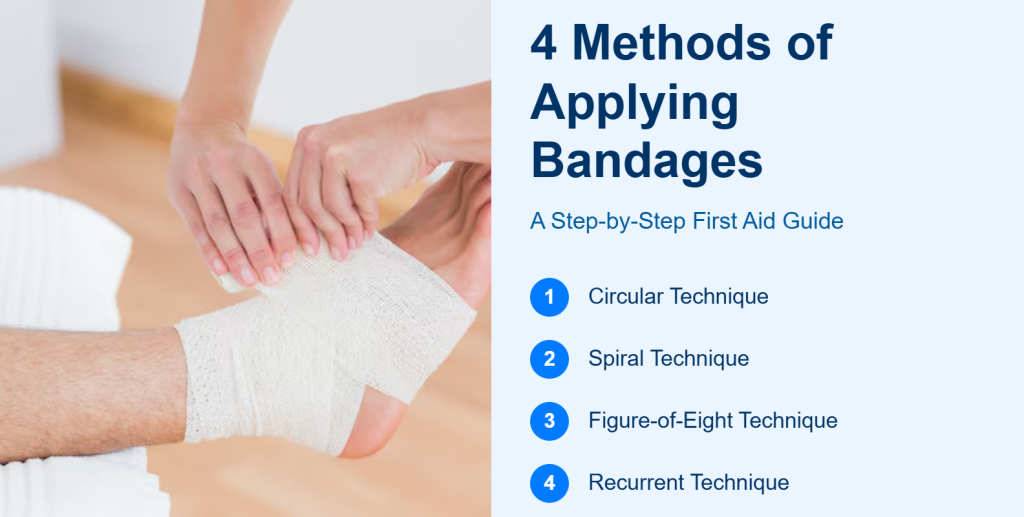
Quick overview
- Use circular, spiral, figure-of-eight, and recurrent techniques for first aid.
- These 4 methods of applying bandages keep wounds clean and hold joints in place.
- Focus on keeping blood flow normal and ensure the bandage feels comfortable.
- Avoid wrapping the material too tightly.
Essential rules for safe bandage application
A safe wrap starts with a clean foundation. You must wash your hands well before you touch any injury. Wear gloves if you have them to block germs. These habits keep the area free of infection. Always follow these steps to protect the patient:
- Place a sterile dressing directly over the wound.
- Do not touch the inside of the dressing that will cover the cut.
- Wrap the bandage starting from the part furthest from the heart and move toward the body.
This process helps blood return to the heart easily. Follow these 4 methods of applying bandages to support a clean wound while you wait for a doctor to check the injury.
The circular turn method for anchoring
A roller bandage needs a firm start to stay in place. You use the circular turn method to anchor it. This lock keeps the material from slipping as you wrap the injury.
Hold the end of the bandage on the skin. Wrap the roll around the same spot at least twice. Each new layer must sit directly over the old one. This makes the bandage secure. It works well on thin body parts like the wrist or a finger. You should check the fit so it is snug but not too tight. Proper blood flow matters. Always talk to a doctor if you feel numbness or see the skin turn blue after you wrap it.
The simple spiral method for limbs
The spiral turn is perfect for long, straight body parts. It helps cover the arm or leg quickly. You start with the anchor method first. Then, you angle the bandage upward at a slight slant. This overlap covers about half or two-thirds of the previous layer. You move slowly up the limb.
Use this for areas with uniform thickness:
- Start the wrap at the bottom of the limb.
- Pull the bandage at a slant to move upward.
- Keep the pressure steady and even.
- Overlap each layer to keep the skin covered.
This is part of the 4 methods of applying bandages. It keeps the wrap flat against the arm or thigh. It is a common way to hold a dressing in place. If the injury hurts more or the swelling grows, see a medical professional right away.
The figure of eight method for joints
The figure of eight method is the best way to bandage joints while keeping your mobility. You can use this for a sprained ankle or a stiff elbow. Follow these steps to wrap the area correctly.
- Start with a circular turn below the joint.
- Wrap the bandage diagonally over the joint.
- Bring the wrap above the joint to secure it.
- Cross the bandage back and forth to make an 8 shape.
If you wrap an ankle, start at the foot. Cross the bandage over the top of the foot. Bring it around the leg and return to the foot. This keeps the wrap tight enough to support the area but loose enough to let blood flow. Always ask a doctor if your injury does not get better after a few days. This simple wrap helps the limb rest in a natural position.
The recurrent turn method for rounded areas
The recurrent turn method is the standard way to cover rounded body parts like fingertips or head wounds. It stops the bandage from sliding off because it covers the tip of the limb firmly.
- Fold the bandage back and forth over the top of the finger or head.
- Use a circular turn at the base to hold those folds in place.
This process keeps the dressing stuck to the rounded shape. It is a quintessence of smart first aid. Keep the bandage snug but do not cut off your blood flow. If your skin turns blue or feels cold, you wrapped it too tight. Please see a medical professional if the wound looks deep or will not stop bleeding.
Crucial checks for blood circulation
A bandage must allow blood to flow. Follow these steps to perform a circulation check and monitor CSM:
- Circulation: Press a fingernail or skin area past the bandage. The color should return in less than two seconds.
- Sensation: Ask the person if they feel any tingling or numbness in the limb.
- Movement: Check if the person can move their fingers or toes easily.
If the skin stays pale or the person reports pins and needles, the wrap is too tight. Loosen the bandage right away. Always watch the person closely for any sudden changes. So, these quick tests prevent tissue damage while keeping the limb secure.
Common mistakes to avoid when bandaging
Bandaging an injury takes care. Some common mistakes lead to pain or poor healing. Use these tips to get the right tension and fit:
- Keep the wrap even. Do not leave gaps between the turns, as this creates pressure points.
- Use dry materials only. Wet fabric shrinks as it dries and cuts off blood flow.
- Pick the right spot for clips. Do not place clips over a joint. They might dig into the skin when the person moves.
- Avoid a loose bandage. If the wrap slides, it does not support the injury.
Check the tightness frequently. A proper bandage is firm but never restricts the body.
Conclusion
Learning these four ways to wrap a bandage helps you keep your family safe when accidents happen. You should practice these wrapping turns now. This preparation makes you ready for any emergency. If a wound looks deep or will not stop bleeding, always call a doctor right away for help.
Frequently asked questions
How tight should a bandage be?
It should feel firm against the skin. You must be able to slide two fingers underneath the wrap comfortably. If your fingers do not fit, it is too tight.
Which method is best for a knee?
The figure-of-eight method works best here. This pattern gives support while letting the joint bend naturally.
Can I reuse a crepe bandage?
You can wash and reuse these bandages. Only do this if they are clean and have no blood on them. Discard them if they get dirty.


