
Quick overview
- Butterfly bandages securely close minor, shallow cuts without a doctor.
- These adhesive strips help skin heal faster and lower the risk of scars.
- Proper cleaning and use stop germs from causing infections.
Defining butterfly bandages and their medical purpose
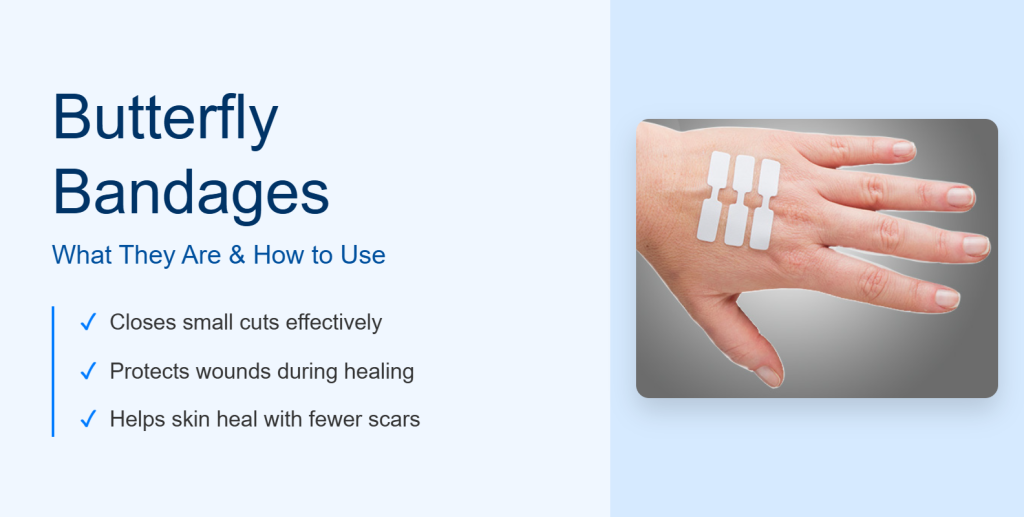
Butterfly bandages are thin, sticky strips. They pull the edges of a cut together. The middle part is narrow. The ends have wide wings. This shape helps them stick well to the skin. People often call them Steri-Strips or wound closure strips. They act like stitches. They provide constant pull across the cut to keep it shut.
| Feature | Description |
| Shape | Narrow center with wide ends |
| Use | Keeps skin edges touching |
| Benefit | Helps skin heal without stitches |
| Another name | Steri-Strips |
Determining if your cut is suitable for butterfly strips
You should check your injury before you reach for the medical supplies. Butterfly bandages work best on simple, shallow cuts. They do not work on every wound. Follow these rules to see if they fit your needs:
- Use these strips only for cuts less than half an inch long.
- Ensure the wound edges are straight. Do not use them on jagged edges.
- Stick to linear boundaries for the best hold.
- Select butterfly bandages for shallow injuries that stop bleeding quickly.
- Avoid using them on moving joints like fingers or knees.
- Do not put them on skin that stays moist or sweaty.
These bandages help keep clean skin edges together. They fail if the skin keeps pulling apart. Stick to flat, still areas of your body for the best results.
Butterfly bandages versus traditional stitches for wound closure
Knowing when to skip the home kit is important. Sometimes you need a doctor. Serious injuries require professional tools to heal right. This table shows the difference between simple tape and real sutures.
| Feature | Butterfly bandages | Traditional stitches |
| Wound depth | Shallow cuts only | Deep, gaping holes |
| Tissue type | Top skin layer only | Yellow fatty tissue or red muscle |
| Body location | Flat, still areas | Knees, elbows, or joints |
| Pain level | Low and easy | Requires numbing |
| Purpose | Quick DIY help | Strong repair |
Go to the emergency room if you see deep layers of your body. Stitches are mandatory if the gap is wide. Doctors also use sutures on the face to avoid scars. If the bleeding will not stop after pressure, you need medical help. Butterfly bandages are only for small accidents.
Preparing the wound site for secure bandage placement
Butterfly bandages need a clean and dry surface to stay in place. Follow these steps to prepare the skin correctly.
- Wash your hands well with soap before you touch the area. This stops germs from entering the wound.
- Rinse the cut under cool running water. This step helps remove any loose dirt or debris from the opening.
- Clean the skin around the cut with mild soap. Be gentle.
- Pat the area dry with a clean towel until no moisture remains. Dry skin is an absolute prerequisite for good adhesion.
- If the area stays damp, the adhesive will not stick. Proper preparation keeps the bandage from curling at the edges. You can also use an antiseptic wipe on the surrounding skin to remove oil before you apply the strips.
Applying butterfly bandages with the proper cross technique
Use this method to close a small cut safely. Always place the strips across the wound rather than along it.
- Pinch the edges of the skin together with your fingers. Hold them in place.
- Take one wing of the bandage and stick it onto one side of the cut.
- Pull the strip tightly across the gap. Secure the other wing on the opposite side. This pull brings the skin edges together.
- Place the center of the strip directly over the cut. This creates a plus sign shape.
- Repeat this with more strips. Space each one about 3mm apart. Continue until the entire length of the wound is closed.
- Add small vertical strips at the ends of your first row. This pattern creates railroad tracks. These extra pieces keep the main strips from peeling off.
This simple cross technique keeps the wound edges steady. It prevents the cut from pulling apart during your daily movement. Keep the area dry for the best results.
Managing wound care and hygiene during the healing process
Butterfly bandages usually stay on the skin for up to two weeks. Proper care helps the healing process. Follow these steps to keep the area clean and secure:
- Keep the area dry for at least 48 hours after you put the bandage on.
- Pat the bandages gently after showering to remove extra moisture.
- Use small scissors to trim any curling edges instead of pulling them.
- Watch for redness, swelling, or pus that signals potential infection signs.
Check the wound every day. If you notice a bad smell or increased pain, talk to a doctor. Staying dry helps the glue hold longer.
Removing adhesive strips safely without damaging new skin
Removing these bandages requires a gentle touch to protect your fresh scar. Start by soaking the bandages in a mix of equal parts water and hydrogen peroxide. This mixture helps loosen the glue. Once the edges lift, peel each wing slowly toward the center of the wound. Lift the middle section last so you do not pull the new skin apart. This slow method prevents skin damage.
Warning: Never rip the bandage off quickly like a standard plaster. Ripping the strips can reopen the wound and cause a larger scar.
Conclusion
Butterfly bandages belong in every home medicine cabinet. They offer a quick way to treat small cuts at home. These strips hold skin together to help the body mend itself. You should visit a doctor if a cut is very deep. Also, see a professional if you notice signs of an infection like redness or pus.
Frequently asked questions
Can you shower with butterfly bandages?
Yes, but you should wait 48 hours first. Pat the area dry with a clean towel after your shower.
How long do they stay on?
The strips usually fall off by themselves in 10 to 14 days. Do not pull them off too early.
Do they leave scars?
They help prevent scars. They keep the edges of the cut straight while the skin heals.
What if they fall off early?
Clean the skin around the cut. Apply a new strip if the skin still looks open or raw.


