
Quick overview
- Extra large bandages offer vital protection for any wound that measures 3 inches or more across.
- Choosing the right material helps your skin heal faster. Flexible fabric or hydrocolloid pads work well for most people.
- You need a clean area to apply these bandages. Always leave a 2.5 cm margin of clean, sticky space around the wound to keep it safe from gunk.
Defining extra large bandages and wound covers
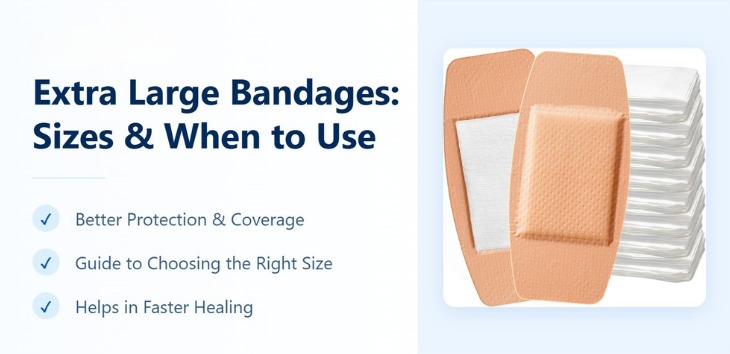
Extra large bandages are the right choice for skin injuries that measure more than 3 inches in length. They keep things like dirt, germs, and bacteria away from your skin. You might call these large covers a shield for your body. Most companies make them thicker than standard strips. This helps the bandage soak up extra liquid that leaks from a wound. It’s a pragmatic solution for people dealing with scrapes or surgery spots that don’t fit under a tiny adhesive square.
Common dimensions and sizes for large dressings
People look for specific sizes like 1.75 x 4 inches or 4×4 inches when they have a large injury. These dressings provide the right amount of coverage for bigger areas of skin.
| Type of Dressing | Typical Size |
| Standard XL Strips | 1.75 x 4 inches |
| Square Patch Bandages | 2×3 or 4×4 inches |
| Rolled Gauze | Customizable lengths |
Standard XL strips usually measure 1.75 x 4 inches. You can find square patch bandages in 2×3 or 4×4 inch dimensions. Rolled gauze is also an option if you need a specific length to wrap around a limb. These options are quite versatile for home care.
Identifying when your wound needs extra coverage
You should choose a large injury cover when your regular strips fail to hide the entire hurt area. It is a peculiar but practical choice for keeping dirt out.
- Use extra large bandages for wounds that standard strips cannot fully enclose.
- Apply them to big scrapes, rug burns, or strawberry injuries from sports.
- Choose these covers for post-surgical incisions to prevent infection.
These bandages help keep the skin clean while it heals. If a wound is deep or covers a wide area, a larger dressing is the right tool for the job. It keeps the area protected from outside germs.
Choosing between flexible fabric and waterproof materials
People choose between flexible fabric and waterproof materials when they need extra large bandages for wounds. Each type serves a different purpose based on the injury and the daily activities of the user.
- Flexible fabric uses Memory Weave technology. This allows the material to stretch and move like a second skin. It works well for wounds on joints like knees or elbows.
- Waterproof versions have a four-sided seal. This design keeps the wound dry during showers or while working near water. It prevents moisture from reaching the cut.
The role of hydrocolloid technology in large wound care
Hydrocolloid extra large bandages for wounds create a moist healing environment to help the skin recover. This specific approach speeds up the repair process for deep scrapes or blisters.
The pad contains a special material that turns into a gel. This gel pad absorbs extra fluid from the injury. It forms a visible white bubble over the sore spot. This Hydro Seal technology keeps out dirt and germs. It also keeps the body’s natural healing power inside the pad. The dressing stays in place for several days until it naturally peels away.
Specialized bandages for joints like knees and elbows
Specialized bandages for knees and elbows provide the extra size and flexible pad grip that these moving body parts need. Regular adhesive strips fail here because the skin stretches too much. A small strip pops off when a person bends a leg or moves an arm. It’s a common nuisance.
- The Skin-Flex collection offers shapes built for joints.
- These items stay put during a full range of motion.
- The material acts like a second layer of skin.
- Users avoid the frustration of constant reapplication.
Managing post surgical sites and C section recovery
Extra large bandages for wounds offer the coverage someone needs after a C section or other post-surgical procedure. These spots are sensitive and need protection from tight clothing. A large adhesive cover acts as a buffer against friction. It keeps the area clean throughout the day. A sterile pad inside the bandage manages minor drainage that often happens after surgery. This setup helps the skin stay dry and calm while it mends. Patients change these covers based on the instructions from their doctor. Keeping the site clean is the main goal.
Step by step guide to applying large bandages
The application of extra large bandages for wounds works best when you follow a few simple steps. Proper care helps your skin heal faster.
- Clean the injury and the clean skin around it with mild soap and water. Remove all dirt or grit. For example, if a runner trips and gets a 4-inch scrape on their thigh, they must rinse it well.
- Pat the area dry with a clean towel. Adhesive needs dry skin to stick well.
- Put a small amount of Neosporin or a similar antibiotic ointment on the center pad of the bandage. This helps keep the area moist and clean.
- Center the pad over the scrape. If the scrape is on a thigh, position the pad to allow for normal leg movement.
- Press the adhesive edges down firmly against the skin. This creates a solid seal and holds the bandage in place.
Creating a sterile margin for effective protection
Extra large bandages for wounds should include a 2.5 cm safety margin around the pad. This creates a sterile margin that acts as a barrier. You want the adhesive to touch healthy skin only. Keep the sticky parts away from the actual cut or scrape. This gap prevents germs or bacteria from sliding under the edges. A wider border keeps the bandage secure and provides better protection for the healing tissue.
How to remove adhesive bandages without ripping skin
Proper bandage removal helps prevent ripping skin and unnecessary pain. You should always take your time. Slow movements protect the sensitive area under the adhesive.
- Pull the edges of the bandage back in the same direction that your hair grows.
- Do not pull straight up.
- Apply a small amount of baby oil or a specific adhesive remover if the bandage feels stuck to your skin.
- Let the oil soak for a minute to loosen the glue.
- Gently lift the edges while the adhesive becomes slick.
Why covering a wound is better than letting it air out
A covered wound with an extra large bandage improves your healing speed. Many people think letting a cut breathe is better, but this is a mistake.
- The bandage keeps the wound area moist.
- A moist environment helps skin cells grow back faster.
- This method prevents hard, thick scabs from forming on the surface.
- You lower your risk of bad scarring when you keep the area covered.
- The fabric acts as a physical barrier against dirt and germs.
- It stops your clothes from rubbing against the hurt area and causing re-injury.
Signs of infection in large wounds to watch for
An infection can happen even when you use extra large bandages for wounds. You need to keep a close eye on the area while it heals. Check for signs of redness that seem to spread further away from the injury. You should also watch for swelling that feels firm or hot to the touch. Another warning sign is a bad smell coming from the wound site. Sometimes the body produces thick fluid that looks yellow or green.
You must see a doctor if you notice red streaks that move away from the wound on your skin. A fever is another symptom that requires professional attention. These changes mean the body might have a hard time fighting off germs on its own. It is smart to take these signs seriously to avoid more trouble later.
Conclusion
Choosing the right extra large bandage keeps big injuries safe and clean. You should always match the size of the bandage to the wound. Pick a material that fits your activity level for the best results.
Frequently asked questions
Can I use extra large bandages on a cyst?
Yes. Hydrocolloid bandages work well here. They absorb fluid from the cyst and keep the area clean.
How often should I change a large bandage?
You should change the bandage once every day. Also, change it right away if it gets wet or dirty.
Are these bandages latex-free?
Many brands like Band-Aid offer latex-free choices. You should always read the label on the box to confirm this for your specific pack.
What size is extra large exactly?
This size typically refers to strips that measure 1.75 by 4 inches. It also includes patches that are 2 by 3 inches or bigger.


