
Quick overview
- Knuckle bandages stay on better than standard strips when joints move.
- The special H-shape grips the skin tightly around a finger.
- You should wash any small cut with clean water to stop germs.
- This protection keeps the area safe during the day.
Why knuckle bandages work better for joint injuries
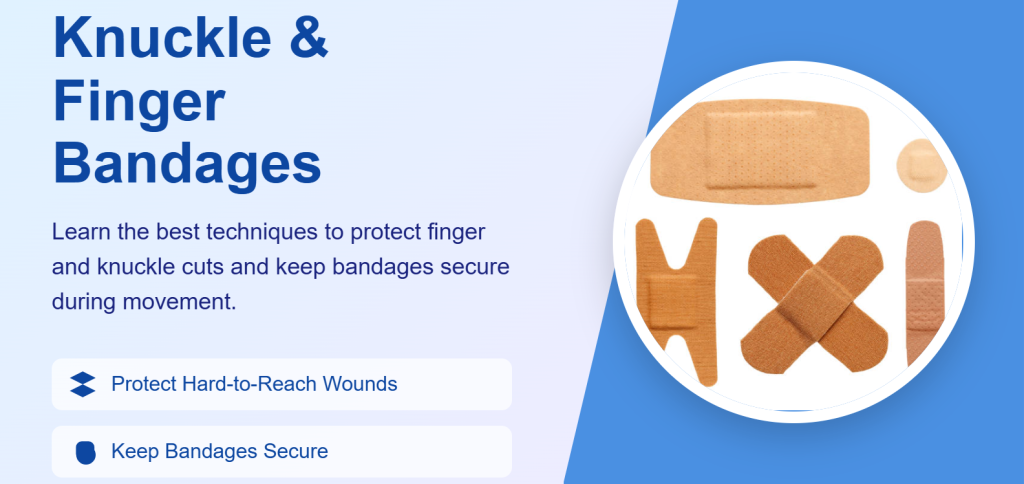
Knuckle bandages use a clever H-shape to stay in place on your hand. Regular bandages peel off the second you bend your finger. The H-shape design wraps around the joint to lock the pad over the cut. This flexible fabric moves with your skin instead of fighting against it. It keeps the sticky parts away from the crease of your knuckle. You get better airflow, too. This helps the wound stay dry and clean as it heals.
| Feature | Standard Bandage | Knuckle Bandage |
| Shape | Flat strip | H-shape |
| Grip | Poor on joints | Strong on joints |
| Movement | Peels off easily | Stays put during motion |
| Comfort | Pulls the skin | Bends with the finger |
Always talk to a doctor if a wound looks deep or shows signs of swelling. A medical professional provides the best advice for your specific health needs.
The best bandage types for hands and fingers
Knuckle bandages and hourglass shapes fit well around curved fingertips. These bandages stay in place better than flat squares. People use butterfly bandages for deep cuts. These small strips pull the skin edges together. They act like temporary stitches to help the wound close. Self-adhering wrap sticks to itself rather than the skin. This prevents painful pulling when it comes off. It also provides extra support for a sore joint. Tubular gauze like Surgitube covers large hand areas. It slides over the skin to protect a healing injury.
- Hourglass bandages for fingertips
- Butterfly closures for deep cuts
- Self-adhering wrap for joint support
- Tubular gauze for large hand wounds
Step by step guide to cleaning your wound
- Rinse the cut with sterile water or tap water to remove dirt. This simple dilution of debris prevents infection.
- Apply firm pressure to the area for five minutes if it bleeds. Use a clean cloth or gauze pad.
- Clean the area around the edges with mild soap. Do not put soap directly inside a deep cut.
- Dab on a small amount of antibiotic ointment. This keeps the site moist while it heals.
- Cover the area with a bandage to keep it dry and clean.
Always check the wound for signs of redness or extra heat. Consult a doctor if the cut looks deep or will not stop bleeding.
How to apply a knuckle bandage in six steps
You need to know how to apply knuckle bandages correctly to keep a cut clean. First, grab the package and open the sterile wrapper. Take great care not to touch the white pad in the center. Next, peel back one side of the paper backing. This exposes the sticky adhesive part.
Place the gauze pad right over the center of the cut on your knuckle. Now, wrap the first wing of the bandage under the joint to hold it in place. Peel the second backing off. Wrap that wing around the other side of your finger. Press the edges down firmly against your skin. This makes a strong seal. Always check with a doctor if the cut looks deep or will not stop bleeding.
Clever ways to wrap a fingertip wound
A custom fingertip bandage stays on better than a standard strip. You can cut the sides of a regular bandage down the middle to make it fit your finger shape. Fold the top of the bandage over the tip of your finger before you cross the wings. This creates a securement that stops the bandage from falling off. Use the crisscross method to wrap the wings over each other.
A busy chef often uses this crisscross method when they get a small nick in the kitchen. It keeps the bandage snug while they move their hands. Leave the tip of your nail partially exposed so you can see if your finger gets good blood flow. If your finger turns blue or feels cold, loosen the bandage right away. You should talk to a medical professional if you have a bad injury.
Smart techniques for bandaging hard to reach wounds
Buddy taping helps when a person injures a finger. This method uses the healthy finger next to the hurt one as a natural splint to keep the area steady. People often use a gauze roll to wrap the fingers together gently. A figure eight wrap works best for the base of the thumb. This pattern adds stability without stopping blood flow. Some people use popsicle sticks as cheap splints for broken bones. These small tools hold the finger straight while the skin heals. Tape should never be so tight that it turns the skin blue or causes extra pain. If the skin looks pale or feels cold, the bandage is too tight and needs loosening.
- Buddy taping uses the next finger as a natural splint.
- Figure-eight wraps provide stability for the thumb base.
- Popsicle sticks act as cheap splints for broken bones.
- Tape should never be so tight that it turns skin blue.
Signs you should see a doctor for hand pain
Serious hand injuries require a professional eye to prevent an infection. Tetanus or sepsis can occur if a deep wound stays dirty or untreated. Seek help if the wound is deep enough to see bone. Watch for red streaks spreading up the arm from the injury site. Pus or a foul smell indicates a serious infection. Numbness in the fingers suggests possible nerve or tendon damage. These signs mean that standard home care is not enough. A doctor must evaluate these symptoms to stop further harm.
- Seek help if the wound is deep enough to see bone.
- Watch for red streaks spreading up the arm.
- Pus or a foul smell indicates a serious infection.
- Numbness suggests possible nerve or tendon damage.
Conclusion
Small hand wounds stay clean when wrapped with the right tools. Proper care keeps people active and safe from infection. It is a simple habit to protect a scrape or cut while it heals. Keeping a bandage dry helps the skin mend faster. Always check for signs of redness or swelling. See a doctor if the pain grows worse.
Frequently Asked Questions
How often should I change the dressing?
Change the bandage once a day. Also, replace it right away if it gets wet or dirty to protect your circulation.
Can I use super glue on a knuckle cut?
Only use medical-grade glue for wounds. Standard adhesive from a store often hurts the skin and causes irritation.
How do I know if the wrap is too tight?
How do I know if the wrap is too tight? Press on your fingernail near the injury. If the pink color does not return in two seconds, the wrap is too tight. You must loosen it immediately.


