
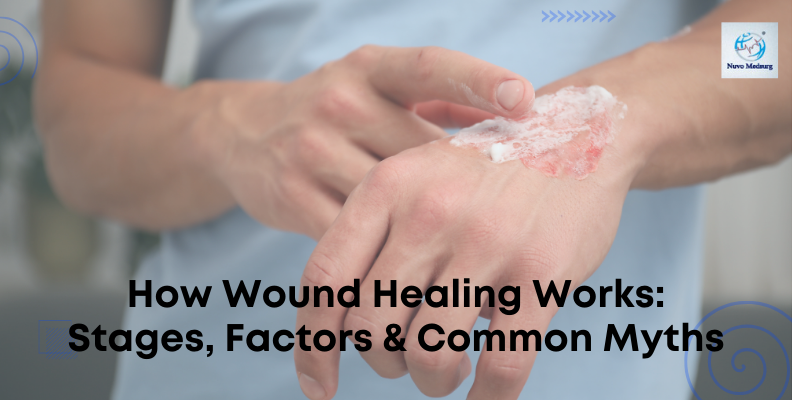
How Wound Healing Works: Stages, Factors & Common Myths
Wound healing is a biological process that enables the body to correct the damaged skin and tissue once injured or operated. This article provides a clear insight into wound healing stages, the manner in which wounds heal with time, the most important factors affecting the recovery and the misconceptions often held that might be used to compromise treatment. Knowing the steps involved, crucial aspects of wound healing and commonly accepted wound healing myths, the reader will be able to learn to be more conscious of the way the body is able to repair itself and how proper wound management is so essential to the overall health and recovery.
How Wound Healing Works
The wound healing process starts as soon as damages are inflicted in tissues. To counteract bleeding, infection prevention, and damaged tissue reconstruction, the body initiates a complex of synchronized biological processes. The process of these responses occurs in a system of wound healing stages, with the damaged cells eliminated, new tissue developed, and skin strength restoration recovers gradually. In the process, the rate and quality of the healing depend on such things as blood supply, nutrition and infection control. This natural healing process may be understood when wounds need time, protection and proper care to heal.
What Are the Main Wound Healing Stages?
The process of wound healing occurs in a natural step-wise process that is triggered once an individual is injured subsequently by the body. It involves four major stages as a rule:
1. Hemostasis (Immediate Response)
This stage starts a few seconds following the injury.
- The vessels in the body narrow in order to curb the loss of blood.
- Platelets form clots.
- To avoid contamination, a protective barrier is developed.
Hemostasis: Hemostasis is the direct reaction of the body to a traumatic wound, which starts several seconds after the injury. Platelets clot and the blood vessels narrow in order to prevent bleeding and prevent the wound to be contaminated. This is done to stabilize the wound before the wound proceeds to other stages of healing.
2. Inflammatory Stage
Inflammation is often misunderstood, but it plays a vital role in how wounds heal.
- White blood cells remove bacteria and dead tissue
- Redness, warmth, and mild swelling appear
- The groundwork for tissue repair is set
This phase typically lasts 2–5 days and protects the wound from infection.
3. Proliferative Stage
This is the active rebuilding phase.
- New tissue (granulation tissue) forms
- Blood vessels regenerate
- The wound contracts and edges pull together
- Skin cells multiply to cover the wound
Proper moisture balance and good wound care support this phase.
4. Maturation (Remodeling) Stage
The last and most extended one, which is weeks to months.
- Collagen fibers reorganize
- Elasticity and strength become better.
- Scar tissue flattens out making it lighter.
Strengthening of the wound takes place even when the wound seems healed.
Key Wound Healing Factors That Influence Recovery
Wound recovery does not depend on a single element. Rather, various internal and external wound healing factors combine to decide the level of effectiveness of damaged tissue in repairing itself. Knowledge of these factors would explain the reasons behind quick healing of some wounds and slow healing of others or development of complications.
1. Age and Overall Health
Age is also a factor in the effectiveness of healing. The aging body requires much time to regenerate cells, produces less collagen, and has weaker immune functions. Furthermore, chronic illnesses like diabetes or cardiovascular disease, or autoimmune diseases, may affect circulation and immune functioning, and raise the chances of delayed recovery and infection.
2. Nutrition
Proper nutrition provides the building blocks required for tissue repair.
- Protein supports cell regeneration and collagen formation
- Vitamin C aids collagen synthesis and immune defense
- Zinc supports enzymatic activity involved in wound repair
Inadequate nutrition can weaken immune response, slow tissue formation, and prolong the healing process.
3. Infection Control
Infection is one of the most critical barriers to successful healing. Bacterial contamination triggers prolonged inflammation, damages healthy tissue, and disrupts normal wound healing stages. Effective hygiene practices, clean wound environments, and appropriate closure methods help reduce microbial exposure and promote uninterrupted healing.
4. Blood Supply
Wound healing requires a healthy blood circulation. Blood supplies the wound site with oxygen, nutrients, and immune cells in addition to eliminating metabolic waste. Decreased vascular flow (usually due to vascular disease or smoking, or pressure injuries) can slow healing to a crawl and predispose to tissue destruction.
5. Moisture Balance
Maintaining an optimal moisture level supports faster epithelial cell movement across the wound surface. Overly dry wounds may scab and slow healing, while excessive moisture can lead to tissue breakdown. Balanced moisture environments help protect new tissue and support efficient skin regeneration.
6. Choice of Surgical Sutures or Materials
The type of materials applied to cover or cushion a wound has a direct effect on the results of healing. Surgical sutures of high quality are useful in ensuring that the wound remains aligned, minimize tissue trauma, and reduce surgeon-wound tension. Consistent, standardized materials contribute to wound stability and predictable healing, particularly in surgical and clinical settings.
Common Wound Healing Myths You Should Stop Believing
Wound healing is a process that is usually surrounded by myths. Following are the myths associated with wound healing:
Myth 1: “A wound is supposed to be left open in order to heal more quickly.”
This was demonstrated by modern medical evidence which states that moist wounds recover much better compared to dry, open wounds.
Myth 2: “Scabs mean the wound is healing properly.”
Scabs in fact retard healing since they clog the movement of new skin cells.
Myth 3: “Hydrogen peroxide is good for daily wound cleaning.”
Repeated use may damage healthy tissue. Most medical guidelines recommend gentle cleaning instead.
Myth 4: “Bigger bandages lead to faster recovery.”
The correct dressing depends on wound type, not size.
Myth 5: “If it doesn’t hurt, it’s healed.”
Wounds can appear healed on the surface while internal tissues are still repairing.
Industry Insight: Why Understanding Wound Healing Matters
Healthcare professionals rely on accurate knowledge of wound recovery for:
- Safer post-operative care
- Better dressing and suture selection
- Early detection of complications
Accurate understanding ensures uniform standards and improved patient welfare.
Conclusion
Knowledge of the body healing process aids in enhancing wound care practice as well as patient safety. Nuvo Medsurg is a trusted manufacturer of reliable medical products though its manufacturing plants at Bahadurgarh in Haryana are geared towards providing products that promote safer clinical results. To understand the provision of the best quality of surgical supplies, turn to Nuvo Medsurg and support your decisions with the knowledge.


