
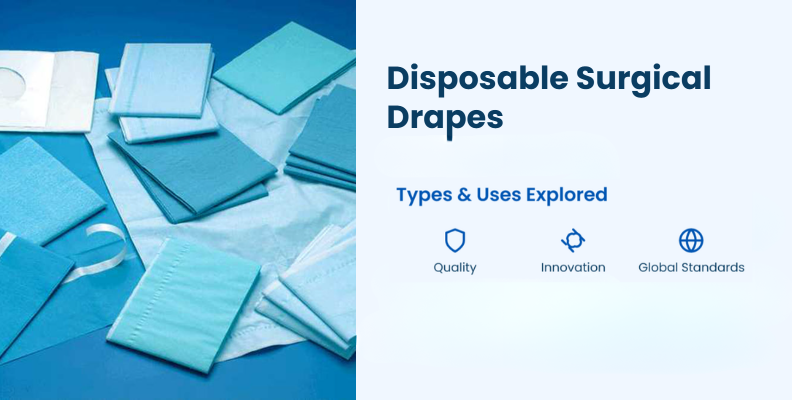
- Disposable surgical drapes create a sterile barrier to stop surgical site infections, also known as SSI, in 2026.
- These items come in many shapes. Some are fenestrated or incise designs, while others fit specific procedures.
- Modern non-woven materials like SMS offer better protection against fluids than old cloth versions. This creates an impervious safeguard for the patient.
What Are Disposable Surgical Drapes?
Disposable surgical drapes are single-use sterile covers. They consist of non-woven materials. They isolate the surgery site from the rest of the patient and the non-sterile surroundings. This prevents microbial migration during the procedure.
Think of these as high-tech, sterile sheets. Surgeons use them to cover everything except the exact spot they need for the operation. These drapes keep the work area clean and dry. They block blood and other liquids effectively. Hospitals throw them away after one use to ensure no germs move between patients. You can find more details on these supplies at Nuvo Med Surg. They serve as the primary defense against harmful bacteria during operations.
Modern Materials in Disposable Medical Drapes
Medical teams use specialized synthetic fabrics to keep patients safe during operations. These disposable surgical drapes rely on specific material science to stop germs and fluids.
SMS fabric is the most common choice. This material combines spunbond and meltblown layers. It blocks fluids well while letting air pass through. Spunlace fabric feels like soft cloth. It absorbs liquids quickly, so it works best for surgeries with heavy fluid use. Polyethylene films offer a full liquid barrier. Surgeons pick these when a procedure requires high-volume irrigation. Manufacturers also use non-woven materials because they do not shed lint. This helps prevent wound irritation and stops other problems after the surgery, according to Surgeine Healthcare.
| Material | Best Use Case | Key Quality |
| SMS fabric | General surgery | Fluid resistance and breathability |
| Spunlace | High fluid procedures | Softness and absorbency |
| Polyethylene | High irrigation procedures | Total liquid barrier |
| Non-woven | Wound protection | Lint-free surface |
Main Types of Disposable Surgical Drapes
Hospitals choose different disposable surgical drapes to match the specific needs of a procedure. Each shape provides a unique way to keep the surgical site clean.
Fenestrated drapes have a pre-cut hole. This opening gives the surgeon clear access to the exact site while the drape covers the rest of the body.
Incise drapes use a sticky film. This adhesive sticks right to the skin of the patient. The surgeon then cuts through this film to perform the operation.
Extremity drapes help during arm or leg surgery. They have elastic openings that fit snugly around the limb to stay in place.
Split drapes, or U-drapes, have a special U-shaped design. They wrap easily around a limb or a patient’s neck.
Laparotomy drapes are large sheets. Doctors use these specifically for abdominal surgeries because they cover a wide area of the patient.
These items provide a predictable layer of protection in the operating room. Using the right drape ensures that the medical team works in a sterile environment.
Benefits of Disposable Over Reusable Drapes
Disposable surgical drapes provide reliable safety for patients and medical staff. They maintain high standards for infection control. You can see the main advantages of these materials here:
- Consistent barrier performance: These drapes meet strict AAMI PB70 standards every time. Reusable drapes often break down after many washes.
- Lower strike-through risk: Non-woven materials block fluids better than cotton. This keeps germs from soaking through and helps prevent SSI.
- Reduced cross-contamination: A fresh drape for each patient stops cross-contamination from dirty laundry.
- Cost efficiency: Hospitals save money when they stop paying for laundry, repair, and sterilization tasks.
- Faster surgery prep: A 2026 hospital study showed that using disposables saved 15 minutes of prep time for each surgery.
Proper Techniques for Surgical Draping
Staff must follow strict aseptic technique when they apply drapes. This keeps the sterile field clean and safe. Follow these steps to place them correctly:
- Dry the patient’s skin first. This helps the adhesives stick well.
- Keep the drapes high. Do not let them touch the floor or bed rails.
- Start at the incision site and move outward toward the towelling.
- Hide your gloved hands under the drape fold. This protects your gloves while you set the drape in place.
- Leave the drape where it lands. Do not move it once you touch the skin. If you place it in the wrong spot, throw it away and grab a new one.
Specialized Drapes for Different Surgeries
Surgeons use specific disposable drapes for different types of operations. Each procedure has unique needs. For example, orthopedic drapes use heavy-duty reinforcement. This extra strength helps the material withstand the physical stress of bone surgery.
Ophthalmic drapes are much smaller and lighter. They have small fluid collection pouches. These pouches keep the patient’s airway clear during eye surgery.
Cardiovascular drapes come with built-in pockets and cable holders. These features help the medical team manage complex tubing during a heart procedure.
OB/GYN drapes often include integrated leggings. They also have fluid collection systems that work well for the lithotomy position. You can learn more about these specific uses in this guide on types of surgical drapes.
A sterile environment is non-negotiable. Pairing high-quality drapes with sterile surgical sutures ensures a complete sterile field for the patient. This combination creates a fastidious barrier against contaminants.
Factors for Selecting Quality Drapes
Selecting the right disposable surgical drapes involves checking material strength and barrier levels. Facilities should consider these points when choosing supplies:
- Check for AAMI level ratings. Level 3 or 4 provides the best protection for high-fluid cases.
- Verify the adhesive quality. The drape must stay in place without damaging sensitive skin.
- Look for lint-free certification. This helps minimize wound contamination during the procedure.
- Ensure the drape size covers the entire sterile field properly.
Quality drapes are essential for a safe surgery. They complement other medical tools. For example, surgeons often use a skin stapler alongside these drapes for efficient wound closure. Proper selection of these items provides an impeccable defense against infections.
Conclusion
Disposable surgical drapes provide the most reliable way to maintain a sterile field in 2026. They offer better protection than reusable cloth. These drapes help hospitals maintain high safety standards with minimal effort. This gear keeps patients safe from infections during medical procedures.
Frequently Asked Questions
What Material Is Best for High-Fluid Surgery?
SMS fabric works best. It has multiple layers that block liquids while remaining breathable.
Can You Reuse a Disposable Drape If It Was Not Used?
No. Once the sterile packaging opens, the drape is considered contaminated. You must discard it immediately.
Are Disposable Drapes Biodegradable?
Most are made of polypropylene and are not biodegradable. Many hospitals use specialized recycling programs to handle the waste instead.
What Is a Fenestrated Drape?
It is a drape with a pre-cut hole. This hole allows the surgeon to work on a specific area while keeping the rest of the patient covered.
Do Disposable Drapes Cause Skin Allergies?
Some patients react to adhesives. Surgeons often use hypoallergenic options if they know a patient has sensitive skin.


